🐾 Does your dog panic when you leave? → Get the Free 7-Day Starter Plan

Best Dog Crates for Separation Anxiety: The Complete Guide
Looking for the best dog crates for separation anxiety? We compared 7 top picks for mild to severe cases. Find the right crate for your dog today.

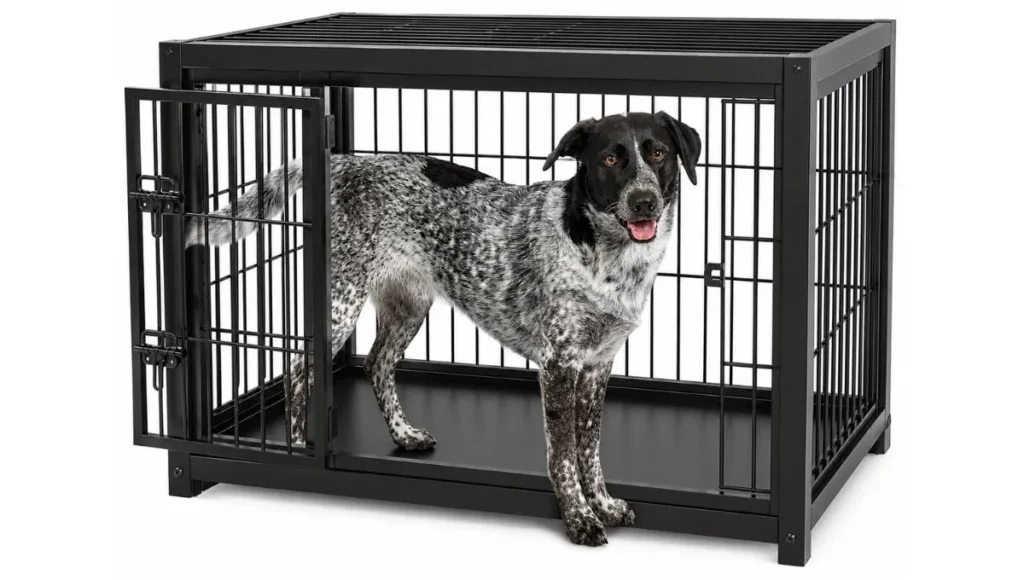
Dog crates for separation anxiety can be one of the most effective management tools you have, or one of the most counterproductive, depending on how they’re used. If your dog panics the moment you leave, you already know that getting through the day safely isn’t simple. The right crate, set up correctly and introduced the right way, can give your dog a calm space to settle in and give you peace of mind while you work through a full treatment plan. But the crate itself is never the cure. This complete guide to dog separation anxiety walks you through everything, from choosing the right crate type for your dog’s specific anxiety level, to setting it up, introducing it properly, and building a week-by-week training schedule that actually sticks.
Table of Contents
- Should You Use a Crate? What the Research Says
- How Dog Crates Help Manage Separation Anxiety
- Types of Dog Crates for Anxious Dogs
- How to Choose the Right Crate for Your Dog’s Anxiety Level
- How to Set Up the Crate for an Anxious Dog
- How to Introduce the Crate the Right Way
- Crate Training Schedule for a Dog with Separation Anxiety
- Common Crate Training Mistakes to Avoid
- FAQ: Dog Crates Separation Anxiety
The best dog crates for separation anxiety share a few things in common: solid construction, minimal visual stimulation, and a size that actually fits the dog.
Should You Use a Crate? What the Research Says
The first thing to know about crates and separation anxiety: they are not universally helpful. For some dogs, a crate activates a den instinct, an innate preference for small, enclosed spaces that reduces arousal and creates a genuine sense of safety. For other dogs, particularly those with severe separation anxiety or a history of confinement-related trauma, being locked in a crate amplifies panic rather than containing it.
Research on canine stress behavior consistently shows that the most anxious responses occur when a dog perceives a threat and cannot escape. If the crate becomes the threat, or simply the container in which panic occurs, it can make the underlying anxiety worse over time. Choosing among the best dog crates for separation anxiety starts with figuring out which side of that line your dog falls on.
When crates tend to help: dogs with mild to moderate separation anxiety who have no history of injuring themselves trying to escape, who settle in enclosed spaces in general, and who show less distress when their environment is visually simplified.
When crates tend to make things worse: dogs with severe separation anxiety, confinement phobia, or a history of escape injuries. If your dog has ever broken teeth on a crate door or injured their paws trying to dig out, the crate is not the right management tool.
The 10-minute test: set up a camera. Leave for 5 minutes with your dog crated, then 5 minutes with your dog loose in a dog-proofed room. Compare the footage. One condition almost always produces notably less distress than the other. The answer tells you whether to proceed with a crate, or work the departure protocol without one.
How Dog Crates Help Manage Separation Anxiety
A crate doesn’t treat separation anxiety, but it can make managing it significantly safer and more structured while treatment is underway.
The psychology of enclosed spaces. Dogs have a natural tendency to seek out small, enclosed spaces when stressed. This is why anxious dogs often squeeze behind furniture or into closets. A crate with solid or covered walls mimics that environment deliberately. It reduces visual stimulation (passing cars, animals outside, people walking by), all of which spike arousal in already-anxious dogs. Less stimulation means a lower baseline anxiety level going into a separation.
Limiting destructive behavior. Separation anxiety often results in destruction: chewed furniture, scratched doors, ingested household items. A secure crate prevents those behaviors during the period when your dog can’t be supervised. This matters both for your dog’s physical safety and for your own ability to extend absences incrementally, which is the foundation of any desensitization protocol.
The crate as management, not cure. This distinction is critical. A dog that settles calmly in a crate while you’re gone has not overcome separation anxiety: the anxiety is being managed by the environment. Real treatment involves gradually building your dog’s tolerance of your absence through systematic desensitization, often with professional guidance. The crate supports that process. It doesn’t replace it.
Types of Dog Crates for Anxious Dogs
Not every crate type works for every anxiety level. Here’s what you need to know about each category before you buy.
Wire crates are the most common starting point. They’re affordable, collapsible, and widely available. The problem for anxious dogs: they’re visually open on all four sides, which means your dog can see every stimulus that passes by. A fitted crate cover addresses this significantly. Wire crates are suitable for dogs with mild to moderate anxiety who have never attempted to escape. They won’t hold a dog that’s actively panicking and trying to get out. If you go this route, the cover is not optional. It’s essential.
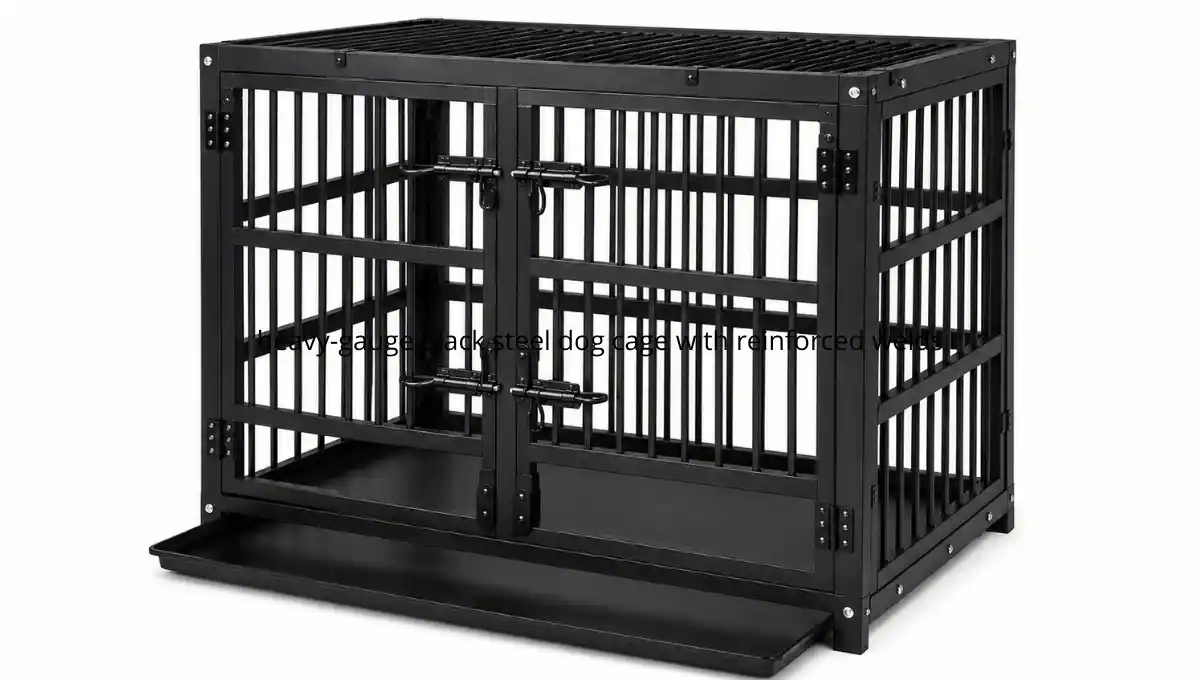
Heavy-duty and escape-proof crates are built for dogs with moderate to severe separation anxiety. They use thicker-gauge steel, reinforced corner joints, and multi-point latch systems that a determined dog can’t work open. Some models feature solid walls on three sides, which eliminates the visual stimulation problem without needing a cover. For a detailed look at specific options in this category, see our guide to best escape-proof dog crates for anxious dogs. If you’re weighing the top two heavy-duty brands head to head, our Impact vs Gunner Kennel: which is better for severe anxiety? breakdown covers the key differences.
Soft-sided crates are only appropriate for dogs with very mild anxiety, the kind that shows up as restlessness or light vocalization, not active escape behavior. A soft-sided crate offers zero resistance to a dog that wants out. They’re lightweight and useful for travel, but they should not be used unsupervised with a dog experiencing true separation anxiety.
Airline crates and plastic kennels fall between wire and heavy-duty on the security spectrum. They have solid walls on three or four sides (excellent for the den effect), a single front door, and decent durability for moderate anxiety. They don’t offer the same escape resistance as a true heavy-duty crate, but they’re significantly more enclosed than a wire crate and work well for dogs in the mild-to-moderate range who respond well to visual containment.
How to Choose the Right Crate for Your Dog’s Anxiety Level
The right crate is the one that matches your dog’s specific behavior, not the most expensive one, not the most popular one. In practice, the best dog crates for separation anxiety are the ones sized and secured for your dog’s actual behavior, not the ones with the most reviews.
Size: get it right. Your dog needs to be able to stand up fully, turn around comfortably, and lie down stretched out. That’s the complete list of requirements. Going larger does not help anxious dogs: excess space can actually increase restlessness and arousal. If your dog falls between two sizes on a manufacturer’s sizing chart, go smaller and add bedding to fill the space. Puppies who will grow should use a crate with an adjustable divider panel so you’re not buying multiple crates.
Security level: match it to the escape history. If your dog has never attempted to escape a crate, a wire crate with a cover is a reasonable starting point. If your dog has bent wire doors, lifted latches, or broken any part of a previous crate, you need a heavy-duty option with reinforced construction and multi-point latches. Don’t try to make a medium-security crate work for a high-escape-risk dog: you’re creating a safety hazard and reinforcing the panic cycle.
Material considerations. Steel and aluminum are the most durable. Plastic and rotomolded options offer excellent den-effect enclosure but vary significantly in escape resistance, so check latch quality specifically. Soft-sided fabric is suitable for mild cases and travel only. In all cases, look for smooth interior finishes with no sharp edges or protrusions that an anxious dog could injure themselves on.
Budget reality check. A high-quality heavy-duty crate costs more upfront, but for a dog with genuine escape behavior, it’s usually cheaper than replacing two or three cheaper crates over time, plus the cost of any vet visits related to escape injuries. If budget is a constraint, a covered wire crate is a legitimate starting point for mild cases. Scale up if needed based on what you observe on camera.
How to Set Up the Crate for an Anxious Dog
The physical setup matters as much as which crate you choose.
Location: place the crate where your dog normally spends time, the living room, not a back bedroom. Isolation on top of separation amplifies anxiety. Being in the main room makes the crate feel like part of normal life rather than a punishment space.
Cover three sides: use a blanket or fitted crate cover and leave the front open for airflow. Coverage reduces visual stimulation (movement outside, animals, people walking by) and increases the den effect. Most dogs settle faster in a covered crate than an open one. For crates with solid walls already built in, this step is handled by the design.
Bedding: use something that smells like you. An old t-shirt carrying your scent may comfort some anxious dogs, as long as your dog does not chew or swallow fabric. Evidence for scent items is limited. Don’t use expensive bedding initially, since anxious dogs sometimes destroy it during the adjustment period. Upgrade once the dog is reliably calm in the crate.
Exit-ritual chew: leave a stuffed, frozen Kong in the crate when you depart. Freezing extends how long it lasts. This creates a positive association with the crate at departure time, the moment your dog would otherwise start to spiral. Over time, the crate becomes the place where the good thing happens, not the place where you disappear.
White noise: a white noise machine or TV left on near the crate reduces alert barking triggered by outside sounds. It won’t resolve separation anxiety on its own, but it removes a layer of environmental stimulation that can interrupt your dog’s ability to settle.
How to Introduce the Crate the Right Way
A crate introduced during a stressful moment, like an actual departure, starts with a negative association that’s very hard to reverse. Introduce it separately, during calm moments, before it’s ever connected to being alone.
Days 1–3: leave the crate door open with high-value treats scattered inside. Let the dog investigate at will, on their own terms. Do not close the door yet. The goal is simple: the crate is a place where good things appear. That’s it.
Days 4–6: feed meals inside the crate with the door open. Once the dog walks in voluntarily, close the door for 30 seconds while they eat, then open it. Build duration slowly: 30 seconds, 1 minute, 2 minutes. No rushing.
Days 7–10: gradually extend closed-door time during meal and treat sessions. Practice stepping out of the room briefly, not leaving the house yet. Your dog should be able to see you leave their line of sight without distress before crated absences begin.
Week 2 onward: introduce the crate as part of the departure training protocol. The dog should be comfortable being closed in it before it’s ever used during actual departures from the home. If you skip this and lock the dog in the crate on day one, the first experience is panic, and that association sticks. Take the extra week. It prevents months of backtracking.
Crate Training Schedule for a Dog with Separation Anxiety
Crate training for separation anxiety is not the same as basic crate training. The goal isn’t just getting your dog to go in. It’s building a genuine calm association with the crate that holds up under the stress of actual departures. That takes time and a structured progression.
Week 1: Open door, positive exploration. Leave the crate accessible and rewarding throughout the day. Toss treats in randomly. Let the dog go in and come out freely. Feed at least one meal inside with the door open. Don’t close the door yet. Success this week: the dog enters the crate voluntarily without hesitation.
Week 2: Feeding near and in the crate, first door closures. Feed all meals in the crate. Begin closing the door during meals for 1–2 minutes, then open immediately when the dog finishes. Gradually extend to 5 minutes. Practice in short sessions throughout the day, not just at meal times. Add the Kong at this stage so the crate has a second high-value association.
Week 3: Short closures, owner out of sight. Work up to 10–15 minutes of closed-door time with you present, then step out of the room briefly. Start with 1 minute out of the room, then return calmly before opening the crate. Build slowly to 5 minutes, 10 minutes, 15 minutes. Camera monitoring is essential here: you need to know what’s happening when you’re not in the room.
Week 4+: Gradual duration increase with actual departures. Begin using the crate for very short real departures: 5 minutes outside the home, then 10, then 20. Watch the camera footage after each session. If your dog is calm or settles within the first few minutes, extend. If your dog is distressed the entire time, hold the duration and add more neutral short-duration sessions before extending again.
The rule throughout: never increase duration faster than your dog’s current comfort level allows. Pushing too fast resets the association. One calm 20-minute session is worth more than five stressful ones.
Common Crate Training Mistakes to Avoid
Most setbacks in crate training for separation anxiety come from a short list of predictable errors.
Using the crate as punishment. The moment the crate becomes associated with negative experiences (being sent there after bad behavior, being locked in during stressful events), you’ve undermined the positive association you’re building. The crate should only ever be a calm, good place.
Wrong size. Too large and the dog paces and is restless. Too small and it’s uncomfortable. Both outcomes increase anxiety rather than reducing it. Measure carefully against manufacturer guidelines.
Rushing the introduction. Skipping the gradual introduction and going straight to long absences is the most common reason crate training fails for anxious dogs. The association needs to be built first.
Leaving the dog too long, too fast. Incrementally increasing duration is the entire method. Jumping from 10 minutes to 4 hours undoes weeks of progress. Build in small, consistent steps.
No camera monitoring. You can’t manage what you can’t see. A dog that appears fine when you return may have been in distress for the first 45 minutes. Camera footage tells you the truth so you can adjust the plan accordingly.
Using the wrong crate type for the anxiety level. A soft crate for a dog with moderate escape behavior, or a standard wire crate for a dog with severe anxiety, sets both dog and owner up for failure. Match the crate to the actual behavior, not to the budget or what looked good online.
FAQ: Dog Crates & Separation Anxiety
Is it cruel to crate a dog with separation anxiety?
Not if the crate is introduced gradually and your dog is genuinely calm in it. A dog that settles in a crate during your absence is not suffering: the crate is functioning as a safe, den-like space. It becomes cruel when a dog is panicking, attempting to escape, or injuring themselves. If that’s happening, stop using the crate for absences and reassess the approach. The test is always the camera footage, not assumptions.
How long can a dog with separation anxiety be crated?
Only as long as they can remain calm, and that limit varies by dog and training stage. A general ceiling for adult dogs is 4–5 hours maximum, and only once they’re reliably settled in the crate. During the training process, duration should be much shorter and incrementally increased. Dogs should never be crated longer than they can comfortably hold their bladder, and puppies have much shorter limits than adults.
Should I put a bed or blanket in the crate?
Yes, with one caveat. If your dog destroys bedding, hold off until they’re calmer in the crate. A worn item of your clothing, such as an old t-shirt, may comfort some anxious dogs because it carries your scent, but only offer it if your dog does not chew or swallow fabric. Once your dog is reliably settled, you can add a proper bed.
Can a dog with separation anxiety ever be left uncrated?
Yes, that’s actually the long-term goal of treatment. A dog that has completed a successful desensitization protocol can usually be left loose in a dog-proofed room, or eventually the full home, without distress. The crate is a management tool during treatment, not a permanent requirement. Most dogs with mild to moderate SA reach this point with consistent work over weeks to months. This is one more reason the best dog crates for separation anxiety are chosen as temporary tools, not permanent fixtures.
What size crate for a dog with separation anxiety?
Your dog should be able to stand fully upright, turn around completely, and lie stretched out. That’s the sizing rule. Going larger doesn’t help: excess space increases restlessness. If your dog is between sizes, go smaller and add bedding to fill the space. For dogs still growing, use a crate with a divider panel so you can adjust the space as they develop.
Are dog crates good for dogs with separation anxiety?
Used correctly and introduced gradually, yes, for most dogs. A crate can keep a dog safe during panic episodes, limit destructive behavior, and provide a calm, enclosed space that reduces environmental triggers. Used as a shortcut without behavior work, a crate tends to increase anxiety over time. The crate supports treatment. It does not replace it. That’s exactly what separates the best dog crates for separation anxiety from a plain kennel: they’re chosen and used as part of a treatment plan, not a substitute for one.
What should I put in a crate for a dog with separation anxiety?
A stuffed frozen Kong (given at departure), an item of your clothing for scent, and minimal bedding until you know the dog won’t destroy it. White noise nearby helps reduce alert barking. Keep the setup simple: nothing with small parts that could be a choking hazard when the dog is unsupervised.