Monitoring Your Dog When You're Away
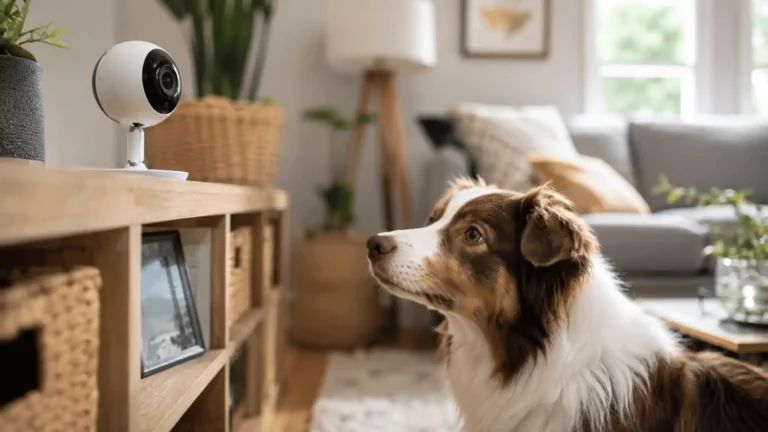
A pet camera does not calm a dog. What it does is show you what happens when you are not there, which is hard to know any other way. That information is useful in three ways. It shows when distress starts, for example the moment you leave or twenty minutes later. It shows what the distress looks like, such as pacing, barking, drooling, or damage near doors. And it gives your vet or trainer something concrete to work from instead of a description from memory.
When you compare cameras, these features matter most for an anxious dog:
- A clear view of the whole room, including doors, windows, and the crate, with usable night vision.
- Motion and sound alerts, so you can check in when something happens instead of watching the screen all day.
- Saved clips or a recording history, so you can review episodes later and share them with your vet or trainer.
- A stable app and Wi-Fi connection, plus any subscription cost for storing clips.
Two-way audio and treat-tossing features call for some caution. Some dogs may settle when they hear a familiar voice, while others may become more worked up because they hear you but cannot reach you. Dogs under high stress may also refuse food. If you try either feature, watch your dog's reaction closely and stop if it seems to make things worse.
Watching a live feed can also raise your own stress. Many owners find it easier to rely on alerts, check at planned times, and jot down what they see: the date, the time, what happened, and how long it lasted.
Comfort and Calming Aids
These products aim to make your dog's surroundings feel more comfortable. Evidence varies a lot between product types and between individual dogs, so it helps to think of them as one piece of a larger plan.
Pressure wraps and vests. These apply steady pressure around the torso. Some owners report that their dogs seem calmer wearing one, but a 2024 systematic review found only weak and limited evidence that pressure wraps reduce signs of anxiety. If you try one, think of it as a comfort aid rather than a treatment. Fit matters. A wrap should be snug without restricting breathing or movement, and you should watch for panting or overheating. Try it while you are home first, so your dog does not learn to link it only with you leaving.
Pheromone diffusers and collars. These release a synthetic version of a scent linked to nursing mother dogs. Diffusers work in one room, and collars travel with the dog. A 2010 systematic review found insufficient evidence for most uses of dog-appeasing pheromone, and a 2021 evidence review described the evidence for anxiety in adult dogs as weak. Some dogs may still seem more relaxed, but a pheromone product is best treated as an optional extra rather than a main strategy.
Calming beds. A soft bed with raised edges can give a dog a comfortable place to rest and fit well into a safe-space routine. A bed does not address the cause of anxiety, so treat it as comfort rather than treatment.
Calming supplements and chews. Ingredients and amounts vary widely between brands, and pet supplements are regulated differently from prescription medication. Ask your vet before you start one, especially if your dog already takes any medication or supplement.
Background sound. Calm music or steady white noise may help cover outside sounds like traffic or neighbors. Responses differ from dog to dog.
Whatever you try, introduce one new thing at a time and keep brief notes. That way you can tell what is making a difference and what is not.
Enrichment and Distraction Tools
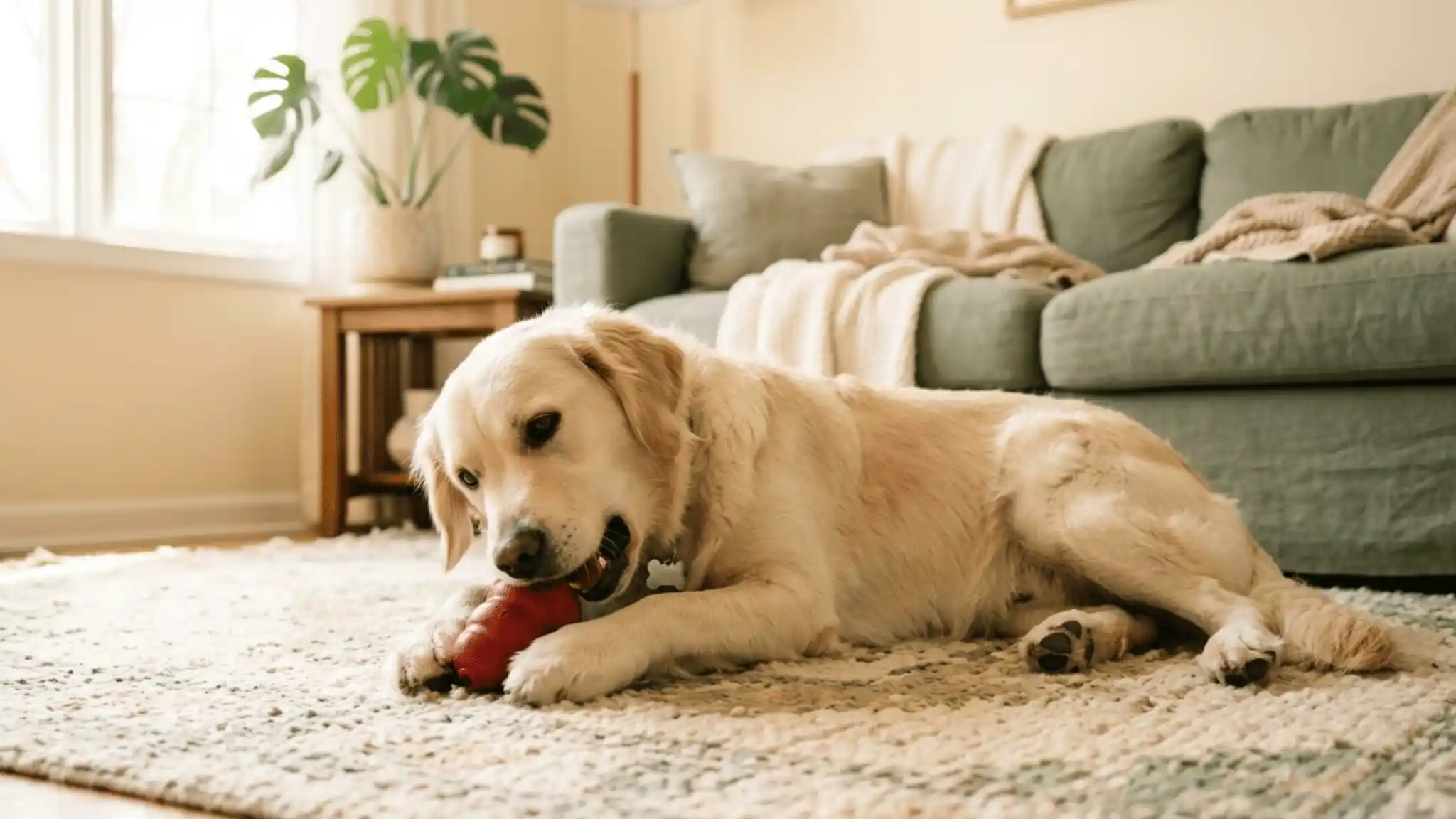
Food puzzles, lick mats, stuffable toys, and chews give a dog something to do. They can help with boredom and extra energy, and they are useful during short practice absences. They do not treat separation anxiety by themselves. Dogs under high stress may ignore food they normally enjoy.
A simple check can tell you something. Offer a favorite treat or puzzle while you are in another room of the house, then again after you step outside briefly. If your dog ignores a food they normally love, that may mean the stress level is too high for that exercise. Share it with your vet or trainer, and go back to an easier step.
A few safety points apply to any enrichment item:
- Choose a size that suits your dog, and watch the first few uses so you can see how your dog handles it.
- Some chews and toys carry a risk of choking or blockage. Ask your vet which ones suit your dog, especially if you plan to leave your dog alone with them.
- Check labels for xylitol, a sweetener that is toxic to dogs. The FDA notes it can appear in some peanut and nut butters, as well as in sugar-free gum, candy, and other products.
- Count treats and stuffed fillings toward your dog's daily food.
Crates, Safe Spaces, and Confinement
A crate can be a comfortable den for a dog who has been gradually taught to like it. For a dog who panics when confined, a crate can make things worse and raise the risk of injury.
Signs that confinement is not working include frantic biting or digging at the crate, bent bars, damaged teeth or nails, heavy drooling, and a soiled crate. If you see these, stop leaving your dog confined and talk with your vet or a qualified trainer. Some dogs do better in a dog-proofed room or behind a gate, with cords, chewable items, and anything toxic put out of reach. If you want to compare crate options, our guide to dog crates for separation anxiety covers them.
Keep in mind that a sturdier or escape-proof crate is designed for safety and containment, not as a treatment for anxiety. A safe space also works best when your dog chooses to go there and never when it is used as punishment.
What Products Cannot Fix
Separation anxiety and other anxiety problems are emotional and behavioral, and no product teaches a dog to feel safe on their own. That usually takes gradual practice at a pace your dog can handle, sometimes with the help of a qualified trainer or a veterinary behaviorist. Products can support that work. They cannot stand in for it.
Products also do not replace veterinary care. Talk to your vet if your dog hurts themselves, destroys doors or crates, stops eating, shows distress that lasts for weeks or keeps getting worse, or changes suddenly. A vet can check for medical causes and discuss whether medication makes sense. Our guide to dog anxiety medications and veterinary care explains what to prepare for that visit, and our complete guide to dog separation anxiety covers the behavior side in depth.
Choose the Right Guide
If you want to see what happens while you are out, start with our guide to the best dog cameras for separation anxiety. It compares camera options for checking in on your dog.
If you are considering a chew or treat, read our guide to calming treats for dogs with separation anxiety, and check with your vet before you start one.
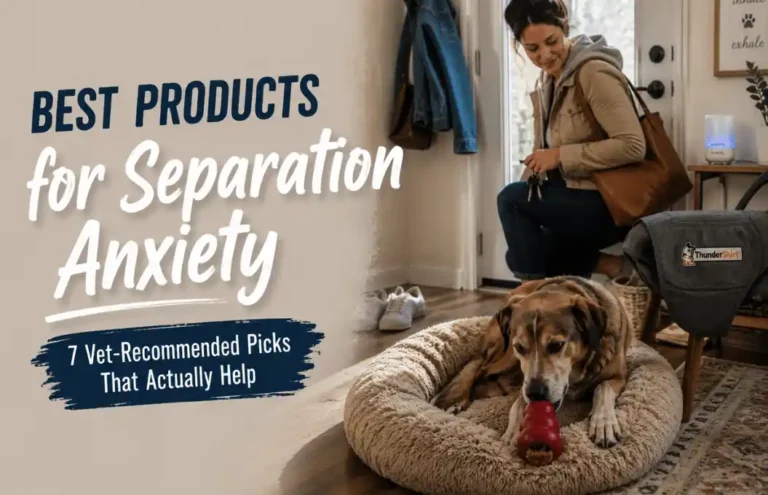
If you want a wider look at what is available, our roundup of the best products for dogs with separation anxiety covers several product types in one place.
If you are curious about pressure wraps in particular, see our guide to anxiety wraps for dogs.
This guide is for educational purposes and does not replace veterinary diagnosis or treatment. Always discuss medication, supplements, or changes to an existing treatment plan with your veterinarian. Some guides linked on this page contain affiliate links. If you buy through them, we may earn a commission at no extra cost to you.
Sources
- Mathis S. et al., A Systematic Review of the Efficacy of Compression Wraps as an Anxiolytic in Domesticated Dogs, Animals, 2024
- Frank D., Beauchamp G., Palestrini C., Systematic review of the use of pheromones for treatment of undesirable behavior in cats and dogs, Journal of the American Veterinary Medical Association, 2010
- Wong C. F., Govenski M., Can dog appeasing pheromone ameliorate stress behaviours associated with anxiety in mature domestic dogs?, Veterinary Evidence, 2021
- U.S. Food and Drug Administration, Paws Off Xylitol, It's Dangerous for Dogs
- Finno C. J., Veterinary Pet Supplements and Nutraceuticals, 2020