🐾 Does your dog panic when you leave? → Get the Free 7-Day Starter Plan

Dog Crates for Separation Anxiety: Should You Use One?
Should you use a crate for a dog with separation anxiety? Learn how to spot confinement distress, the warning signs, and safer alternatives.

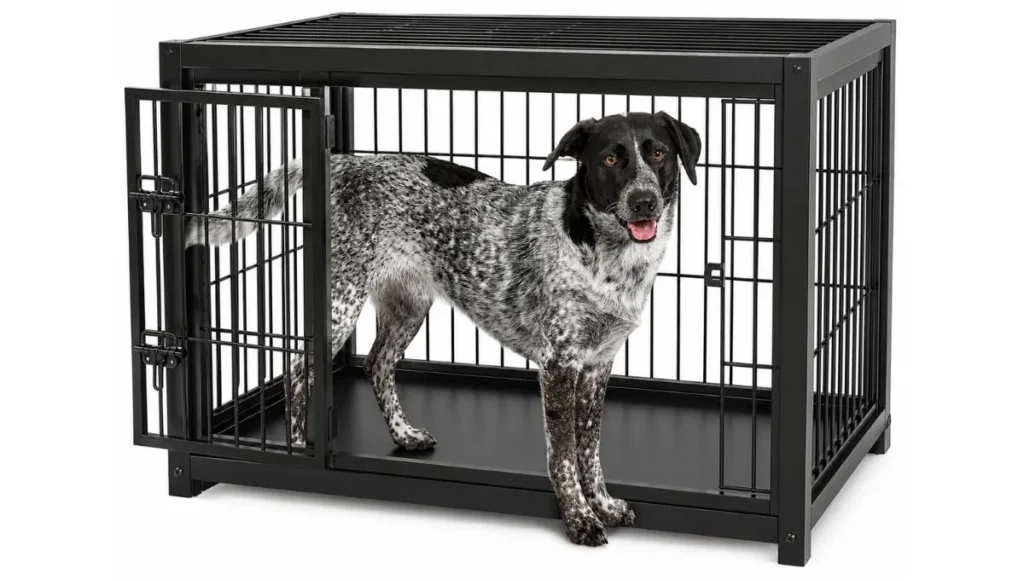
Dog crates for separation anxiety are a tricky topic. For some dogs, a crate is a quiet place to rest. For others, it adds panic to a situation that is already frightening. This guide helps you decide whether a dog separation anxiety crate setup is worth trying, how to spot the warning signs, and what to do instead if it is not working. Whatever you decide, a crate never treats separation anxiety. At most, it is one part of a wider plan, which you can read about in our complete guide to dog separation anxiety.
Safety first: if your dog panics, drools heavily, damages the crate or has been hurt while confined, stop leaving your dog crated while you are away and talk to your veterinarian or a qualified behavior professional. This article is educational and does not replace a veterinary assessment.
Table of Contents
- Should You Use a Crate for a Dog With Separation Anxiety?
- Separation Anxiety vs Confinement Anxiety
- Signs Your Dog Is Distressed in a Crate
- Escape Attempts and Injury Risks
- What a Crate Can and Cannot Do
- Types of Dog Crates for Separation Anxiety
- How to Choose a Crate if Your Dog Tolerates One
- How to Set Up the Crate for an Anxious Dog
- Introducing a Crate Gradually: Core Principles
- Alternatives to a Crate
- Common Crate Training Mistakes to Avoid
- When to Get Professional Help
- FAQ: Dog Crates & Separation Anxiety
- Sources
Should You Use a Crate for a Dog With Separation Anxiety?
It depends on your dog. Crates are not universally helpful. Some dogs rest in a familiar crate on their own and stay relaxed with the door closed. Other dogs panic when confined, and for them a crate adds to the distress instead of containing it.
Veterinary guidance is cautious. The AAHA toolkit on canine separation anxiety suggests checking whether a dog can be crated safely, for example by recording the dog going into a crate and staying there while the owner is away. If the dog panics, resists going in, destroys the crate or injures itself, AAHA suggests options such as pet sitters, home day care or boarding. AAHA’s owner handout goes further and lists confining a dog in a crate as something not to do, because it may increase anxiety and the dog could get hurt trying to escape.
A veterinary behaviorist writing for dvm360 adds that crating does not treat separation anxiety. It only confines the problem to one place. The same article describes distraught dogs that have broken teeth, jaws and limbs trying to escape, and it says a dog should be comfortable being left alone in the crate before anyone relies on it.
The ASPCA’s handout on treating separation anxiety says crates can help some dogs who come to see them as a safe place, but they can raise stress in others. It lists heavy panting, heavy drooling, frantic escape attempts and nonstop barking or howling as signs that a crate is not a good fit.
A crate may be worth considering when your dog walks in on its own, rests there while you are home, stays relaxed with the door closed, and has never panicked, damaged the crate or been hurt while confined. Even then, introduce it gradually and check how your dog does on camera.
A crate is probably not the right tool when your dog resists going in, shows any of the distress signs described below, or has ever damaged a crate or been hurt while confined.
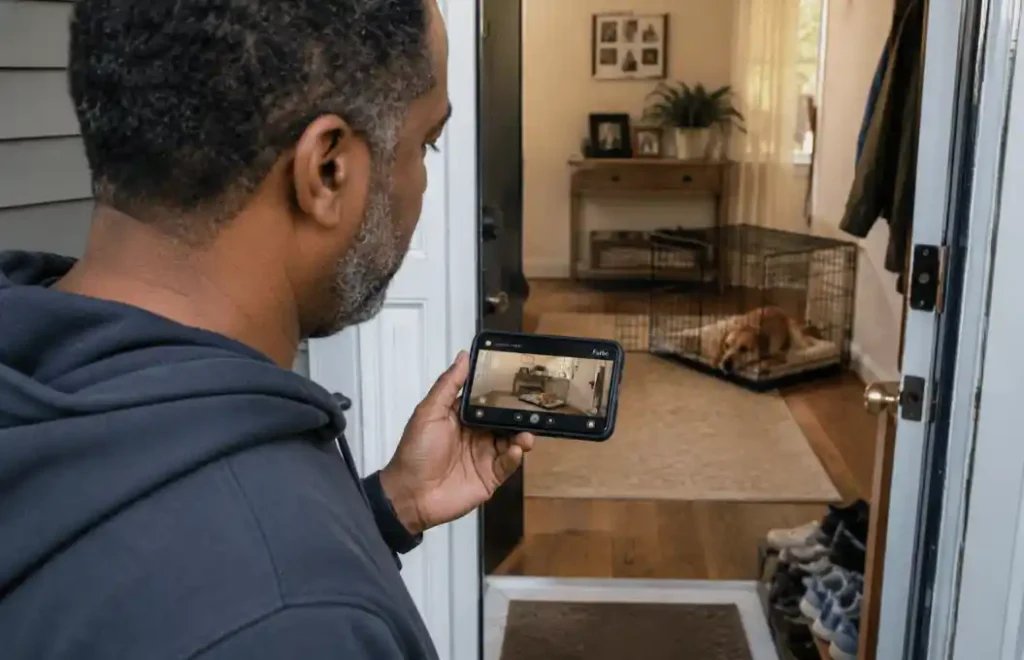
Observe without triggering panic: Use a camera to review absences your dog can already tolerate, rather than deliberately leaving a distressed dog confined to run a test. Watch for pacing, panting, repeated barking, escape attempts, or injuries. If you see panic or a risk of injury, stop using the crate for unsupervised absences and ask your veterinarian or a qualified separation-anxiety professional about a safer management plan.
Separation Anxiety vs Confinement Anxiety
Two different problems can look alike from the outside. A dog with separation anxiety is distressed because you are gone. A dog with confinement anxiety, sometimes called confinement distress, is distressed because it is shut in a small space. Behavior professionals describe these as separate but overlapping problems, and a dog can have one or both.
This matters because the solution is different. If the crate itself is the trigger, a bigger or tougher crate does not fix it. Some certified separation anxiety trainers report that moving a dog out of a crate and into a gated room can lower the panic. That comes from professional experience and not from a controlled study, so treat it as one perspective and discuss it with your veterinarian.
These clues can help you tell the two apart:
- When the escape attempts happen. The ASPCA handout says that if escape behavior is caused by separation anxiety, it does not happen when the guardian is present. A dog that also panics in the crate while you sit right beside it may be reacting to the confinement.
- Resistance to the crate. AAHA treats freezing at the crate, refusing to go in, destroying the crate or injuring itself as reasons to look for other options.
- Behavior when you are home. A dog that rests in the crate with the door closed while you are home but panics when you leave is more likely reacting to your absence. Check this on camera instead of guessing.
None of these clues is a diagnosis. Your veterinarian or a qualified behavior professional can help you work out what is going on.
Signs Your Dog Is Distressed in a Crate
Watch recordings of absences your dog can already tolerate. Veterinary sources such as AAHA, the ASPCA and dvm360 describe these signs of distress:
- Heavy panting or heavy drooling
- Frantic digging, chewing or pawing at the door or bars
- Nonstop barking or howling
- Freezing at the crate or refusing to go in
- A damaged crate, bent bars, broken nails, damaged teeth or sore paws after being confined
- Urine or stool in the crate
- Ignoring a favorite food toy. AAHA notes that dogs who are extremely distressed cannot eat.
If you see any of these signs, stop leaving your dog in the crate while you are away and speak with your veterinarian. AAHA’s owner handout recommends showing your veterinarian the video, so keep the footage.
Escape Attempts and Injury Risks
Escape attempts by dogs with separation anxiety can be extreme. The ASPCA notes that dogs may dig or chew at doors and windows, which can injure their teeth, front paws and nails. A veterinary behaviorist writing for dvm360 also describes dogs breaking teeth, jaws and limbs while trying to get out of a crate.
A tougher crate is not a safe fix. A heavy-duty crate may keep a dog inside, but it does not address the panic behind the escape attempts. Treat any escape attempt, bent bar, lifted latch or injury as a warning sign, not as a reason to buy a stronger crate.
If your dog has already escaped, damaged a crate or been hurt, stop using the crate when you are away and talk to your veterinarian or a qualified behavior professional before you try confinement again.
What a Crate Can and Cannot Do
A crate does not treat separation anxiety. At best, it is a management tool for a dog that is already comfortable in it.
Enclosed spaces affect dogs differently. Some dogs voluntarily rest in enclosed spaces, while others are distressed by confinement. A crate with partly solid sides can reduce views of movement outside, but that does not necessarily reduce separation anxiety. Check your dog’s actual response rather than assuming that less visibility always helps.
Limiting destructive behavior. Separation anxiety often results in destruction: chewed furniture, scratched doors, ingested household items. A crate may limit access to household hazards only if the dog is already comfortable inside and does not attempt to escape. For dogs who bite bars, force doors, or panic, confinement itself can introduce serious injury risks.
Management, not cure. This difference matters. A dog that settles calmly in a crate while you’re gone has not overcome separation anxiety. The anxiety is being managed by the environment. Real treatment involves gradually building your dog’s tolerance of your absence through systematic desensitization, often with professional guidance. The crate can support that process. It doesn’t replace it.
Types of Dog Crates for Separation Anxiety
The next four sections are for dogs that already tolerate a crate. They are not a recommendation to crate a dog that panics. No crate type treats separation anxiety or confinement distress, and the differences below are about design, not about treatment.
Wire crates are the most common starting point. They’re affordable, collapsible, and widely available. The downside for anxious dogs is that they’re visually open on all four sides, which means your dog can see everything that passes by. A fitted cover can reduce what your dog sees, but some dogs dislike covers. Wire crates are only worth considering for dogs who have never tried to escape a crate, and they won’t hold a dog that’s actively panicking and trying to get out. A fitted cover is optional. Use one only if your dog is comfortable with it, ventilation remains adequate, and your dog cannot pull or chew the fabric.
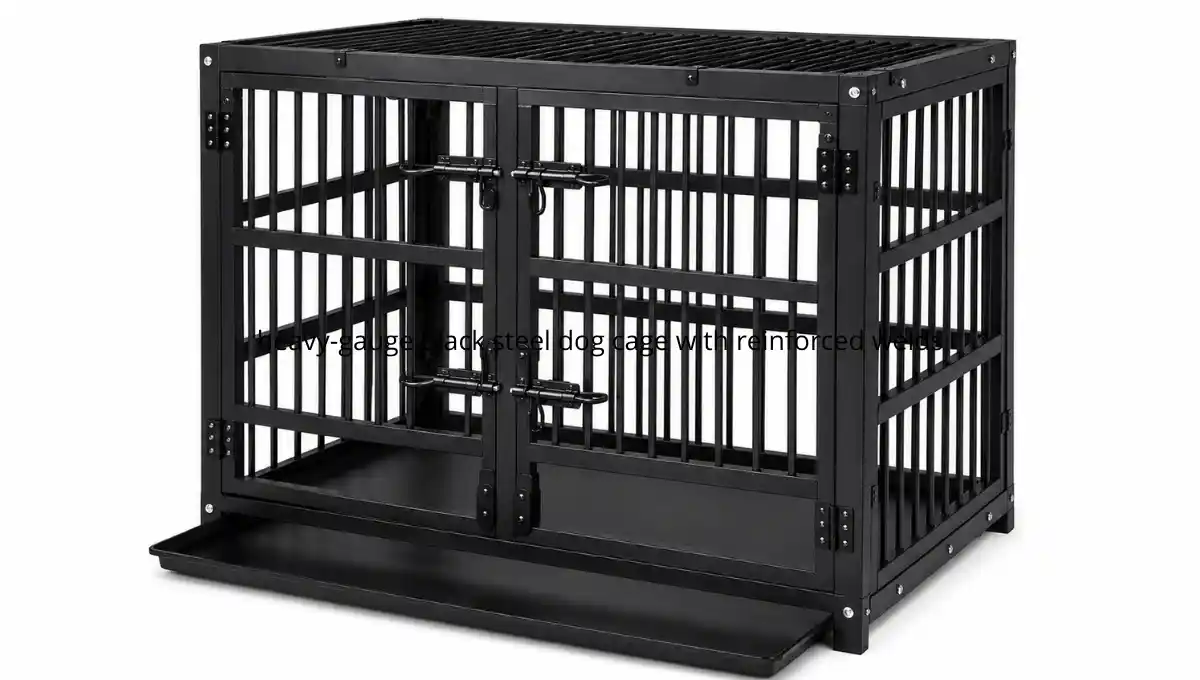
Heavy-duty and escape-resistant crates are built with reinforced parts, but they do not treat separation anxiety and they are not automatically safe for a dog who panics when confined. Materials and locking designs vary by model, and no latch or enclosure should be described as impossible for a determined dog to open. Some models have solid walls on some sides, which reduces what the dog can see but does not mean it lowers anxiety. If a veterinarian or behavior professional has cleared a crate for your dog and you want a sturdier build, see our comparison of escape-resistant dog crates. Our Impact vs Gunner Kennel comparison covers two heavy-duty brands side by side.
Soft-sided crates are not suitable for dogs with separation anxiety who try to escape. They’re lightweight and useful for travel and for calm dogs, but they offer little resistance to a dog who wants out and should not be used for unsupervised time with a dog who has separation anxiety.
Airline crates and plastic kennels fall between wire and heavy-duty on the security spectrum. They have solid walls on three or four sides, which limits what the dog can see, plus a single front door and moderate durability. They don’t offer the same escape resistance as a heavy-duty crate, but they enclose the dog more than a wire crate does and can suit dogs who stay relaxed in an enclosed space.
How to Choose a Crate if Your Dog Tolerates One
If your dog is comfortable in a crate, choose it for fit and safety, not for price or popularity. The right size, a smooth interior and a design your dog cannot injure itself on matter more than the number of reviews.
Size: get it right. Your dog needs to be able to stand up fully, turn around comfortably, and lie down stretched out. Those are the basic requirements. Do not choose a smaller crate if it prevents comfortable standing, turning, or lying in a natural resting position. Compare the usable interior dimensions with your dog’s measurements. Additional space does not by itself cause or cure anxiety. Puppies who will grow should use a crate with an adjustable divider panel so you’re not buying multiple crates.
Escape history matters more than security level. If your dog has never attempted to escape a crate, a wire crate is a reasonable starting point, with a cover only if your dog accepts one. If your dog has bent wire doors, lifted latches, or broken a previous crate, treat this first as a warning of possible distress and injury. Consult your veterinarian or a qualified behavior professional before attempting unsupervised confinement again. Do not assume that buying a stronger crate fixes the problem. A dog with a history of escape attempts is not a good match for any crate until a professional has weighed in.
Material considerations. Steel and aluminum are the most durable. Plastic and rotomolded options enclose the dog more fully but vary significantly in escape resistance, so check latch quality specifically. Soft-sided fabric is suitable for travel and calm dogs only. In all cases, look for smooth interior finishes with no sharp edges or protrusions that an anxious dog could injure themselves on.
Budget. If your dog tolerates a crate, you do not need the most expensive model. Prices change often, so check current prices at the store. Spending more on a crate does not replace a behavior plan, and it never treats the anxiety.
How to Set Up the Crate for an Anxious Dog
The physical setup matters as much as which crate you choose.
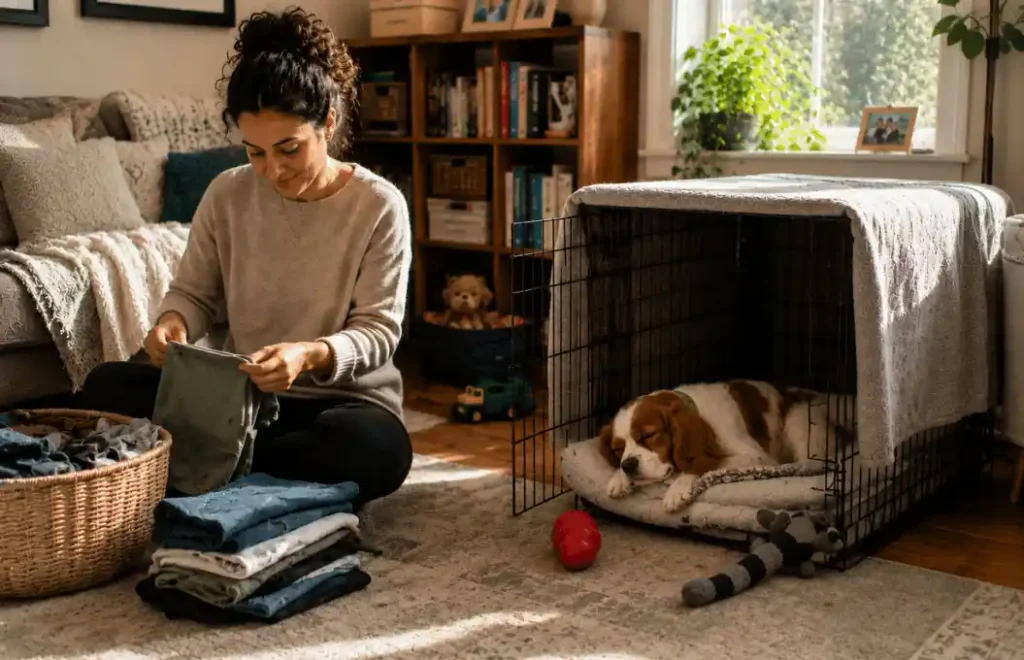
Location: place the crate where your dog normally spends time, such as the living room, not a back bedroom. A crate in a busy room is less likely to feel like a place of punishment or isolation.
Covers are optional. Some dogs seem to settle better when part of the crate is covered, and others dislike it. If you try a blanket or fitted cover, leave the front open for airflow, make sure your dog cannot pull it in or chew it, and watch how your dog reacts. Take it off if your dog seems more worried. Crates with solid walls built in may not need a cover.
Bedding: you can try something that smells like you. An old t-shirt carrying your scent may comfort some anxious dogs, as long as your dog does not chew or swallow fabric. Evidence for scent items is limited. Don’t use expensive bedding initially, since anxious dogs sometimes destroy it during the adjustment period. Upgrade once the dog is reliably calm in the crate.
Food toys: a stuffed Kong or another food toy can make the crate a pleasant place while you are home. Offer it first when you are in the room. AAHA notes that a dog who eats from a food toy is showing less anxiety, and that a dog who is extremely distressed cannot eat. If your dog ignores the toy when you leave, treat that as a sign the setup is too hard right now.
White noise: a white noise machine or TV left on near the crate can mask outside sounds for some dogs. It will not resolve separation anxiety on its own.
Introducing a Crate Gradually: Core Principles
Every dog moves at its own pace, so this guide does not give a fixed schedule. These principles apply whatever the timeline looks like. For the full step-by-step method, see our guide to kennel training a dog with separation anxiety.
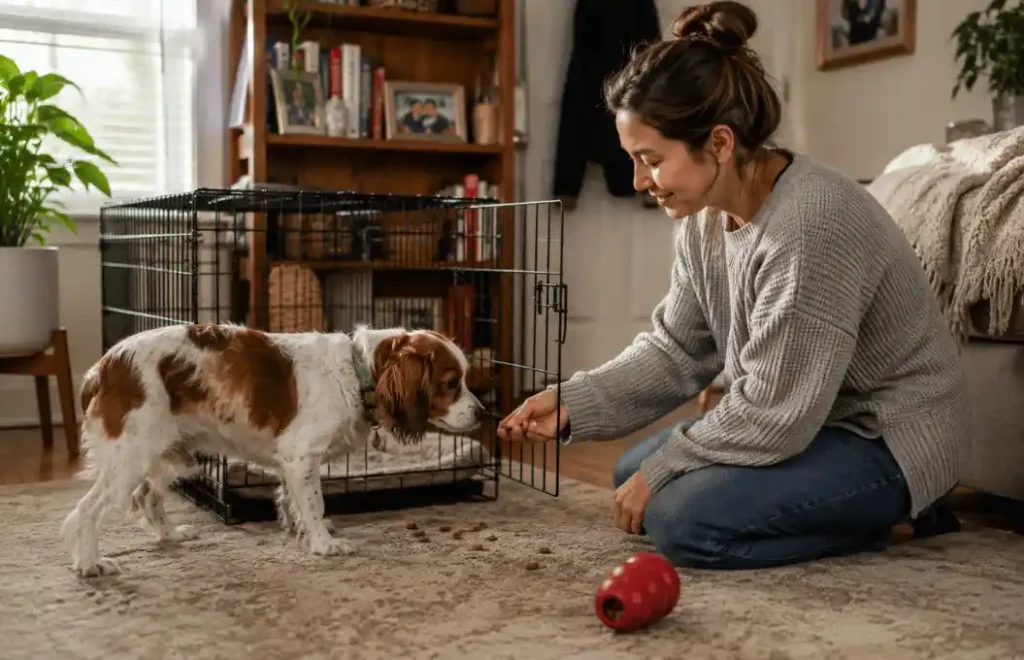
- Make the crate a good place first. Keep the door open and let your dog explore on its own terms, with treats or meals inside. Introduce it during calm moments, never during a real departure.
- Let your dog choose to go in. Do not push your dog in or shut the door on a hesitant dog.
- Add one change at a time. A veterinary behaviorist writing for dvm360 describes the order as getting used to the crate, then staying in it while the owner is home, and only then being left in it while the owner is gone. Keep each step small.
- Move on only when your dog is relaxed. If you see panting, pacing, whining or refusal, go back to an easier step. Never repeat an absence that caused panic.
- Use a camera. You need to see what happens when you are out of the room, because a dog may look fine when you return.
- Do not rely on the crate for real departures yet. Your dog should be comfortable being left alone in it first.
- Treat setbacks as information. If your dog cannot get through the early steps calmly, the crate may not suit your dog.
If your dog struggles at any step, that is a good moment to talk with your veterinarian or a behavior professional instead of pushing ahead.
Alternatives to a Crate
If your dog panics in a crate, or you have decided not to use one, there are other ways to keep your dog safe while you work on treatment. Veterinary sources mention these options:
- A pet sitter, or a friend or relative who stays home. AAHA’s toolkit names pet sitters, and its owner handout also lists leaving the dog with a friend or relative who stays home.
- Doggie day care or taking your dog to work. Both appear in AAHA’s owner handout as options to discuss with your veterinarian.
- A different area of the home. AAHA’s handout suggests an area that is not associated with increased anxiety, and the ASPCA handout suggests confining a dog that does poorly in a crate to one room behind a baby gate. Some dogs still struggle in any confined space, so check how your dog does on camera.
- Boarding. AAHA’s toolkit mentions boarding at the veterinary hospital so a dog that panics in a crate can be observed and protected.
- Fewer absences during treatment. AAHA’s toolkit recommends minimizing the time your dog is left alone while treatment is underway.
- Medication or supplements prescribed by your veterinarian. AAHA’s handout notes that pheromones, nutraceuticals and anxiety medications may be prescribed when other options are not workable. Read our guide to dog anxiety medication options, evidence and safety, and never start or change medication without your veterinarian.
The right option depends on your dog and your schedule. None of these replaces gradual training to help your dog feel comfortable being alone.
Common Crate Training Mistakes to Avoid
Most setbacks in crate training for separation anxiety come from a short list of predictable errors.
Using the crate as punishment. The moment the crate becomes associated with negative experiences (being sent there after bad behavior, being locked in during stressful events), you’ve undermined the positive association you’re building. The crate should only ever be a calm, good place.
Choosing the wrong size. A crate that is too small does not let your dog stand, turn around and lie down comfortably. Check the interior dimensions against your dog’s measurements and the manufacturer’s size guide.
Rushing the introduction. Skipping the gradual introduction and going straight to long absences is a common reason crate training fails for anxious dogs. The association needs to be built first.
Leaving the dog too long, too fast. Incrementally increasing duration is the entire method. Jumping from a short absence to a long one can undo earlier progress. Build in small, consistent steps.
No camera monitoring. You can’t manage what you can’t see. A dog that looks fine when you return may have been in distress while you were gone. Camera footage shows what really happened so you can adjust the plan.
Treating a stronger crate as the solution. A sturdier crate does not lower panic. If your dog has escaped, damaged or been hurt in a crate, the next step is professional advice and not a tougher crate.
Ignoring signs of distress. Panting, drooling, frantic escape attempts and nonstop barking mean the crate is not working. Stop using it when you are away and ask your veterinarian for help.
When to Get Professional Help
Talk to your veterinarian if your dog shows any of the distress signs above, has hurt itself, or becomes anxious when you get ready to leave. Bring your camera footage. Your veterinarian can rule out medical causes and discuss treatment options, including medication where appropriate. AAHA’s toolkit describes a qualified person coaching owners through gradual desensitization once the dog has learned some calm behaviors, with video check-ins to track progress.
If you want help finding a trainer, read our guide on how to choose a dog trainer for separation anxiety.
FAQ: Dog Crates & Separation Anxiety
Is it cruel to crate a dog with separation anxiety?
It can be harmful if your dog panics, tries to escape or gets hurt while confined. Some dogs rest calmly in a crate they have learned to like, but veterinary sources warn that crating can increase distress and cause injury in others. If you see signs of panic, stop leaving your dog crated while you are away and talk to your veterinarian.
How long can a dog with separation anxiety be crated?
There is no safe number that applies to every dog. The limit is how long your dog stays calm, and for a dog with separation anxiety that may be very short. Dogs also need to be able to hold their bladder, and puppies have shorter limits than adults. Ask your veterinarian or a qualified behavior professional for guidance based on your dog.
Should I put a bed or blanket in the crate?
Yes, with one caveat. If your dog destroys bedding, hold off until they’re calmer in the crate. A worn item of your clothing, such as an old t-shirt, may comfort some anxious dogs because it carries your scent, but only offer it if your dog does not chew or swallow fabric. Once your dog is reliably settled, you can add a proper bed.
Can a dog with separation anxiety ever be left uncrated?
Yes. A crate is not a required part of treatment. The goal is for your dog to feel comfortable being alone through gradual training, ideally with professional guidance. Some dogs do better in a gated area or with a sitter while they learn. Ask your veterinarian or a qualified trainer which setup suits your dog.
What size crate for a dog with separation anxiety?
Your dog should be able to stand fully upright, turn around and lie down stretched out. A crate that is too small is uncomfortable. For puppies that are still growing, a divider panel lets you adjust the space as they grow. The right size does not treat separation anxiety or confinement distress.
Are dog crates good for dogs with separation anxiety?
Sometimes, but not for every dog. A crate can be a comfortable resting place for a dog that likes it and stays relaxed with the door closed. For a dog that panics when confined, it can increase distress and the risk of injury. A crate does not treat separation anxiety. Check how your dog responds on camera and speak with your veterinarian if you see signs of distress.
What should I put in a crate for a dog with separation anxiety?
Keep it simple. A well-fitting crate, bedding your dog will not chew apart, and an item with your scent if your dog does not chew or swallow fabric. A food toy may help if your dog can eat while you are home, but a dog that is extremely distressed may ignore it. Avoid anything with small parts that could become a choking hazard when your dog is unsupervised.
What is the difference between crate anxiety and separation anxiety?
A dog with separation anxiety is distressed when left alone. A dog with confinement anxiety is distressed when shut in a small space. The two can overlap. The ASPCA handout notes that escape behavior caused by separation anxiety does not happen when the guardian is present, so a dog that panics in a crate even with you nearby may have confinement distress. A veterinarian or behavior professional can help you sort it out.
What can I use instead of a crate for a dog with separation anxiety?
Veterinary sources mention pet sitters, doggie day care, a friend or relative who is home, taking the dog to work, boarding, or leaving the dog in a gated area of the home that is not linked with anxiety. The right option depends on your dog, so check how your dog does on camera and talk to your veterinarian.
What should I do if my dog hates the crate?
Stop using it for any absence and go back to an easy step, such as an open door with treats nearby and no pressure to go in. A crate that moved too fast from a new object to a closed door can build a bad association, but some dogs simply dislike confinement. If your dog still resists or shows distress after a slow restart, drop the crate and talk to your veterinarian about alternatives.
Sources
- Canine separation anxiety sample case, AAHA behavior management toolkit.
- Separation anxiety: signs your dog might be suffering in your absence, AAHA owner handout.
- Managing separation anxiety in dogs (Proceedings), Victoria L. Voith, DVM, PhD, DACVB, dvm360, 2011.
- Treating Separation Anxiety in Dogs, ASPCA handout, 2020.
- Dog Separation Anxiety in Crate, Malena DeMartini, certified separation anxiety trainer perspective (a trainer’s view, not a veterinary source).