🐾 Does your dog panic when you leave? → Get the Free 7-Day Starter Plan

Scared Rescue Dog: How to Help Your Newly Adopted Dog Feel Safe
Scared rescue dog? Learn how to recognize fear, create a safe routine, build trust, and help your newly adopted dog feel comfortable at home.

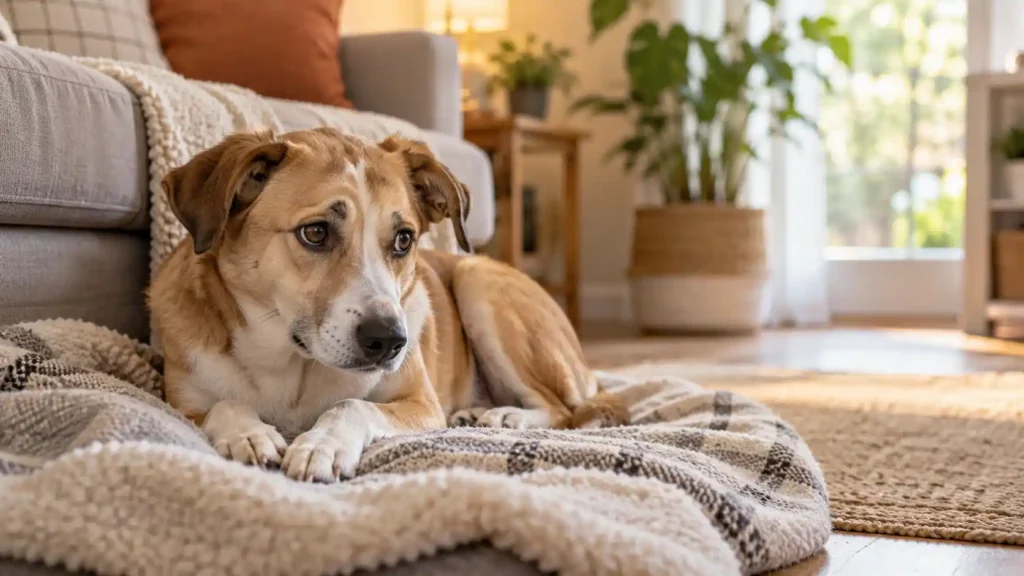
You brought your new dog home expecting a sweet first evening. Instead, your rescue dog is hiding behind the couch, trembling at every sound, or ignoring the food bowl. If that sounds familiar, you have not done anything wrong. A scared rescue dog is very common, and most of them need calm, predictable days and plenty of time far more than they need special tricks.
If you have a scared rescue dog, the first step is to create a calm, predictable environment. This guide explains why newly adopted dogs are often afraid, what to do in the first 72 hours, how to build trust step by step, and when it is time to ask a professional for help. Every dog is different, so treat the timelines below as rough guides and not as promises.
Why Is My Rescue Dog So Scared?
Your home is the most unfamiliar place your dog has ever been. New smells, new sounds, new people and a new routine all arrive at once. Even a dog that looked friendly at the shelter can shut down once the excitement of the car ride is over.
There are several common reasons a rescue dog acts fearful:
- Sudden change. Moving from a shelter or foster home to a new house is stressful for almost any dog.
- Limited socialization. Some dogs never learned that everyday things like vacuum cleaners, doorbells or strangers are safe.
- Past experiences. Some dogs have had frightening or unpredictable experiences. Others simply have an unknown history, so it is best not to assume what happened.
- Natural temperament. Some dogs are born more sensitive and need more time to feel secure.
- Health problems. Pain or illness can make a dog jumpy or withdrawn, which is why a vet check matters.
You do not need to know the full backstory to help. What helps most is making your home feel safe, quiet and predictable.
8 Signs Your Rescue Dog Is Afraid
Fear does not always look like cowering. Many scared dogs are quiet, which owners sometimes mistake for calm or good behavior. Watch for these signs and read them in context:
- Hiding under furniture, behind a couch or in a corner
- Trembling or shaking
- Freezing in place or moving very slowly
- Tail tucked and ears pinned back
- Turning the head away or avoiding eye contact
- Refusing food, water or treats
- Panting, pacing or yawning when it is not hot or tired
- Startling at everyday sounds or sudden movements
If you want a deeper look at body language, our guide to the critical signs of stress in a dog explains what each signal usually means.
How to Help a Scared Rescue Dog in the First 72 Hours
The first few days set the tone. The goal is not to bond fast. The goal is to let your dog feel safe at their own speed. The ASPCA also advises setting up a quiet, safe space where a new pet can decompress and not forcing interactions in the first days.
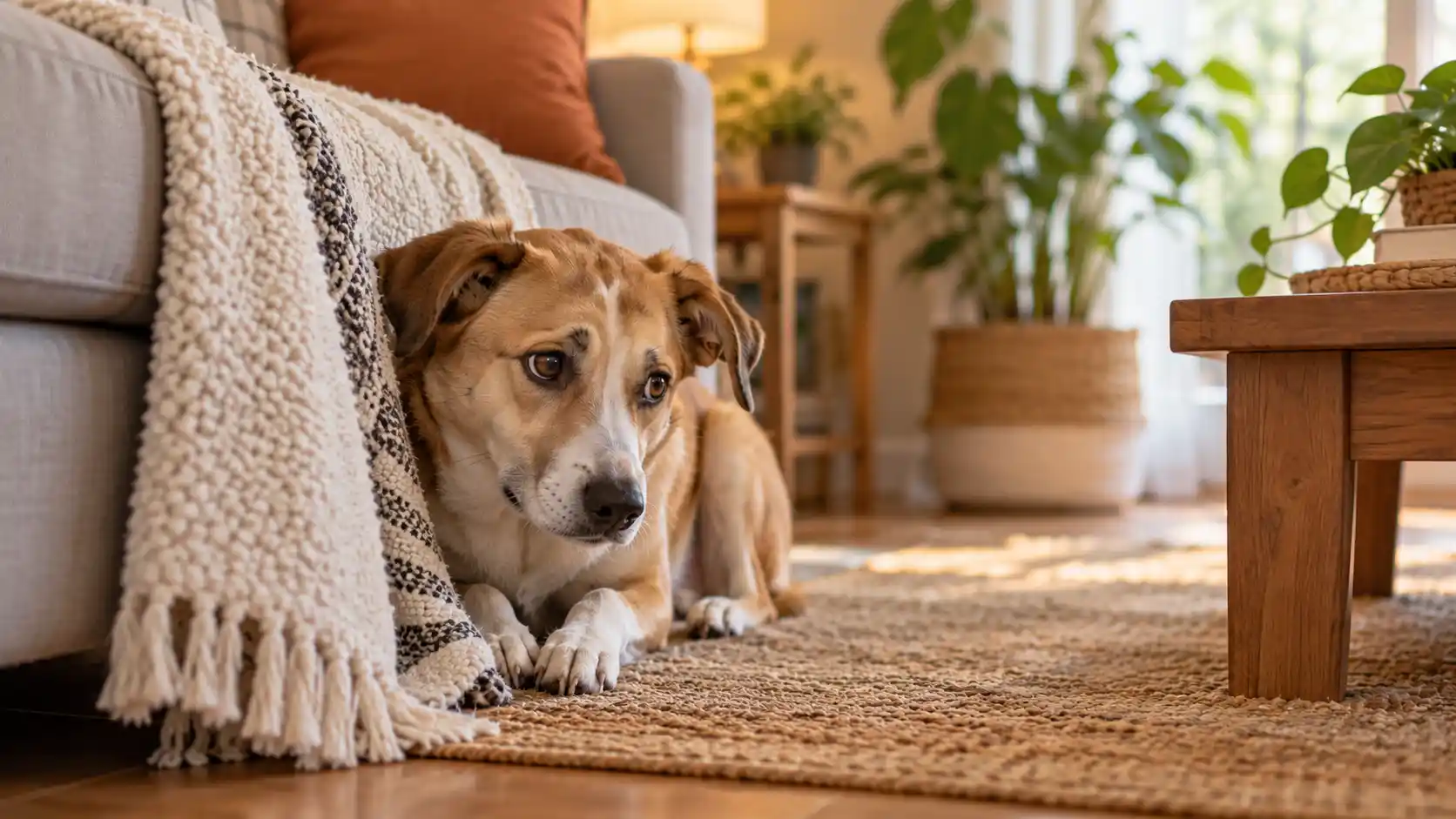
- Create a quiet base. Pick a calm room with a bed, water and a spot where your dog can retreat. A covered crate or a bed in a low-traffic corner works well if your dog likes it.
- Keep the first days boring. Skip the welcome party, the dog park and the tour of the neighborhood. Fewer visitors means less pressure.
- Stick to a simple routine. Feed, walk and rest at the same times every day. Predictability is calming for a nervous dog.
- Secure doors, gates and fences. Frightened dogs can bolt. Use a secure leash and consider a harness that cannot slip off during the first weeks.
- Let your dog come to you. Sit nearby, look away and let your dog approach when ready. Do not reach over the head or pull a dog out of a hiding spot.
- Book a vet visit. Ask your vet to check for pain or illness that could add to the fear.
It is normal for a rescue dog to eat little, sleep a lot or show very little personality at first. This is often called the decompression period.
7 Gentle Ways to Build Trust With a Scared Rescue Dog
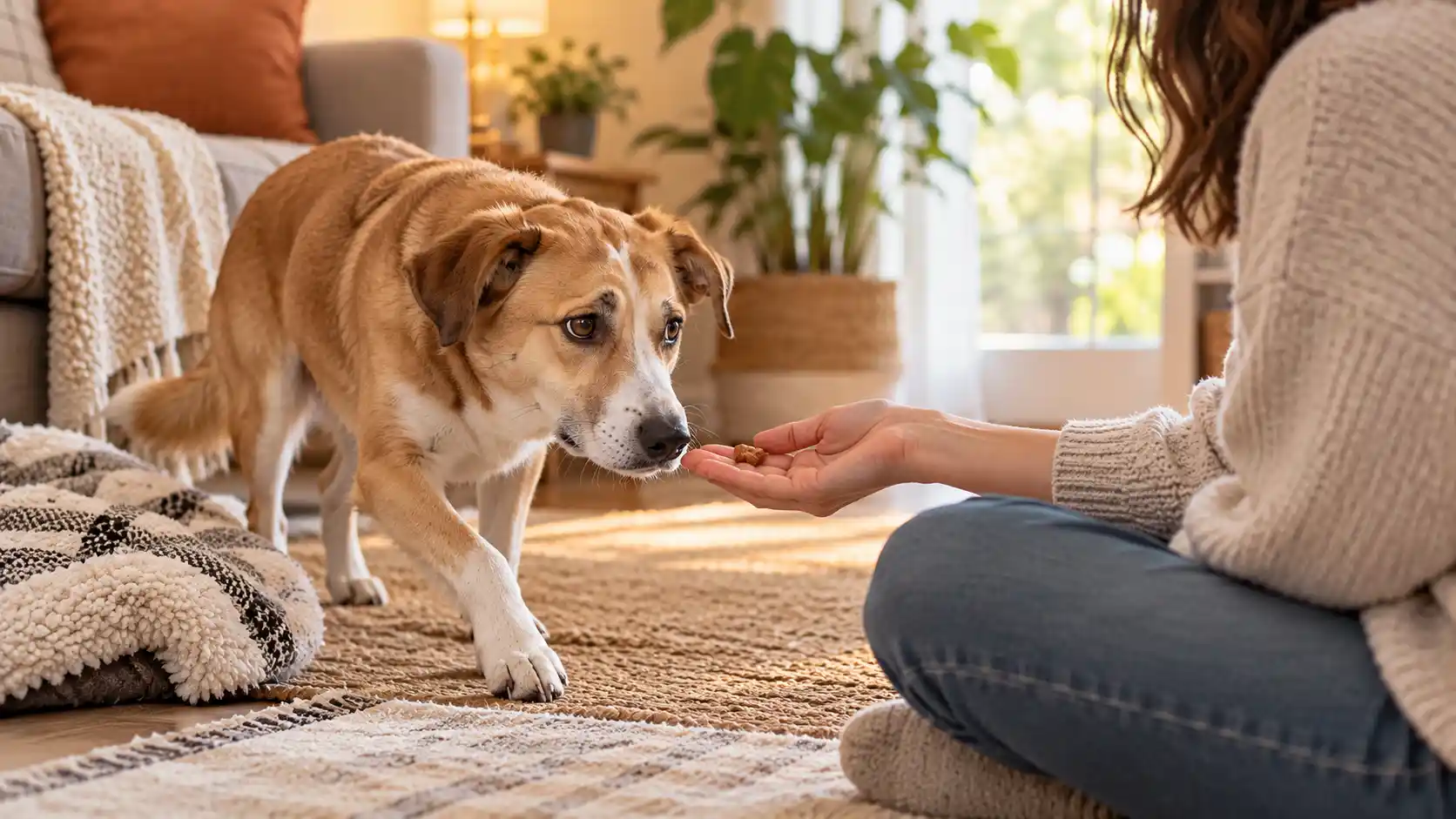
1. Let your dog choose
Choice builds confidence. Leave the crate or bedroom door open, let your dog walk away from interaction and never force a greeting. Many dogs seem to relax more easily when they feel they have some control.
2. Use rewards your dog loves
Toss soft treats near your dog without asking for anything in return. Over time your dog learns that you predict good things. The principles behind this are covered in our guide to positive reinforcement dog training. The American Veterinary Society of Animal Behavior also recommends reward-based methods for all dog training, including for fear and anxiety.
3. Keep your body language soft
Move slowly, speak in a low voice and avoid looming over your dog. Turning slightly sideways and crouching to the side feels less threatening than facing a dog head on.
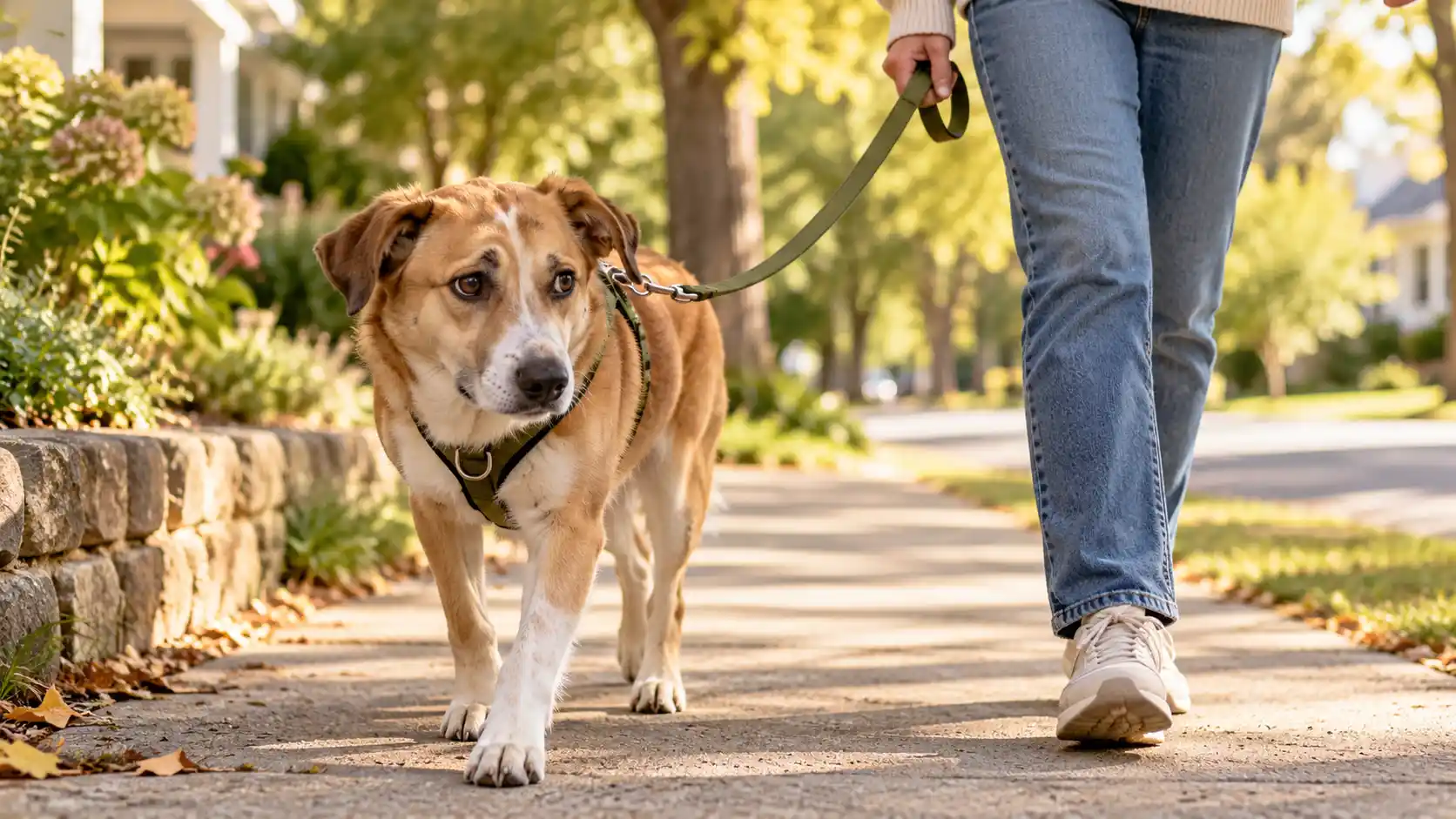
4. Take calm, short walks
Start with quiet routes and short outings. If your dog is too scared to walk, spend a few days only in the yard or on the doorstep. Distance from scary things matters more than distance covered.
5. Introduce new things slowly
Add one new person, one new sound or one new place at a time, and stop before your dog shows stress. If your dog freezes, trembles or refuses treats, you went too fast. Go back a step.
6. Offer enrichment
Sniffing, licking and chewing can help many dogs settle. Try a lick mat, a food puzzle or scattering part of a meal on the floor so your dog can search for it.
7. Protect your dog from overwhelming moments
You are your dog’s advocate. If a guest wants to pet your dog, politely say no for now. Asking the family to give a nervous dog space at first can take a lot of pressure off. For a longer plan, see our complete guide to anxiety dog training.
Common Scared Rescue Dog Behaviors and Solutions
My Rescue Dog Hides All Day
Hiding is a coping strategy, so do not remove it. Keep the hiding spot available, sit near it and drop treats close by without reaching in. Most dogs start venturing out when they notice that nothing bad happens around you.
My Rescue Dog Is Scared of Me
Ignore your dog for short periods while you do something relaxing nearby, like reading. Let your dog see that you are predictable and not demanding. Avoid direct eye contact and let your dog decide when to come closer.
My Rescue Dog Won’t Eat
Some dogs eat very little on the first day because of stress. Offer food in a quiet place, try a spoonful of plain wet food on top, and stay out of sight while your dog eats. Do not wait it out if your dog refuses water, vomits, has diarrhea, seems weak or unwell, or is not eating normally. Call your vet promptly in those cases, since stress is not always the only cause.
My Rescue Dog Is Afraid of Walks
Keep walks short and start at quiet times of day. Stay a comfortable distance from whatever triggers your dog, and head home if your dog shuts down. Some dogs do better with a few days of yard time before trying the street again.
My Rescue Dog Panics When Left Alone
Fear of being alone is common after adoption, but it can also be true separation anxiety. Practice only at a level your dog can handle. Begin with absences so short that your dog stays relaxed, and stop before any sign of distress. If your dog panics within seconds of you moving toward the door, skip the do-it-yourself exercises and ask your vet or a qualified behavior professional for a plan. If your dog drools, destroys things or howls whenever you leave, read our guide to dog separation anxiety and talk to your vet.
How Long Does It Take a Rescue Dog to Feel Safe?
There is no fixed timeline. Many shelters and trainers use the 3-3-3 guideline as a loose reference, and the ASPCA describes it too:
- 3 days: your dog may feel overwhelmed, shy or unsure how to act.
- 3 weeks: your dog starts to learn the routine and may show more personality.
- 3 months: your dog often feels more at home and trusts you more.
Some dogs relax in a week. Others need many months, especially if they were very under-socialized. Progress also rarely moves in a straight line, so a bad day after a good week is normal. Measure progress by small wins and not by the calendar.
When to Contact Your Veterinarian or a Behavior Professional
Reach out for help if you notice any of the following:
- Growling, snapping or biting, especially if it is getting worse
- Refusing water, vomiting, diarrhea, weakness, or not eating normally
- Constant panic, trembling or hiding that does not ease after several weeks
- Destructive behavior or injuries from escape attempts
- Sudden changes in behavior, which can point to pain or illness
A veterinarian can rule out medical causes and discuss options. A certified trainer or a veterinary behaviorist can build a plan for your dog. If you are looking for training support, our article on dog training for anxious dogs explains what to look for.
Simple Weekly Progress Tracker
Progress is easy to miss when you see your dog every day. Once a week, mark how your dog reacts in each situation below: comfortable, hesitant, very stressed, or not observed. There is no schedule to meet. If most rows stay in the very stressed column for several weeks, talk to your vet or a behavior professional.
| Situation | Comfortable | Hesitant | Very stressed | Not observed |
|---|---|---|---|---|
| Eating meals | ||||
| Coming out of hiding on their own | ||||
| Taking treats from your hand | ||||
| Resting in the open | ||||
| Walking outside | ||||
| Meeting a new person | ||||
| Being alone for a short time |
Frequently Asked Questions
Is it normal for a rescue dog to be scared at first?
Yes. Moving to a new home is stressful, and many rescue dogs start out nervous, shy or shut down. Most improve with patience, routine and gentle handling.
Should I comfort my scared rescue dog?
Calm company is fine and often helpful. You do not need to avoid your dog, but let your dog set the pace and avoid forcing cuddles. Being nearby, speaking softly and staying predictable is usually enough.
Can a scared rescue dog become confident?
Many do. Confidence tends to grow when a dog repeatedly experiences safe, predictable days and gentle exposure to new things. Some dogs stay a bit sensitive for life, and that is okay with the right support.
Should I let my rescue dog sleep in my bed?
It depends on your dog and your preference. Some scared dogs feel safer nearby, while others prefer their own space. Offer a comfortable bed in your bedroom or close to it, and let your dog choose where to settle.
When should I worry about my rescue dog’s fear?
Be concerned if your dog is not eating, shows aggression, injures themselves, or does not improve over several weeks. In those cases, call your vet or a qualified behavior professional.
Bringing home a scared rescue dog takes patience, but small, steady steps add up. Keep things calm, protect your dog from too much too soon, and celebrate every little win. If you keep it simple and predictable, your dog will usually start to show you who they really are. Helping a scared rescue dog feel safe takes patience, consistency, and gentle encouragement.
This article is for general information and does not replace advice from your veterinarian or a qualified behavior professional.