🐾 Does your dog panic when you leave? → Get the Free 7-Day Starter Plan

How to Build Confidence in a Dog: 10 Gentle Exercises
Help your hesitant dog practice small, comfortable wins with scent games, simple skills, and activities that leave room to choose and walk away.

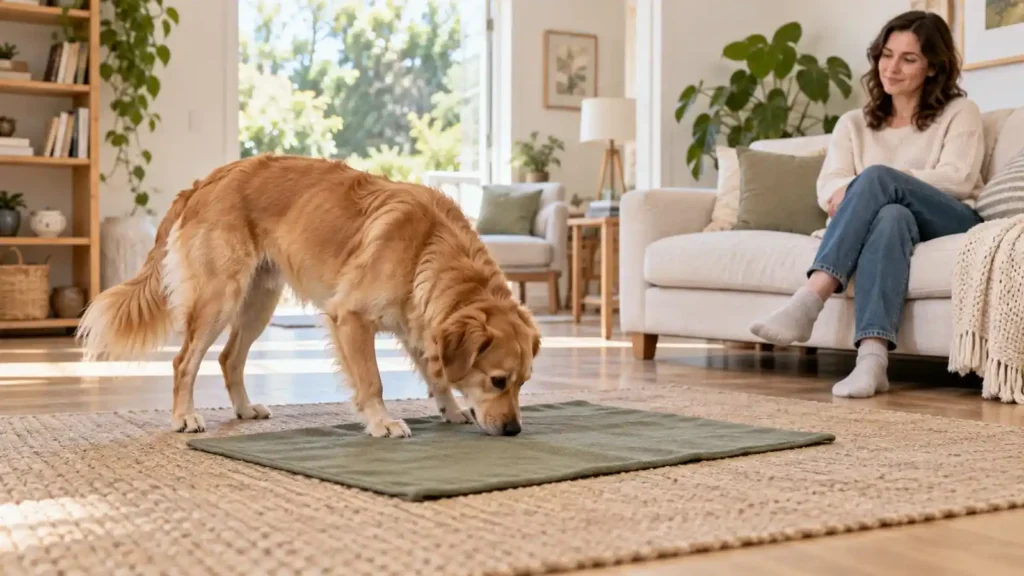
How to build confidence in a dog starts with noticing the small moments. Your dog pauses at a doorway, watches a new toy from across the room, or hangs back when an activity changes. It can be tempting to coax them forward. A more useful starting point is to make the next step small enough that they can choose it comfortably.
To build confidence in a dog, start in a familiar setting, reward easy voluntary actions, and let your dog take breaks or move away. Short scent games, simple skills, and manageable choices offer opportunities to explore without pressure.
This guide is for hesitant dogs of different ages, including dogs who have lived with the same family for years. The exercises are practical enrichment and training ideas, not a treatment plan for a phobia. You do not need to complete all ten: begin with one your dog already finds inviting.
Why Do Some Dogs Lack Confidence?
Dogs vary in how readily they approach unfamiliar experiences. Temperament, early experiences, learning history, and their current environment can all contribute. Hesitation alone does not prove that a dog was mistreated.
Confidence also depends on context. A dog who loves searching the yard may dislike unfamiliar indoor flooring. Look for the specific situation your dog finds difficult instead of labeling them as generally “insecure.”
Physical comfort matters, too. New reluctance to move, play, or interact deserves a veterinary check, especially when it appears suddenly or comes with other changes.
For dogs whose fear affects everyday life, our anxiety dog training guide explains the broader approach to supporting an anxious dog.
Signs Your Dog Needs More Confidence
Possible signs of discomfort include hanging back, lowering the body, tucking the tail, trembling, avoiding contact, or trying to leave. Watch the whole dog and the situation: one yawn or lip lick does not establish that your dog is afraid.
A quiet dog is not automatically a relaxed dog. Freezing and becoming unusually still can also signal discomfort. Dogs Trust describes how recognizing fear and stress signals helps owners respond earlier.
Before starting, use this simple decision guide:
| What you observe | What to do |
|---|---|
| Loose posture, voluntary participation, comfortable movement | Keep the activity easy and offer a short turn. |
| Repeated hesitation, turning away, tension, or stepping back | Pause and simplify the setup. Allow more space. |
| Freezing, trembling, escape attempts, growling, or escalating distress | End the activity and help your dog reach a comfortable place. |
Eating treats is only one clue. Some uncomfortable dogs still eat, and a dog who declines food may also be full or unwell. Consider the full picture.
10 Gentle Confidence-Building Exercises for Dogs
Start in a quiet, familiar space with secure footing and an open route away from the activity. Keep other pets separate around food and toys. Use small, suitable treats or part of your dog’s normal food, accounting for their dietary needs.
As a practical starting point, offer a few repetitions or about one to three minutes, then pause. This is a flexible suggestion, not a prescribed training duration. Stop sooner if your dog disengages. The examples below combine familiar enrichment activities with deliberately easy setups. They are not ten individually proven treatments for anxiety.
1. Find It on the Floor
Place a treat on a clear, nonslip floor where your dog can see it. Say “find it” once and let them collect it. Repeat nearby, without tossing food toward anything frightening.
If your dog enjoys the game, spread a few pieces slightly farther apart in the same comfortable space. Make the search easier again if they lose interest or appear frustrated.
Blue Cross includes food and toy searches in its scent-work suggestions. Here, the goal is an easy search your dog can solve independently.
2. The Open-Towel Search
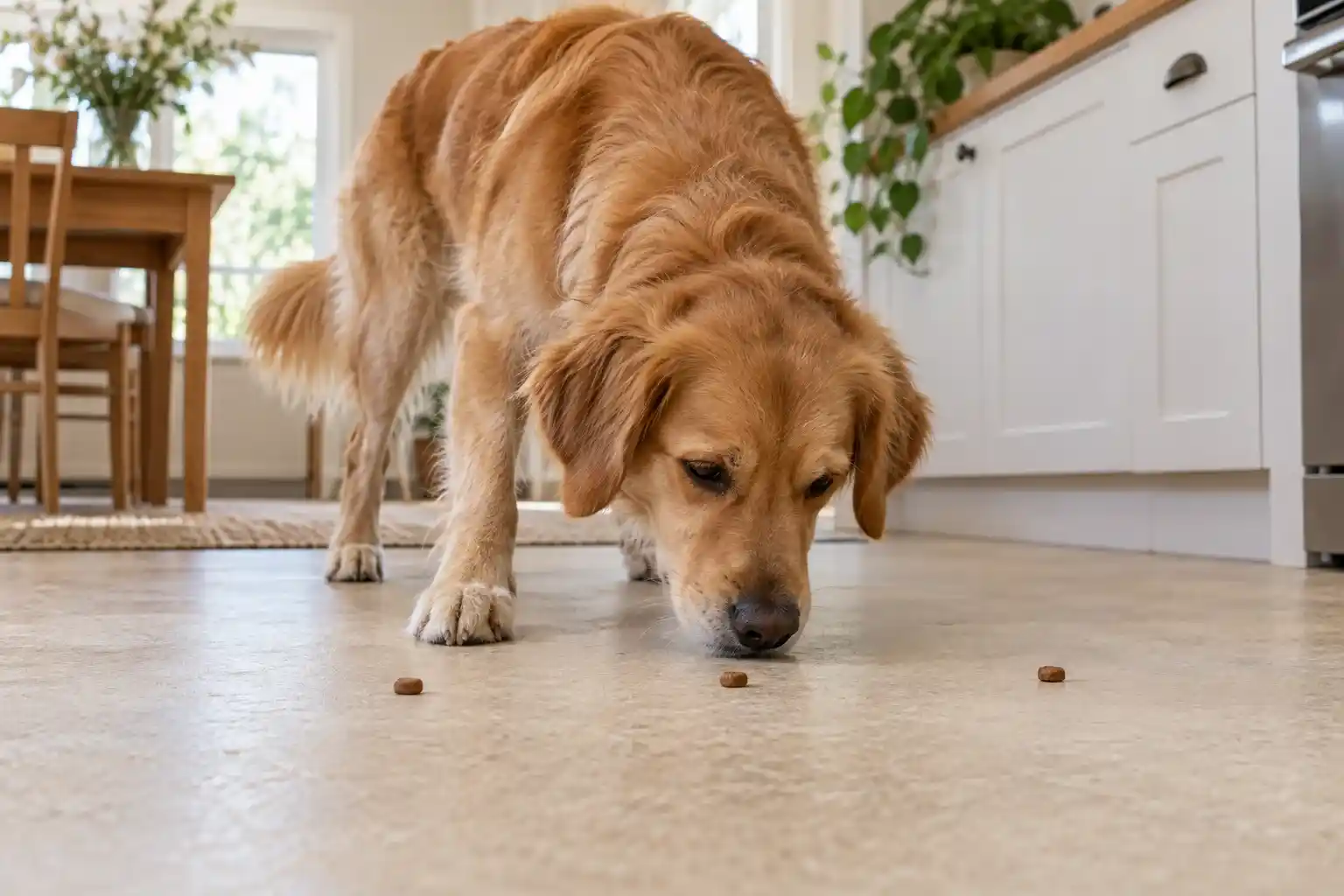
Lay a towel flat and place a few treats on top. Let your dog approach and eat them without moving the towel.
On another comfortable turn, place one treat beside a loose fold, leaving it partly visible. Avoid tightly rolling or knotting the towel. Supervise throughout and remove it if your dog starts chewing or swallowing fabric. For dogs who ingest fabric, use the plain-floor search instead.
3. A Voluntary Hand Target
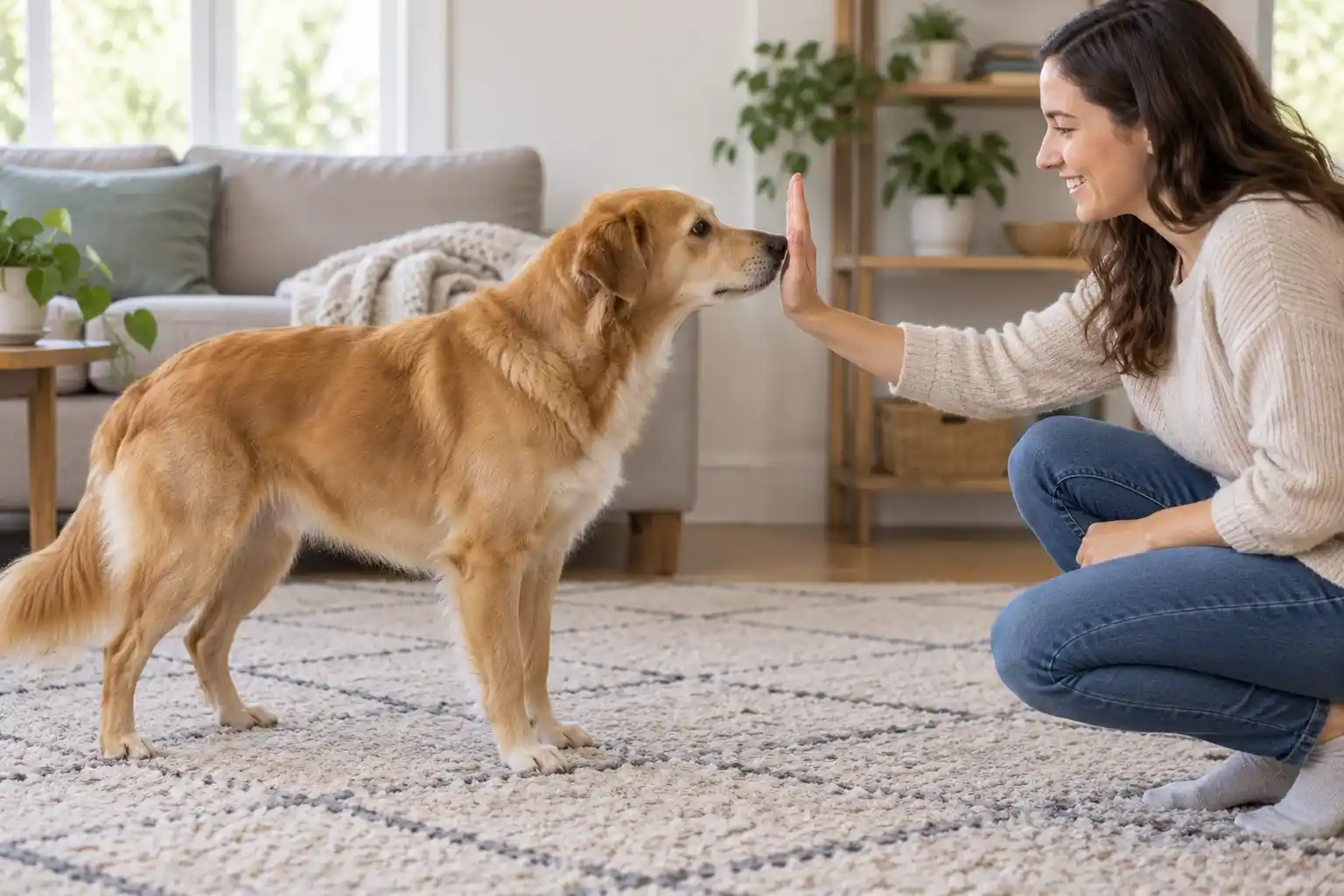
Hold an open hand still, a few inches to the side of your dog’s nose. If they voluntarily investigate or touch it, say a quiet marker such as “yes” and give a treat with your other hand.
If your dog turns away or seems concerned about hands, lower your hand and skip this exercise. Do not move it into their face or use the target to draw them toward a feared object. The first success can be as small as a comfortable glance toward your hand.
4. Reward a Tiny New Idea
Sit quietly with a familiar toy resting on the floor. Reward one easy voluntary action, such as looking at the toy or stepping toward it. Then pause.
Repeat at that same easy level before expecting anything more. You do not need a finished trick. If your dog waits uncertainly, simplify rather than withholding rewards until they become frustrated.
This is a useful introduction to positive reinforcement dog training: notice an action you want to encourage and follow it with something your dog values.
5. Choose Between Two Familiar Toys
Place two familiar toys apart on the floor. Let your dog investigate either one, or neither. Follow their preference with a brief game they already enjoy.
Keep the toys still if movement startles your dog. A glance, sniff, or short interaction can be enough for the first turn. Choosing to leave ends the invitation. It does not mean your dog failed.
6. Walk onto a Familiar Mat
Put a familiar mat on a nonslip surface. Reward a voluntary look or step toward it. If your dog chooses to step on, place the reward where they are comfortable receiving it, then allow them to leave.
Do not ask for a long stay or use the mat to hold your dog near a trigger. Start with the mat flat and fully visible. If the material moves or worries your dog, choose a more stable surface or return to another game.
7. Solve an Uncovered Food Puzzle
Place a few treats in a sturdy, shallow food-safe tray with no moving parts. Let your dog collect them freely. For an interested dog, spread them among a few shallow compartments while keeping every piece easy to reach.
Avoid lids, rattling parts, and complicated mechanisms at the beginning. Stop if your dog bites at the tray, becomes frustrated, or tries to swallow it. A more expensive puzzle is not necessary. Difficulty should match the individual dog.
8. Take a Dog-Led Sniff Break
Choose a quiet, familiar outdoor area. With secure, well-fitted walking equipment, give your dog time to sniff and choose between safe directions while you supervise.
Keep away from traffic, unknown dogs, and other situations your dog finds difficult. If the location is overwhelming, return to a quieter space. This is an exploration break, not an attempt to make your dog stay near something frightening.
9. Practice an Easy Turn-Away Cue
In a calm room, say a cue such as “this way,” turn gently, and take a step. Reward your dog if they comfortably follow. Practice without leash pressure or a distracting trigger.
Over time, this familiar movement may help you guide your dog away from a situation that is becoming uncomfortable. Do not wait for a frightening encounter to teach it, and do not rely on a cue to manage a dangerous situation.
10. Explore One Harmless Object by Choice
Set a stable, quiet object, such as an empty shallow tray, well away from your dog’s resting place. Leave plenty of room to pass it. A relaxed glance from a distance can be the entire exercise.
Reward comfortable interest without using food to lure your dog closer. Never move the object toward them, block their retreat, or insist on contact. Skip this activity if unfamiliar objects already trigger significant fear. Begin a tailored plan with professional guidance instead.
Dogs Trust discusses enrichment as an opportunity for searching, problem-solving, and learning. Match the activity to what your dog willingly enjoys today.
How to Build Confidence in a Dog Through Play
Play offers another way to share comfortable experiences. Start with an activity your dog already chooses, such as carrying a soft toy, searching for it in plain sight, or retrieving it over a short distance on secure footing.
Offer a brief turn, pause, and see whether your dog asks for more. Bringing the toy back or approaching with loose movement may invite another turn. Turning away or leaving means it is time to stop.
Keep movement gentle for hesitant dogs. Avoid looming over them, grabbing at their face, or chasing a dog who is trying to get away. If your dog guards toys or food, get individual guidance before playing exchange games.
Common Mistakes That Can Make Fear Worse
Making the challenge too big. A crowded dog park or busy store is a large leap from a quiet home game. Change one feature at a time, such as location or distraction level, and return to an easier version when needed.
Using food to override hesitation. A treat should not draw your dog into a situation they would otherwise avoid. Put distance and comfort ahead of completing the exercise.
Punishing warning signals. Growling and retreating give you information. Stop, create space, and seek help when necessary. AVSAB recommends reward-based training methods and advises against aversive methods.
Confusing exhaustion with progress. A dog who stops responding after an overwhelming outing may still be distressed. Look for voluntary engagement and comfortable recovery instead.
Turning every day into a test. Rest and predictable routines matter. Repeating a familiar easy activity is a valid choice.
For a specific fear, VCA explains that desensitization and counterconditioning involve carefully controlled exposure at an intensity that does not provoke fear, paired with something enjoyable. That work is different from simply keeping a dog near a trigger until they stop reacting.
How to Track Your Dog’s Progress
When you build confidence in a dog, record what your dog actually did rather than giving them a general confidence score. Useful observations include approaching voluntarily, exploring with a loose body, choosing to return after a pause, or settling comfortably afterward.
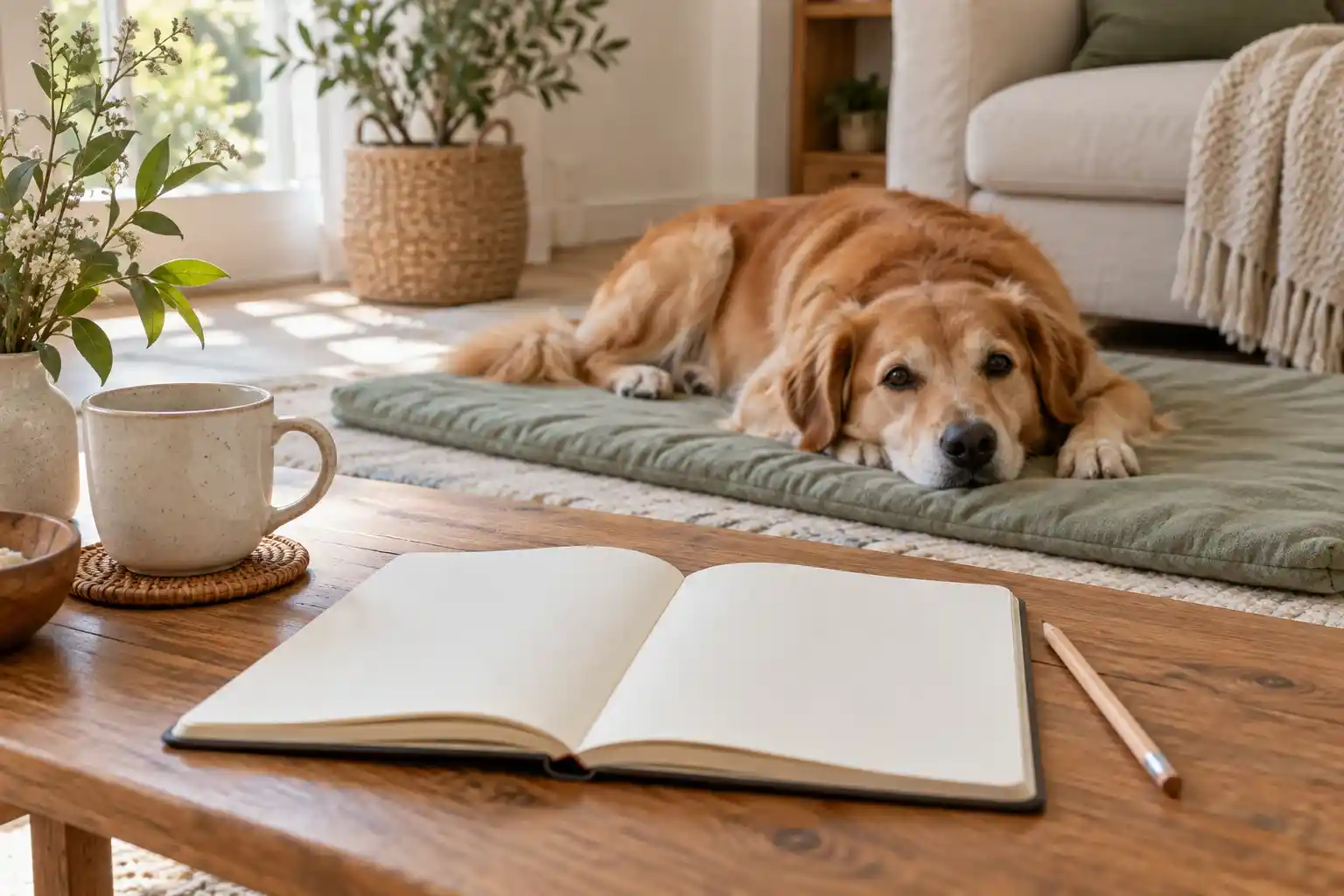
Use this tracker for one short activity at a time:
| Date | Activity and setting | What my dog chose | Body language | Next adjustment |
|---|---|---|---|---|
| Example only | Find it, quiet kitchen | Collected three visible treats | Loose movement, sniffed afterward | Repeat the same setup |
| Example only | Hand target, living room | Turned away from hand | Head turned, stepped back | Skip target, offer floor search |
Compare similar situations. Success at home does not automatically transfer to a busy street. A difficult day is a reason to adjust the environment or activity, not to increase pressure.
When to Seek Professional Help
Arrange a veterinary assessment for sudden or worsening fear, suspected pain, or changes in movement, appetite, sleep, or daily functioning. Seek help promptly if your dog panics, tries to escape, snaps, bites, or struggles to recover after ordinary events.
A veterinarian can assess possible medical contributors and discuss referral to a veterinary behaviorist or an appropriately qualified professional using reward-based methods. VCA advises professional guidance for fear modification plans, because progressing too quickly can worsen fear.
While waiting, reduce avoidable triggers and choose comfortable routines. Do not use these exercises to test bite risk or to bring a fearful dog closer to children, unfamiliar people, or other animals.
Frequently Asked Questions
What is the easiest confidence-building exercise for a dog?
A visible treat search on a familiar, nonslip floor is a simple starting option for a dog who enjoys food. Place the reward nearby and allow your dog to choose whether to collect it. If they seem uncomfortable, stop and reassess the setting.
Can an older dog become more confident?
Older dogs can learn new skills. Adapt activities to their mobility, senses, and comfort, and ask your veterinarian about new hesitation. Favor stable surfaces and gentle searches over jumping or balance challenges.
How long does it take to build a dog’s confidence?
There is no fixed deadline. Comfortable participation in one game is a small observation, not proof that a wider fear has resolved. Track changes in comparable situations and seek help when fear persists or limits daily life.
Should I make my dog face what scares them?
Do not force contact, block escape, or remain close to a trigger while your dog is distressed. A gradual behavior plan should begin at an intensity your dog can handle comfortably, with professional guidance when needed.
What if my dog will not play or take treats?
Pause instead of insisting. Consider whether the setting is too difficult, the reward is unsuitable, or your dog needs rest. Persistent or sudden loss of appetite or interest warrants veterinary advice.
Are these exercises suitable for a newly adopted dog?
Only offer activities the dog appears comfortable choosing. A newly adopted dog may first need quiet, rest, and a predictable routine. See our scared rescue dog guide for that settling-in stage.
To build confidence in a dog, start by making everyday experiences manageable. Choose one easy activity, watch your dog’s response, and let their comfort determine the next step.
Sources
- Dogs Trust: Helping Dogs Cope with Fear and Big Emotions
- Dogs Trust: Enrichment Activities for Dogs
- Blue Cross: Scent Work for Dogs
- AVSAB: Position Statements and Humane Dog Training Guidance
- VCA: Overcoming Fears with Desensitization and Counterconditioning
- VCA: Fears, Phobias, and Anxiety in Cats and Dogs
This article provides general education and does not replace individualized veterinary or behavioral advice.