🐾 Does your dog panic when you leave? → Get the Free 7-Day Starter Plan

How to Stop a Dog From Biting: 7 Proven Tips That Work
How to stop a dog from biting? Discover 7 proven training tips to stop puppy nipping, fear biting, and adult dog aggression safely and effectively.

Affiliate disclosure: This article and its sidebar contain affiliate links. If you buy through these links, PetCalmZone may earn a commission at no extra cost to you.
Learning how to stop a dog from biting starts with understanding why the behavior happens in the first place. A puppy nip that draws blood. An adult dog that snaps at guests. A fear bite you never saw coming. Dog biting is one of the most stressful issues owners face and one of the most misunderstood. Puppy mouthing and adult dog biting are very different problems with different causes and solutions. In this guide, you’ll find practical training tips and the right products to help stop biting at every stage of your dog’s life, so you and your family can feel safe again.
Table of Contents
Puppy Biting vs. Adult Dog Biting
Puppy nipping is a normal part of development. Puppies explore the world with their mouths and learn bite inhibition through play with littermates. It’s annoying, sometimes painful, but rarely dangerous. Adult dog biting is a different story: it typically stems from fear, resource guarding, pain, or chronic overstimulation. The training approach you need depends entirely on which problem you’re dealing with. Knowing how to stop a dog from biting starts with identifying whether you are dealing with normal puppy mouthing or a more serious behavior problem. Biting in adult dogs often shares roots with jumping and other over-excitement behaviors, all signs of poor impulse control that respond well to consistent, structured training.
How to Stop a Dog From Biting: Puppy Training
The goal with puppies isn’t to eliminate mouthing entirely. It’s to teach bite inhibition and redirect the behavior to appropriate outlets. When learning how to stop a dog from biting, focus on teaching your puppy what to do instead of simply correcting unwanted behavior. Here’s what works:
- Bite inhibition training: When your puppy bites too hard, let out a sharp yelp and immediately stop play for 30–60 seconds. This mimics how littermates communicate pain and teaches your puppy that hard biting ends the fun.
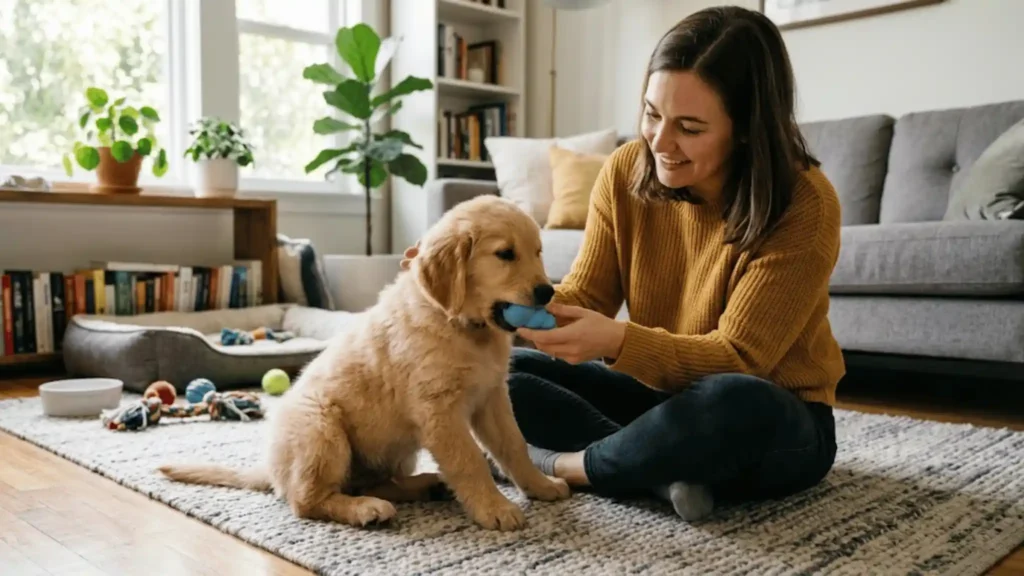
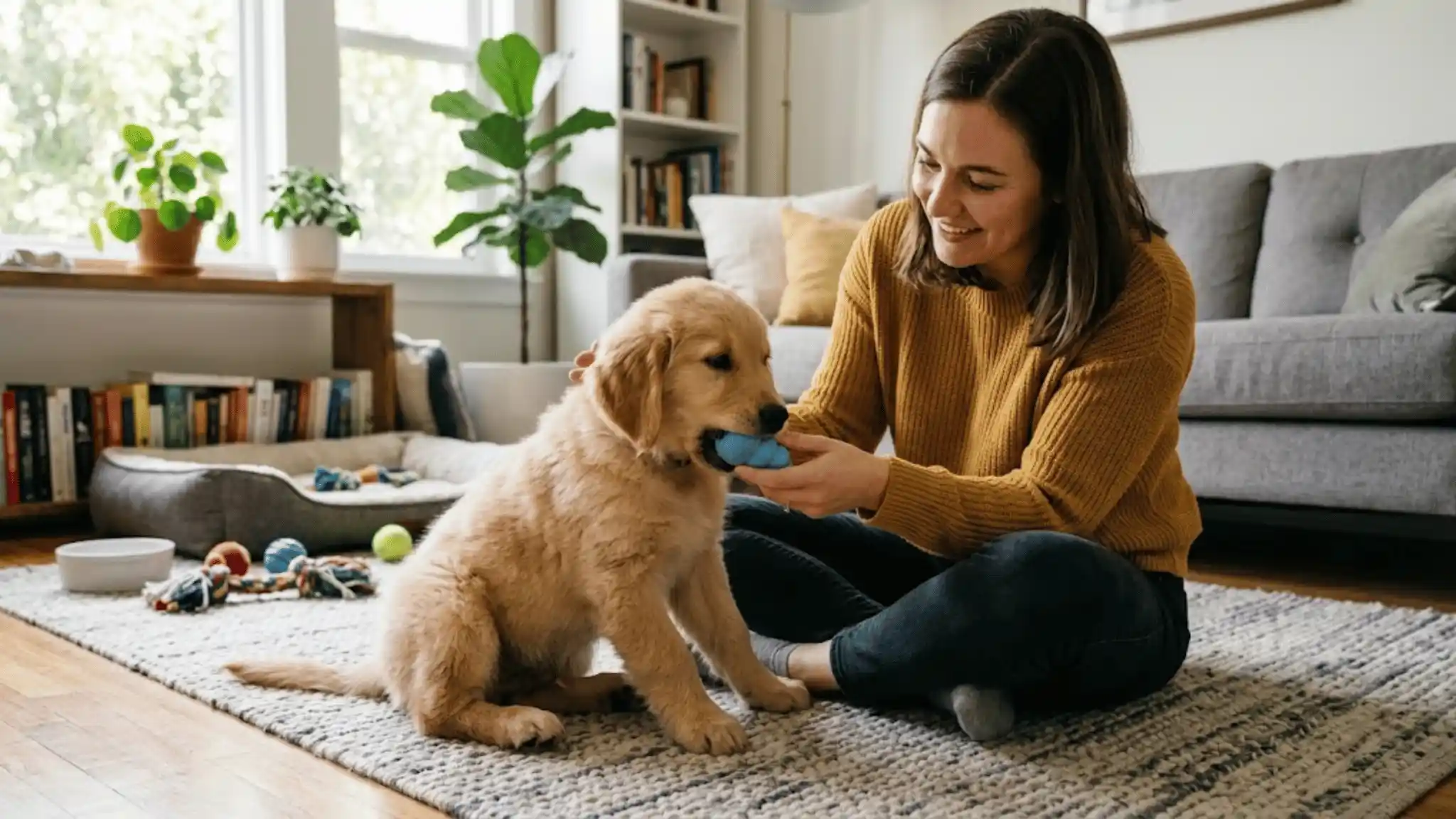
- Redirect to chew toys: Always have an appropriate chew toy within reach. The moment your puppy goes for your hand, swap in a toy. The KONG Puppy Toy is a top pick: its soft rubber is perfect for teething gums, and you can stuff it with treats to make it irresistible.
- Use time-outs for persistence: If the yelp-and-pause method isn’t working, calmly place your puppy in a gated area or crate for a short break. Keep it brief (1 to 2 minutes) and emotionally neutral. This isn’t punishment. It’s a reset.
- Reward calm behavior: Positive reinforcement is your most powerful tool. Use Puppy Training Treats (Zuke’s Mini Naturals) to reward your puppy whenever they take treats gently or choose their toy over your hand. Small, soft, and low-calorie, these treats are ideal for high-repetition training sessions.
- Prioritize socialization: Well-socialized puppies learn to read social cues and modulate their behavior. Puppy classes, controlled playdates, and exposure to new people and environments all reduce biting driven by excitement and uncertainty.
- Never use physical punishment: Tapping, scruff-shaking, or alpha rolling a puppy doesn’t teach bite inhibition. It teaches fear, which can make biting worse over time.
How to Stop Adult Dog Biting
Adult dog biting requires a more careful, methodical approach. If you are trying to learn how to stop a dog from biting, understanding the reason behind the behavior is essential before choosing a training method. Before you can fix the behavior, you need to understand what’s driving it.
- Identify triggers: Does your dog bite when approached while eating? When strangers reach for them? When they’re touched in a certain spot? Pinpointing triggers is the essential first step. Common causes include fear, resource guarding, pain (always rule out a vet visit), and overstimulation.
- Desensitization and counter-conditioning: Gradually and systematically expose your dog to their trigger at a low intensity while pairing it with something they love. This changes the emotional response over time, but it requires patience and consistency.
- Management first: While you’re working on training, prevent biting situations with management tools: a leash indoors, baby gates to control access, and clear warning systems like a yellow bandana for reactive dogs. Management isn’t a cure, but it keeps everyone safe while you train.
- Muzzle training for safety: A properly introduced muzzle is a humane, responsible management tool for dogs with a bite history. The Baskerville Ultra Muzzle is the gold standard. It allows panting, drinking, and treat taking, so your dog can still participate in training while wearing it. A muzzle can also be useful while you work on how to stop a dog from biting under professional guidance. Introduce it slowly with positive reinforcement before using it in real situations.
- Build a solid training foundation: Review positive reinforcement training techniques to ensure you’re communicating clearly with your dog. Dogs that understand what you want from them are less likely to resort to biting out of confusion or frustration.
- Understand the bigger picture: Biting is often one symptom of a broader behavioral issue. Our guide to common dog behavior problems can help you identify whether fear, anxiety, or poor socialization may be at the root.
Our Top Tool for Biting Prevention
For both puppies and adult dogs, reward-based redirection is the cornerstone of any effective biting prevention plan, and the treat you use matters. Zuke’s Mini Naturals are our top pick for training: pea-sized, soft, and low-calorie enough that you can use dozens in a single session without worrying about overfeeding. Dogs go wild for them, which means you can reliably redirect attention away from biting and toward better behaviors. Keep a bag in every room during the training phase. When learning how to stop a dog from biting, having the right reward ready can make redirection much easier.
When Biting Is Serious
Some biting situations go beyond what most owners can handle alone. If your dog has broken skin more than once, has shown aggression toward children, or bites around food or toys with no warning, it’s time to call a certified professional behaviorist ,not just a trainer. These situations carry real safety risks. A certified applied animal behaviorist (CAAB) or veterinary behaviorist can design a behavior modification plan that keeps everyone safe. Don’t wait. If you are unsure how to stop a dog from biting safely, do not try to handle serious aggression on your own.
Ready to Stop Your Dog From Biting? Take the First Step
The right approach can help you learn how to stop a dog from biting and help your dog develop safer, calmer behaviors. Start with the training techniques in this guide, choose the tools that fit your dog’s needs, and take one consistent step at a time.