🐾 Does your dog panic when you leave? → Get the Free 7-Day Starter Plan

Positive Reinforcement Dog Training: The Complete Guide
Positive reinforcement dog training helps solve common behavior problems without punishment. Learn proven techniques, rewards, and steps to train your dog with confidence.

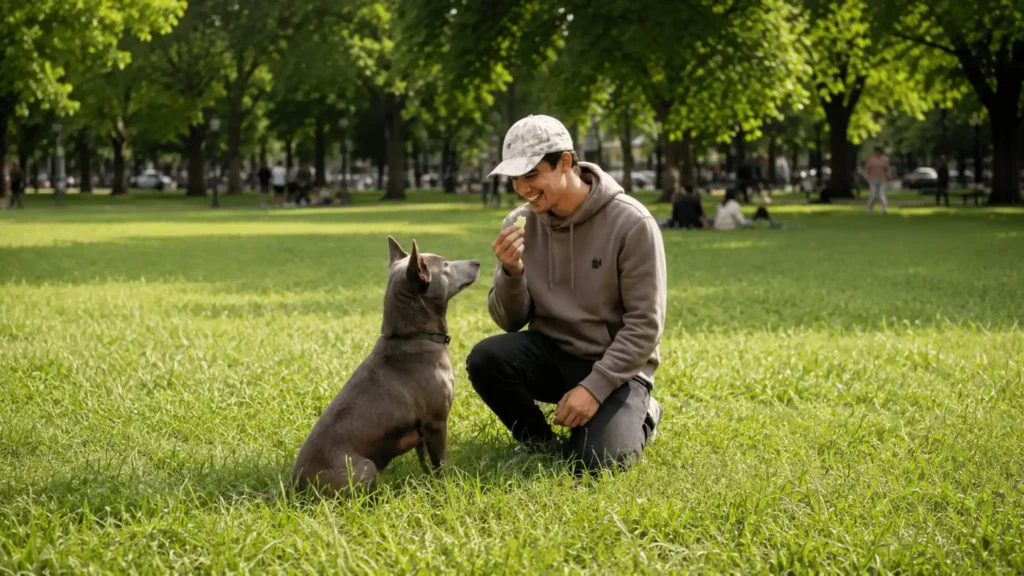
If you’ve heard the term “positive reinforcement dog training” and wondered what it actually means in practice, or whether it really works for dogs with real behavior challenges, you’re in the right place. Positive reinforcement dog training is the most researched, most effective approach to teaching dogs new behaviors and solving existing problems. And the best part? It strengthens your bond with your dog instead of damaging it.
This guide will walk you through exactly what positive reinforcement is, why it works from a science perspective, how to use it for the most common training goals, and which tools will help you get the best results. Whether you’re training a brand-new puppy or working with a dog who has some ingrained bad habits, this is the approach that works.
What Is Positive Reinforcement Dog Training?
Positive reinforcement is one of four quadrants of operant conditioning, the science of how behavior is shaped by consequences. In the positive reinforcement quadrant, something desirable is added after a behavior, which increases the likelihood of that behavior happening again.
In plain English: your dog does something good, you immediately give him something he values (a treat, praise, a toy, playtime), and he’s more likely to do that thing again. That’s it. That’s the whole model.
The American Kennel Club recognizes positive reinforcement as a cornerstone of effective, humane dog training. Decades of behavioral science backs up what force-free trainers have known for years: punishment-based methods have more side effects, more failures, and more risks than reward-based training.
Why Positive Reinforcement Dog Training Works
Some people worry that positive reinforcement is “permissive” or that it creates dogs who only obey when there’s a treat visible. Neither of those things is true when positive reinforcement is applied correctly. Here’s why it works so well:
It Works With Your Dog’s Brain, Not Against It
Dogs learn through association and consequence. When a behavior produces something good, the brain releases dopamine and encodes that behavior as “worth repeating.” This is the same learning mechanism that helps humans learn skills: we repeat things that feel rewarding and avoid things that produce pain or stress.
Punishment-based training can suppress behavior, but it doesn’t teach the dog what to do instead. It also triggers the stress response, which impairs learning. A stressed dog learns worse than a relaxed, engaged dog, which is why force-free training produces faster and more durable results.
It Builds a Positive Training Relationship
When training involves punishment, avoidance, or intimidation, your dog begins to associate you with negative experiences. He may still obey to avoid punishment, but the relationship is based on fear, not trust. That matters: a dog who trusts you is more likely to look to you for guidance in new situations, less likely to panic under stress, and more resilient overall.
With positive reinforcement, training sessions become something your dog looks forward to. Most dogs trained this way show excitement when they see the treat pouch come out: they’re eager to engage because training has always meant fun and good things.
It’s Safer
Using punishment on a fearful or anxious dog is genuinely dangerous. A dog who is already scared and then punished may redirect his fear into aggression. This is one of the most common ways dog bites happen: the owner punishes a dog who was showing warning signs (growling, stiffening), and the dog escalates to biting because the warning was punished away. Positive reinforcement training eliminates this risk entirely.
The Core Tools of Positive Reinforcement Dog Training
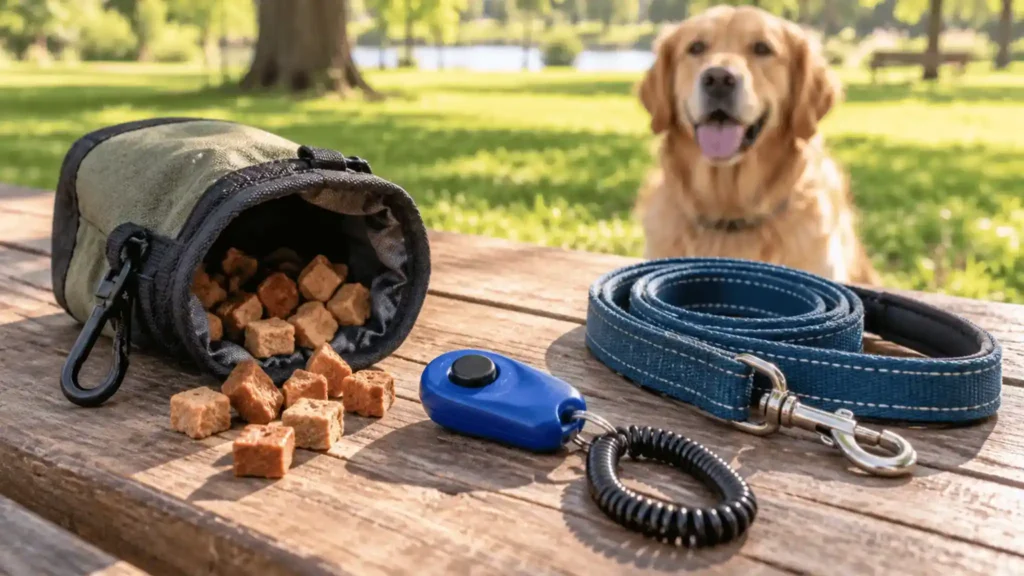
High-Value Treats
Treats are the most common reinforcer in positive reinforcement dog training. The key is using treats that your dog actually finds motivating, not just his regular kibble, which he can get for free all day. High-value treats are small, soft (so your dog can eat them quickly and get back to training), and smelly enough to hold his attention even in distracting environments.
Keep total training treats under 10% of your dog’s daily calorie intake to avoid weight gain. Many trainers use a portion of the dog’s regular meal as training treats, especially if the dog is highly food motivated.
A Training Clicker
A clicker is a small device that makes a distinct clicking sound. In positive reinforcement training, the click is used as a “marker”: it tells your dog the exact moment he did the right thing. This precision makes training dramatically faster because your dog can clearly identify which behavior earned the reward.
Before using a clicker for training, you need to “charge” it: pair the click with a treat about 10-20 times so your dog learns that click = treat coming. After that, every time you click, treat. Never click without treating. That would erode the value of the marker.
A Treat Pouch
Speed matters in positive reinforcement training. The faster you can deliver the treat after the click or verbal marker, the clearer the connection is in your dog’s brain. Fumbling around in your pocket defeats the purpose. A training treat pouch clips to your waistband or belt and lets you deliver a treat within one second of the marker.
How to Use Positive Reinforcement Dog Training: Step by Step
Step 1: Set Your Dog Up to Succeed
Training works best when your dog can actually do what you’re asking. That means starting in a low-distraction environment (your living room, not the dog park), keeping sessions short (5-10 minutes for most dogs, even shorter for puppies), and training when your dog is alert but not over-aroused.
Step 2: Mark and Reward with Precision
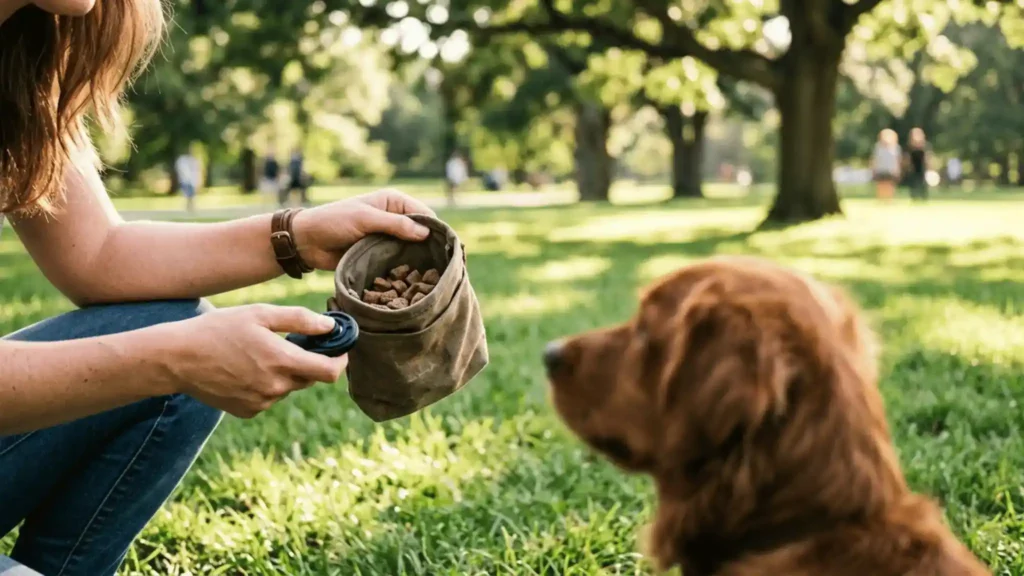
The timing of your mark (click or “yes!”) is everything. You want to mark the exact behavior you want, not a second before, not a second after. If you’re teaching “sit” and you mark when your dog is halfway lowering his rear, you’re marking the crouch, not the sit. Mark the moment his bottom fully touches the ground.
Step 3: Add a Cue
A common beginner mistake is saying the cue word before the dog understands the behavior. Wait until your dog is offering the behavior reliably (at least 8 out of 10 repetitions) before adding the verbal cue.
Step 4: Increase the Three D’s (Duration, Distance, and Distraction)
- Duration: Can your dog hold a sit for 5 seconds? 15 seconds? A minute?
- Distance: Can he sit when you’re 10 feet away? Across the room?
- Distraction: Can he sit when there are other dogs nearby? When kids are playing?
Step 5: Fade the Treats (But Never Eliminate Rewards Entirely)
Treats should be used heavily in the learning phase, then gradually faded to a variable schedule once the behavior is solid. Variable reinforcement is actually more powerful than continuous reinforcement: it’s the same principle that makes slot machines so addictive. Your dog never knows which repetition will earn the jackpot treat, so he keeps trying.
Teaching Essential Behaviors with Positive Reinforcement
Sit
Hold a treat at your dog’s nose and slowly move it backward over his head. As his nose goes up following the treat, his rear will go down. The moment his bottom touches the ground, click and treat.
Down
Start with your dog in a sit. Hold a treat at his nose and slowly lower it straight down to the ground, then drag it slightly toward you. His elbows should follow the treat to the ground. Click and treat the moment his elbows touch.
Stay
Ask for a sit or down. Pause for one second. Click and treat without your dog moving. Repeat, gradually extending the pause before the click. Introduce a release word (“okay!” or “free!”) so your dog learns that the behavior continues until released.
Come (Recall)
Never call your dog to you for something he considers unpleasant. Make “come” the best word in his vocabulary by pairing it with jackpot treats, wild celebration, and genuine enthusiasm every single time.
Common Mistakes in Positive Reinforcement Dog Training
- Rewarding the wrong behavior: Petting your dog when he jumps up is rewarding jumping, even if you’re saying “no.”
- Sessions that are too long: More than 10-15 minutes and most dogs check out.
- Inconsistent cues: “Sit” and “sit down” are two different things to your dog.
- Moving too fast: Trying to get to advanced behaviors before you’ve mastered basics will frustrate both of you.
The Bottom Line on Positive Reinforcement Dog Training
Positive reinforcement dog training is not a trend or a soft alternative: it’s the most scientifically supported method of training dogs that exists. It works faster than punishment-based methods, produces more reliable behavior, and builds the kind of trust and relationship with your dog that makes every interaction better.
Start today. Pick one behavior. Load up your treat pouch. And enjoy the process. Your dog certainly will.