🐾 Does your dog panic when you leave? → Get the Free 7-Day

How to calm an anxious dog: 9 methods that work fast
Learn how to calm an anxious dog with 9 proven methods — from calming wraps to supplements and training techniques. Fast relief for your dog starts here.

If your dog is pacing, panting, or shaking – you need answers fast. The good news: there are proven methods to calm an anxious dog, and most of them work within minutes. Here are the 9 most effective approaches, ranked from quickest to longest-lasting.
1. Use a Calming Wrap or Anxiety Vest
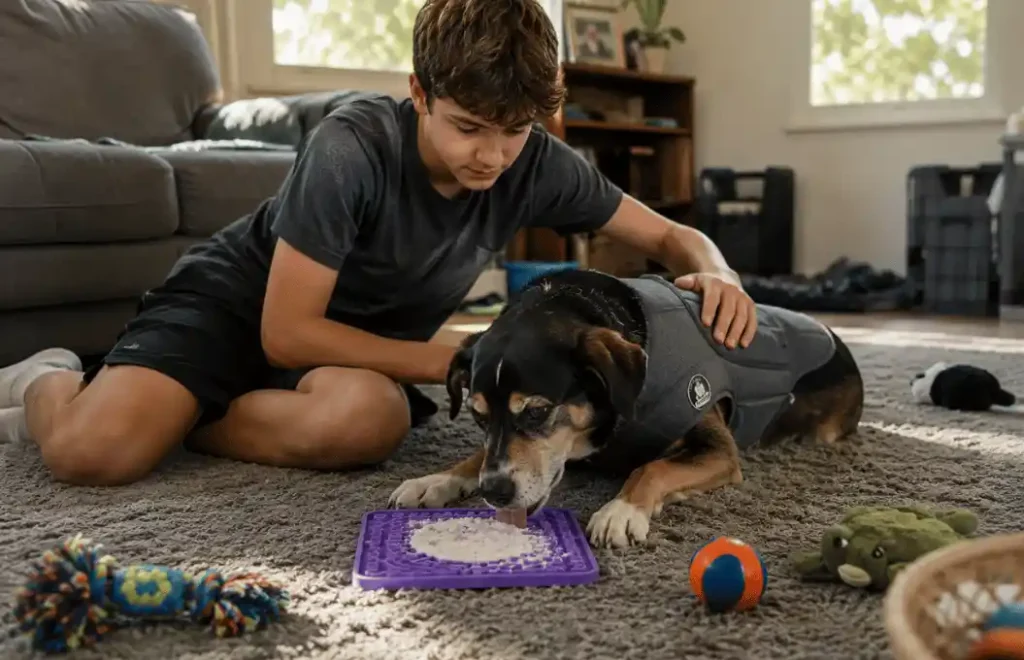
Pressure wraps like the ThunderShirt apply gentle, constant pressure to your dog’s torso – similar to swaddling a baby. Many dogs calm down within minutes of putting one on. They’re especially effective for noise phobias (thunderstorms, fireworks) and travel anxiety.
→ See our guide: Best Dog Anxiety Vests: Do They Actually Work?
2. Try Calming Supplements
Supplements with L-theanine, melatonin, or ashwagandha can take the edge off anxiety without sedating your dog. They work best for mild-to-moderate anxiety and are safe for daily use. Look for products with clinical dosing on the label, not just “proprietary blends.”
→ Compare top picks: Best Calming Supplements for Dogs
3. Give Your Dog a Long-Lasting Chew
Chewing is a natural stress-reliever for dogs. A bully stick, frozen KONG, or lick mat keeps your dog mentally engaged and triggers a calming response in the nervous system. This is a simple, zero-cost technique that works immediately.
4. Create a Safe Space
Dogs are den animals. A quiet, covered crate with a familiar blanket can feel like a sanctuary during stressful moments. Don’t force your dog in – let them enter voluntarily, and never use the crate as punishment.
→ Related: Best Anxiety Dog Crates
5. Use CBD Oil or Calming Chews
CBD interacts with your dog’s endocannabinoid system to reduce stress responses. It’s not a sedative – at proper doses, it promotes calm without drowsiness. Give it 30–45 minutes before a known stressor (car ride, vet visit, storm).
→ Our research-backed picks: Best CBD for Dog Anxiety (2026)
6. Try Desensitization and Counter-Conditioning
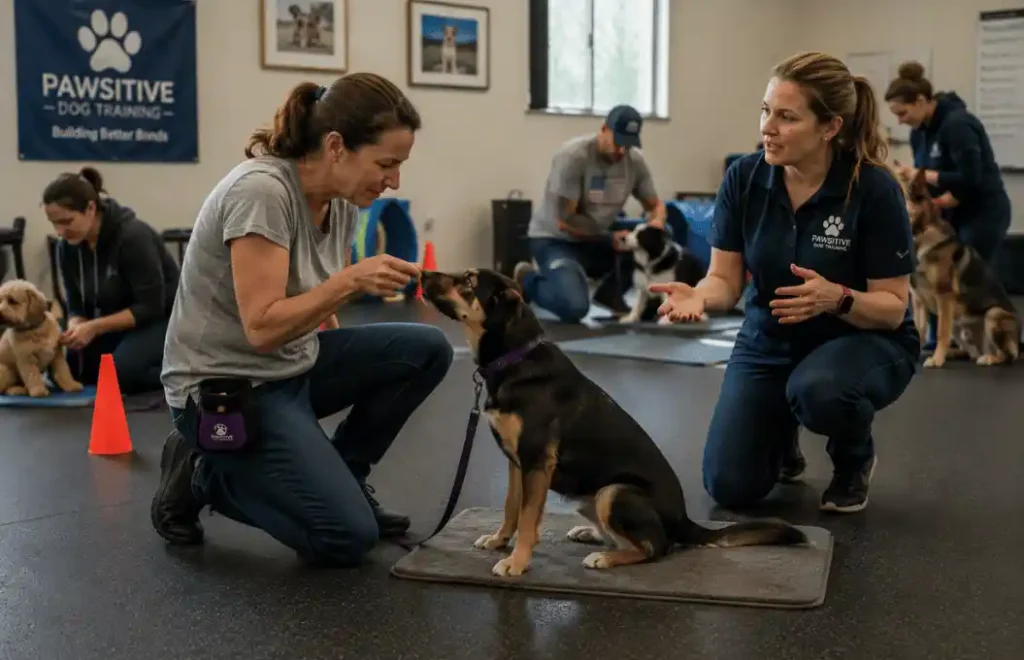
This training approach gradually exposes your dog to the trigger at a very low intensity, pairing it with something positive (treats, play). Over time, your dog’s emotional response changes – from fear to neutral or even positive. It requires consistency but delivers lasting results.
→ Step-by-step: How to Train a Dog With Separation Anxiety
7. Increase Physical Exercise
A tired dog is a calmer dog. 30–60 minutes of vigorous activity (fetch, running, swimming) reduces cortisol and increases serotonin. Make exercise a daily non-negotiable, not just a response to anxious behavior.
8. Play Calming Music or White Noise
Research shows that classical music and reggae reduce stress behaviors in shelter dogs. Spotify has dedicated “dog calming” playlists. White noise machines also help mask sudden sounds that trigger reactive dogs.
9. Talk to Your Vet About Medication
For severe anxiety, behavioral medications like fluoxetine or trazodone can make a significant difference – especially when combined with training. These aren’t sedatives; they reduce anxiety at the source so training can actually work.
→ Full guide: Best Anxiety Medication for Dogs: Vet’s Guide (2026)
Which Method Should You Start With?
| Situation | Best First Step |
|---|---|
| Immediate relief needed | Calming wrap + lick mat |
| Daily background anxiety | Calming supplements |
| Specific triggers (storms, fireworks) | CBD + safe space |
| Separation anxiety | Desensitization training + crate |
| Severe anxiety | Vet consultation + medication |
How to Combine Methods for Best Results
No single method works for every dog – but stacking complementary approaches dramatically improves outcomes. Think of it in three layers:
- Immediate layer (works in minutes): Calming wrap + frozen KONG or lick mat. Use this the moment anxiety spikes.
- Daily support layer (works over days/weeks): Calming supplements + consistent exercise. These build a lower anxiety baseline so your dog is less reactive to begin with.
- Long-term layer (works over months): Desensitization training + vet guidance if needed. This addresses the root cause rather than just managing symptoms.
A practical example: if your dog panics during thunderstorms, put on the ThunderShirt (immediate), give a CBD chew 30 minutes before a predicted storm (support), and work on storm desensitization with a trainer in the off-season (long-term). Each layer reinforces the others.
Warning Signs Your Dog Needs Professional Help
Home management works well for mild to moderate anxiety – but some situations call for a vet or certified behaviorist. Watch for these red flags:
- Self-harm: Excessive licking to the point of raw skin, hair pulling, or repeated escape attempts that cause injury
- Aggression: Fear-based biting or snapping that endangers people or other animals
- No improvement after 2–3 weeks of consistent home management
- Sudden onset anxiety in a previously calm dog – this can indicate an underlying medical condition (pain, thyroid issues, neurological changes)
- Inability to eat, drink, or rest during anxiety episodes
- Panic attacks that last longer than 20–30 minutes without subsiding
A veterinary behaviorist can assess whether medication, advanced behavior modification, or both are needed. Early intervention leads to much better outcomes – anxiety that goes untreated tends to worsen over time, not resolve on its own.
Recognizing Anxiety in Your Dog: What to Look For
Before you can treat anxiety, you need to recognize it. Some signs are obvious; others are easy to miss or mistake for bad behavior:
- Physical signs: Panting (when not hot), trembling, yawning, lip-licking, whale eye (showing whites of eyes), tucked tail, flattened ears
- Behavioral signs: Pacing, destructive chewing, excessive barking, house soiling despite being trained, refusing to eat
- Subtle signs owners often miss: Hyper-vigilance (constantly scanning the room), inability to settle, clinginess, frequent yawning in stressful situations
Understanding your dog’s individual “anxiety signature” – the specific combination of signs they show – helps you intervene earlier and choose the right method. A dog who yawns and licks their lips before trembling needs a different approach than one who barks and paces immediately.
The Bottom Line
There’s no single fix for dog anxiety – but layering two or three of these methods together produces the fastest results. Start with a calming wrap and a safe space today, add supplements for daily support, and work toward behavioral training for long-term relief.
For a complete overview of dog anxiety – causes, signs, and solutions – read our Complete Guide to Dog Separation Anxiety.
For a full list of recommended tools, see our best calming products for dogs with separation anxiety.
Frequently Asked Questions
How do I calm my dog down quickly?
The fastest options are a calming wrap (ThunderShirt) and a long-lasting chew like a frozen KONG. These work within minutes for most dogs.
What can I give my dog to calm him down naturally?
Natural options include L-theanine supplements, CBD oil, calming chews with melatonin, and physical exercise. Always check with your vet before adding new supplements.
Does exercise help with dog anxiety?
Yes – consistent daily exercise is one of the most effective long-term anxiety reducers. It lowers cortisol and boosts serotonin, making your dog calmer overall.
Can dog anxiety get worse without treatment?
Yes. Untreated anxiety often escalates over time. Each time a dog has a full anxiety response without intervention, the neural pathways associated with that fear can strengthen. Mild anxiety can become moderate, and moderate can become severe. Starting management early – even with simple techniques – significantly improves the prognosis.
How long do calming supplements take to work?
It depends on the ingredient. Melatonin and L-theanine typically take 30–60 minutes for acute relief. For supplements designed for daily use (like ashwagandha or L-tryptophan), meaningful effects usually build over 2–4 weeks of consistent use. Always give a new supplement a fair trial of at least 3–4 weeks before concluding it doesn’t work.
Is it normal for a dog to have anxiety only in certain situations?
Completely normal – this is called situational anxiety, and it’s the most common form. Many dogs are perfectly relaxed at home but panic at the vet, during storms, or in the car. Situational anxiety is generally easier to treat than generalized anxiety because you can anticipate and prepare for triggers in advance.
