🐾 Does your dog panic when you leave? → Get the Free 7-Day Starter Plan

Best Dog Crate for Separation Anxiety: A Safety-First Comparison
Still cycling through crates? We reviewed the best dog crate for separation anxiety, matched to mild, moderate, and severe cases. See our top pick now

This post contains affiliate links. If you buy through our links, we may earn a small commission at no extra cost to you.
Looking for the best dog crate for separation anxiety? Start with one fact. A crate does not treat separation anxiety, and a dog that panics when confined can get hurt trying to get out.
This page compares crates on details you can check, such as materials, latches, size range, weight and warranty. We have not tested these crates ourselves, so there are no scores or rankings here. If you are still deciding whether a crate belongs in your plan at all, read our guide first: Dog Crates for Separation Anxiety: Should You Use One?
Read this before you buy
- A heavy, escape resistant crate is not automatically right for a dog in distress. It can hold a panicking dog in place without lowering the panic.
- If your dog has hurt itself trying to get out, or chews, digs or bends bars in a frenzy, do not buy a stronger crate as the first step. Stop leaving your dog alone in the crate and ask your veterinarian for an evaluation. A veterinary behaviorist can help when the problem is severe.
- No crate is escape proof. Some makers use that word in their marketing. We do not, because no one has shown it holds for every dog.
- Never test a crate by leaving a distressed dog alone in it. Introduce it slowly while you are home.
Table of Contents
Not sure how serious your dog’s anxiety is? Read: Dog Separation Anxiety: Complete Owner’s Guide
Quick Comparison of the Crates We Reviewed
The table uses manufacturer pages where we found them and retailer listings for the rest. We checked everything on October 27, 2026. Prices and stock change often, so confirm on the seller’s page before you buy.
| Crate | Materials | Door and latch | Sizes and weight | Folds | Warranty as stated | List price seen |
|---|---|---|---|---|---|---|
| Impact High Anxiety | 5052 aluminum, 0.080 inch | Slam latch, zinc steel paddle latch, butterfly latches, keys included | Medium to 2XL, 45 to 66 lb | No | Lifetime, plus a lifetime dog damage guarantee | $1,090 to $1,930 |
| Impact Stationary | 5052 aluminum, 0.050 inch | Not detailed on the collection page | Medium to XXL, 27.5 to 43.5 lb | No, bolted frame | Lifetime, optional 2 year dog damage add-on | $900 to $1,450 |
| Impact Collapsible | 5052 aluminum, 0.050 inch | Not detailed on the collection page | Small to 3XL, 23.25 to 70 lb | Yes | Lifetime, optional 2 year dog damage add-on | $760 to $3,120 |
| Diggs Revol | Steel frame, mesh sides, reinforced plastic | Dual lock latch, garage style side door, ceiling hatch | Small to large, 25 to 53 lb | Yes | Terms not stated on the product page | $599 (size not specified) |
| Gunner G1 | Double wall plastic body, welded powder coated frame | Paddle latch with key lock, top and bottom backup latches, metal mesh door | Small to large, 27 to 72 lb | No | Lifetime for the original buyer, excludes damage by the dog | $550 to $900 |
| ProSelect Empire | Half inch steel tubing, 20 gauge steel | Two slide latches placed out of the dog’s reach | Medium and large, heavy, weight not listed | No, bolted frame per listing Q&A | Not stated | $597.52 at Chewy |
| MidWest iCrate | Coated steel wire | Slide bolt latch with Paw Block | Several sizes, weight not listed | Yes | None stated in the listing | $61.93 for the 36 inch at Chewy |
The ProSelect, MidWest and EliteField details come from retailer or marketplace listings because we did not find a manufacturer page with specifications. Treat those rows as less certain.
Impact High Anxiety, Stationary and Collapsible Are Not the Same Crate
Impact sells several crates and they are not interchangeable, so the model name matters when you shop.
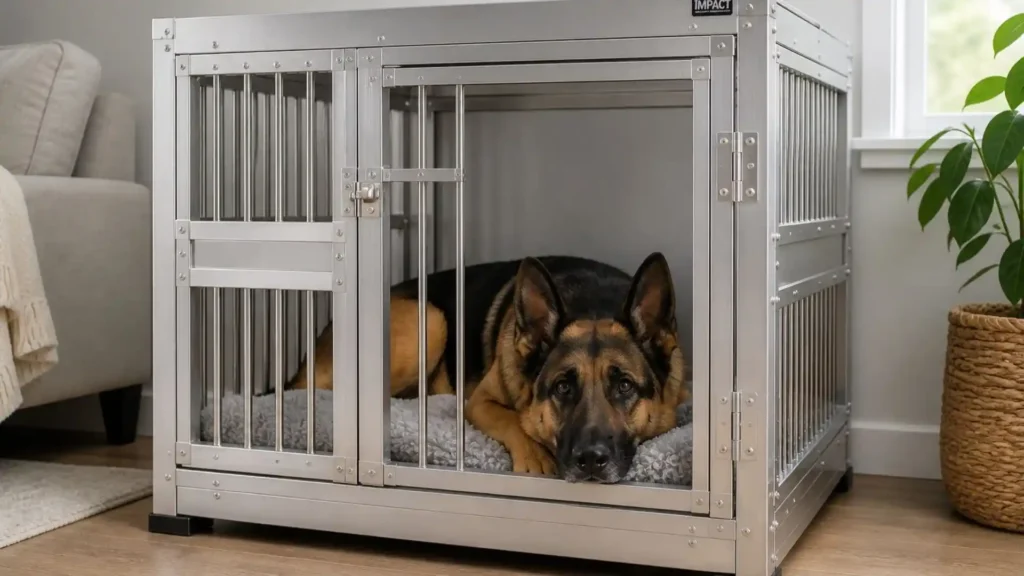
- High Anxiety: 0.080 inch 5052 aluminum, which the maker says is 62 percent thicker than its other models. It has 0.5 inch ventilation openings, a slam latch plus a paddle latch, and keys. It does not fold. Impact lists it as the only model with its lifetime dog damage guarantee.
- Stationary: 0.050 inch aluminum with 0.817 inch ventilation openings, bolted together for home use. It is lighter than the High Anxiety, at 27.5 to 43.5 pounds.
- Collapsible: 0.050 inch aluminum that folds flat and is built for travel. It has the widest size range, from small to 3XL.
Impact calls the High Anxiety crate escape proof and offers a 30 day escape proof guarantee. It also cites its own study with the Fi collar maker, which reported less scratching, barking and stress licking among dogs with elevated anxiety after they switched to Impact crates. That is the company’s data, not independent research. The same page says the crate is the tool and training is the work, which matches what we say across this site.
See the maker’s pages for the High Anxiety crate and the full Impact lineup. For a head to head look, read Impact High Anxiety Dog Crate vs Gunner Kennel: Which Is Worth It?
Crate Reviews
Each review lists what the maker or seller states, then the limits that matter for an anxious dog. We have not tested any of these crates.
1. Impact High Anxiety Crate
Best for: Dogs that already settle calmly in a crate but have bent, chewed or defeated lighter ones, and whose veterinarian or behaviorist agrees a sturdier crate is reasonable.
The High Anxiety crate is made from 0.080 inch 5052 aluminum with 0.5 inch ventilation openings. The door uses a locking slam latch and a zinc steel paddle latch, and keys come with the crate. Sizes run from medium to 2XL and weights run from 45 to 66 pounds. The warranty is lifetime, and Impact adds a lifetime dog damage guarantee for this model.
Limits: It is expensive, with list prices we saw from about $1,090 to $1,930 before sales. It is heavy and does not fold. The escape claims and the anxiety study come from the company. A very secure crate also does nothing about the cause of the distress. If your dog is hurting itself, start with your veterinarian, not a purchase.
Source: Impact Dog Crates
2. Diggs Revol Dog Crate
Best for: Dogs that are comfortable in a crate and need one that folds and rolls between rooms.
Diggs lists a steel frame with mesh sides and reinforced plastic, a garage style side door with a ceiling hatch, a two step dual lock latch, built in wheels and a carry handle. It folds flat. Interior sizes run from 25.3 by 17.4 by 18.5 inches in small to 42.5 by 28 by 30 inches in large, and weights run from 25 to 53 pounds. The list price was $599.
Limits: The product page gives no warranty terms and no chewing claims. The escape proof latch wording is marketing with no test details. The Revol showed as sold out when we checked, and Diggs says a redesigned version ships in December 2026, so confirm which version you are buying.
Source: Diggs
3. Gunner G1 Kennel
Best for: Car travel with a dog that is already calm in confinement.
The G1 has a double wall plastic body with a welded, powder coated frame reinforced with aluminum, a metal mesh door, a paddle latch with a key lock and backup latches at the top and bottom. Gunner states that the small, medium and intermediate sizes are 5 star crash tested by the Center for Pet Safety, and the large size is not listed as certified. Interior sizes run from 21.75 by 14.5 by 15.5 inches to 33.25 by 21 by 29 inches, and empty weights run from 27 to 72 pounds. List prices ran from $550 to $900.
Limits: Gunner makes no anxiety claims. The lifetime warranty covers the original buyer and does not cover damage the dog causes. A separate $200 chew kit is sold for high drive dogs, and the base crate carries no chew claim. The sizes showed as sold out when we checked.
Source: Gunner. See also Impact High Anxiety Dog Crate vs Gunner Kennel.
4. ProSelect Empire Dog Cage
Best for: Large, strong dogs that are calm in the crate and need a steel build.
The Chewy listing describes half inch steel tubing with 20 gauge steel, heavy welds, two slide latches placed out of the dog’s reach and four locking casters that can be removed. It comes in medium and large. Buyers describe it as very heavy and bolted together, so plan on two people to assemble it and no folding. Chewy listed it at $597.52 and showed it out of stock when we checked.
Limits: We did not find a manufacturer page, so size charts, weight and warranty terms are unconfirmed, and bar spacing is not stated. A cover is optional. Add one only if your dog settles better with fewer sights, and many dogs do fine without one.
Source: Chewy listing
5. MidWest iCrate Wire Crate
Best for: Dogs that already accept crates and need a low cost, folding wire crate.
The Chewy listing for the 36 inch iCrate describes a folding steel wire crate with a slide bolt latch and a Paw Block, a leak proof plastic pan and a divider panel. Chewy listed it at $61.93 when we checked.
Limits: The listing makes no escape or chew claims and states no warranty. A wire crate makes sense only for a dog that is comfortable being enclosed. It is not meant to contain a determined or panicked dog.
Source: Chewy listing
6. EliteField 3-Door Soft Crate
Best for: Calm dogs that need a quiet travel or resting space.
The Amazon listing describes three mesh doors, a steel frame, a removable washable crate cover and bed cover, storage pockets and a two year warranty. It folds and comes with a carrying bag.
Limits: A soft crate is not suited to a dog that scratches, chews, digs or panics. Skip it if your dog has scratched or chewed anything.
Check the EliteField listing on Amazon
How Do You Match a Crate to Your Dog?
Start with how your dog behaves in the crate, not with the product list. That behavior tells you whether a crate is the right tool at all.
Your dog walks in, settles and rests, even if it is restless when you leave the room:
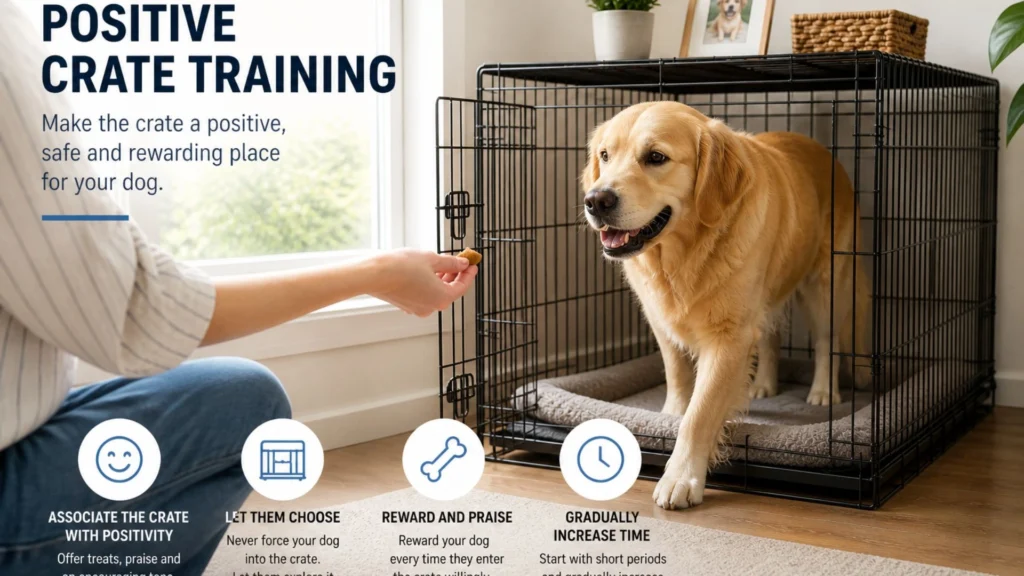
A basic wire crate such as the MidWest iCrate can work, with or without a cover. Work on the underlying anxiety too. Read: How to Kennel Train a Dog With Separation Anxiety (Safe Steps)
Your dog is calm in the crate when you are home but has damaged a lighter crate before:
Talk to your veterinarian first, because damage often signals distress. If they agree a sturdier crate is reasonable, the Impact High Anxiety, the ProSelect Empire or the Gunner G1 are worth a look. Introduce it gradually while you are home.
Your dog panics, drools heavily, tries to dig or chew its way out, or has injured itself:
Do not buy a stronger crate. Stop leaving your dog alone in a crate and book a veterinary visit, then ask about a veterinary behaviorist. Medication can be part of a plan, and our guide explains the options: Dog Anxiety Medication: Options, Evidence and Safety
Your dog is large and strong:
Check the size chart and the crate weight first. Some models have limited size ranges, and large sizes can sell out.
Your dog is calm and just likes a quiet spot:
A soft crate like the EliteField can work for travel, as long as your dog does not chew or scratch.
How We Compared These Crates
We did not test these crates. We compared published details: materials and gauge, door and latch design, ventilation, interior size, weight, whether the crate folds, warranty terms and the list price we saw.
We left out scores on purpose. Published details cannot tell you how a crate holds up with a distressed dog, and nobody can promise that. They also cannot tell you whether a crate is right for your dog’s anxiety.
Anxiety, escape and chew claims are reported as the maker’s claims, not as findings. Prices and stock come from the pages linked above and were checked on October 27, 2026.
What Crate Size Does an Anxious Dog Need?
Getting the size right matters more with separation anxiety than with a calm dog. Too much space and the crate loses its den feel, so the dog paces instead of settling. Too little, and you add physical stress on top of the anxiety itself.
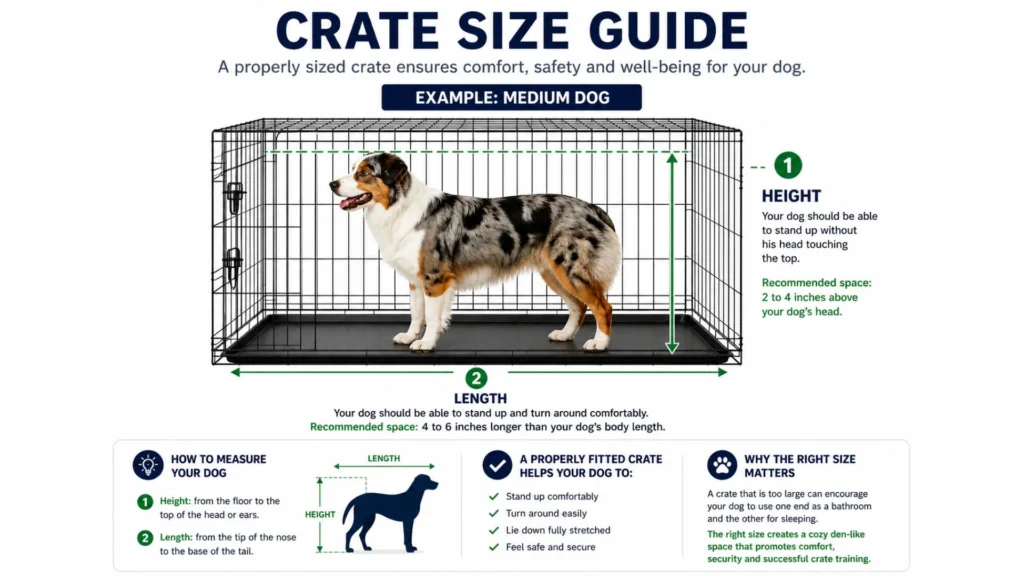
Sizes differ by brand, so use each maker’s size chart instead of assuming a standard. Some models come in limited ranges, such as the Impact High Anxiety (medium to 2XL) and the ProSelect Empire (medium and large).
Frequently Asked Questions
Is a crate good or bad for a dog with separation anxiety?
It depends on the dog. A crate does not treat separation anxiety. Some dogs rest calmly in one, while others panic when they are confined, and for those dogs a crate can make things worse. If your dog drools heavily, tries to dig or chew its way out, or gets hurt, stop leaving it alone in the crate and ask your veterinarian for an evaluation.
What size crate is best for an anxious dog?
Your dog should be able to stand up, turn around and lie down comfortably. A crate that is much bigger than that can feel exposed rather than den-like. Sizes differ by brand, so use the maker’s size chart and your dog’s measurements instead of guessing.
Can I leave an anxious dog in a crate all day?
No. A crate does not replace exercise, company or stimulation. If your schedule means long absences, look into a dog walker, daycare or a certified behavior consultant before crate confinement becomes the main plan.
Which crate is best for a dog with severe separation anxiety?
Severe separation anxiety is a health and behavior problem first. No crate treats it and no crate is escape proof. If your dog already rests calmly in a crate and your veterinarian or a behaviorist agrees one is appropriate, a heavy aluminum or steel build such as the Impact High Anxiety or the ProSelect Empire is one of the options compared above. If your dog panics inside a crate, the answer is not a stronger crate.
Should I put a blanket or toys in the crate?
A worn item of your clothing may comfort some dogs, but only offer it if your dog does not chew or swallow fabric. Toys are fine if your dog does not destroy them. Skip plush toys or anything with small parts that could become a choking hazard when unsupervised. For longer absences, make sure water is accessible.
What should I do if my dog gets hurt trying to escape the crate?
Stop using the crate for now and have your veterinarian check your dog for injuries. Then ask for a behavior evaluation before trying any other crate. Injuries during confinement are a sign of distress, and a stronger crate will not solve that.
A crate can be one part of a plan for a dog that is comfortable being enclosed. It cannot fix separation anxiety, and it can make things worse for a dog that panics when confined.
If you are unsure where your dog falls, start with our guide to dog crates for separation anxiety and talk with your veterinarian. Then use this comparison to choose a crate that fits your dog’s size and your budget.