🐾 Does your dog panic when you leave? → Get the Free 7-Day Starter Plan

Dog Trainer for Separation Anxiety: How to Choose
How to choose a dog trainer for separation anxiety: when to get help, trainer vs vet behaviorist, credentials to check, questions to ask, and red flags.


If your dog panics when you leave, the right professional can make the difference between slow, frustrating progress and a plan that actually fits your dog. This guide helps you decide when to get help, tell the different types of professional apart, check their qualifications, and judge the program they offer, so you can choose with confidence.
It does not set out a training protocol or discuss medication: those belong in our guide to dog training for separation anxiety and with your veterinarian. Here, the focus is on choosing the person who will guide you.
Table of Contents
When to Get Professional Help
Many owners make progress on their own, but some situations call for a professional from the start. Consider reaching out if:
- Your dog hurts themselves, or tries to, by scratching, chewing, or escaping doors, windows, or a crate.
- The distress starts before you leave, as soon as your dog notices you getting ready.
- Your dog cannot be left even briefly without panicking, and you have no way to avoid absences.
- You have worked on it steadily for several weeks and are seeing little or no change.
- The barking or howling is putting your housing or your relationship with neighbors at risk.
- You feel stuck, overwhelmed, or unsure whether what you are doing is helping.
A professional can also help you confirm what you are dealing with in the first place. If you are not sure the behavior is separation-related, our guide to separation anxiety vs. normal behavior is a good starting point, and a camera can show you what actually happens when you leave.
Trainer, Behavior Consultant, or Veterinary Behaviorist?
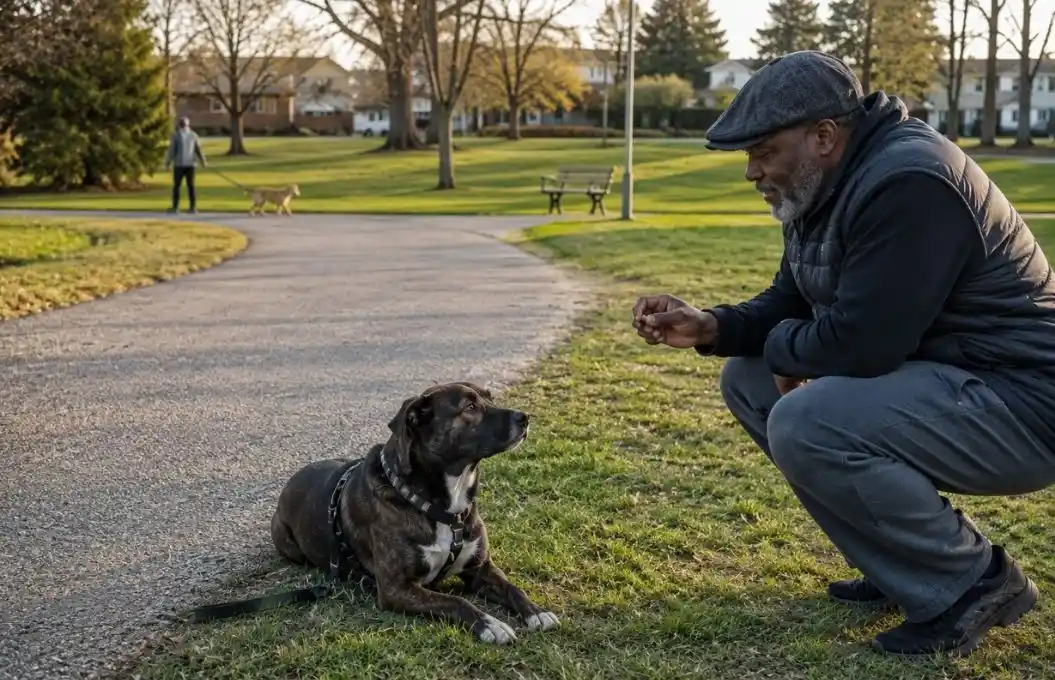
These titles are not interchangeable, and the right choice depends on your dog’s situation.
- Dog trainer. Trainers teach behaviors and skills. For separation anxiety, look for one who works specifically with this problem, not only general obedience. A Certified Separation Anxiety Trainer (CSAT) or a trainer with equivalent, documented experience in separation-related behavior is the most relevant.
- Behavior consultant. Consultants focus on behavior problems rooted in fear and emotion, which is what separation anxiety is. They assess the whole picture and design a behavior-change plan, often working with your vet.
- Veterinary behaviorist. A board-certified veterinary behaviorist is a veterinarian with specialist training in behavior. They can diagnose, rule out medical causes, and decide whether medication has a place in the plan. Any decision about medication is a medical one and belongs with a veterinarian.
These roles often work together. A trainer or consultant may run the day-to-day plan while your veterinarian, or a veterinary behaviorist, handles the medical side. You do not have to choose only one.
Qualifications and Experience to Check
Titles in dog training are not all regulated, so check credentials against the organization that issues them rather than taking a claim at face value. Here is what to look for:
- Separation anxiety experience. Ask how much of their caseload is separation anxiety specifically, and how recent that work is. Experience with this one problem matters more than a long list of general qualifications.
- A recognized credential. Look for a CSAT (Certified Separation Anxiety Trainer), an IAABC-certified behavior consultant, a CPDT-KA, a board-certified veterinary behaviorist (DACVB), or a certified applied animal behaviorist (CAAB). Check the credential in the issuing organization’s directory, not just on the trainer’s own website.
- Reward-based methods. The professional should use methods grounded in positive reinforcement, not tools or techniques that rely on fear, pain, or intimidation.
- Willingness to collaborate with your vet. A good trainer or consultant works alongside your veterinarian, especially when medication may be part of the plan.
A credential is a starting point, not a guarantee. The questions in the next sections help you judge whether the professional is the right fit for your dog.
Where to Find Separation Anxiety Dog Trainers
Each of the main professional organizations maintains a public directory where you can search by location and specialty. Start with the one that matches the type of professional you are looking for:
- CSAT (Certified Separation Anxiety Trainer): a program focused specifically on separation anxiety. The program’s information for owners page explains the credential and how to find a CSAT near you.
- IAABC (International Association of Animal Behavior Consultants): the consultant directory lists certified behavior consultants by species and location.
- CCPDT (Certification Council for Professional Dog Trainers): the certified trainer directory covers CPDT-KA and related credentials.
- ACVB (American College of Veterinary Behaviorists): the diplomate search helps you find a board-certified veterinary behaviorist (DACVB) in your area.
- Animal Behavior Society: the applied animal behaviorist directory lists certified (CAAB / ACAAB) behaviorists.
If no specialist is available locally, many of these professionals work remotely. The remote vs. in-home section below covers how that works and when it is a good option.
Questions to Ask Before You Commit
A short conversation before you sign up tells you a lot. Good professionals welcome these questions:
- Methods. What approach do you use, and do you rely only on reward-based methods? The AVSAB advises against methods that work through fear, pain, or intimidation, which can make anxiety worse.
- Working from video. Will you watch footage of my dog when alone, and base the plan on what you actually see rather than on assumptions?
- Adapting sessions. How do you adjust the plan to my dog’s reactions, and what happens if we hit a setback?
- Follow-up. How often will we be in contact, how do you track progress, and how do I reach you between sessions?
- Working with my vet. Are you comfortable collaborating with my veterinarian, and referring me to one if a medical check or a behaviorist is needed?
- Fit with my life. How much time will this take each day, and is the plan realistic for my schedule?
Remote or In-Home Support
Separation anxiety is one of the few behavior problems often handled well remotely, because the dog needs to be alone to show the behavior, and a professional watching over video avoids adding a stranger to the home.
- Remote support. You and the professional review camera footage and talk by video call. It can mean access to specialists far from you, no new person in the house to unsettle the dog, and flexible scheduling. The limits: it depends on your setup and on your own hands-on work, and it is less suited to cases that need in-person medical assessment.
- In-home support. The professional sees your home and your dog directly, which can help with setup and with reading subtle body language. The limits: their presence can change how the dog behaves, availability is narrower, and it is often more costly.
For either format, a camera is central, since the point is to see your dog when no one is there. Our guide to dog cameras for separation anxiety covers what to look for.
What a Good Program Should Spell Out

Before you commit, you should understand what you are signing up for. A clear program usually sets out:
- An initial assessment. How your dog’s situation will be evaluated, including footage of absences, before any plan is written.
- An individualized plan. A plan built around your dog, not a one-size-fits-all script.
- Follow-up. How often you will check in, how progress is tracked, and how the plan is adjusted.
- Managing absences. A realistic approach to the times you must leave while the work is underway, such as help from family, a sitter, a walker, or daycare.
- Veterinary collaboration. When and how a veterinarian is involved, since medical questions, including medication, are theirs to decide.
- Fees and terms. What is included, how sessions or packages are structured, and the cancellation or refund terms, in writing.
Fees vary widely by professional, format, and location, so ask each one directly rather than relying on a general figure. What matters is that the terms are clear and in writing before you start.
Red Flags to Watch For
Some signs suggest a professional is not the right fit for an anxious dog:
- A guaranteed cure. No one can promise a result. Separation anxiety varies from dog to dog, and honest professionals talk in terms of progress, not guarantees.
- The same timeline for every dog. A fixed “X weeks to fix it” is a warning sign. The pace should follow your dog’s reactions.
- Punishing the distress. Anti-bark collars, or any method that uses fear, pain, spray, or shock, targets the symptom and can deepen the anxiety.
- No assessment or follow-up. A plan handed over with no review of your dog and no ongoing contact is unlikely to work.
- Dismissing your vet. A professional who discourages veterinary involvement, especially in a severe case, is a concern.
- Pressure to buy products. The focus should be on a behavior plan, not on selling gadgets or supplements.
How to Prepare for the First Consultation
A little preparation makes the first session far more useful:
- Film some absences. A few clips of your dog when alone are the single most useful thing you can bring. Record an absence you already need to make, and do not deliberately cause or prolong distress just to get footage.
- Write down what you see. Note when the behavior happens, what seems to trigger it, how your dog acts before you leave and when you return, and anything you have already tried.
- Gather health information. Have your veterinarian’s details and any relevant medical history ready, since behavior and health are linked.
- List your constraints. Be honest about your schedule, your home, and how much time you can give each day, so the plan is realistic.
- Prepare your questions. Bring the questions from the section above, and anything specific to your dog.
For the wider picture of the condition and the exercises a plan may involve, see our complete guide to dog separation anxiety and our practical plan for a dog who barks or howls when you leave.
Frequently Asked Questions
Do I need a trainer or a veterinary behaviorist?
It depends on your dog. A trainer or behavior consultant who specializes in separation anxiety can run the behavior plan for many dogs. A veterinary behaviorist, or your own vet, is needed for a medical assessment and for any decision about medication. In more severe cases the two often work together.
How do I check a trainer’s credentials?
Look them up in the directory of the organization that issues the credential, such as the CSAT program, the IAABC, the CCPDT, the ACVB, or the Animal Behavior Society, rather than relying on a claim on a website. Ask too how much of their work is with separation anxiety specifically.
Can separation anxiety training be done remotely?
Often, yes. Because the dog needs to be alone to show the behavior, a professional can work effectively from camera footage and video calls, and this avoids adding a stranger to the home. Remote support depends on your setup and on your own hands-on work between sessions.
How much does it cost to work with a separation anxiety professional?
It varies widely by professional, format, and location, so there is no reliable single figure. Ask each one what is included, how sessions or packages are structured, and the cancellation terms, and get it in writing before you start.
What if there is no behaviorist near me?
Many trainers and behavior consultants work remotely, and veterinary behaviorists often consult with your local vet by phone or video. Your own veterinarian can also start the process and refer you on if needed.
Sources
- Malena DeMartini — CSAT program, information for owners
- International Association of Animal Behavior Consultants (IAABC)
- Certification Council for Professional Dog Trainers (CCPDT)
- American College of Veterinary Behaviorists (ACVB)
- Animal Behavior Society — Applied Animal Behaviorists
- AVSAB: Position Statement on Humane Dog Training (2021)