🐾 Does your dog panic when you leave? → Get the Free 7-Day Starter Plan

How to Stop Dog Barking When You Leave: A Practical Plan
A step-by-step plan for a dog who barks when you leave: watch with a camera, note triggers, reduce outside noise, support distress, and track comfort.

Affiliate disclosure: The sidebar on this page contains affiliate links. If you buy through these links, PetCalmZone may earn a commission at no extra cost to you.
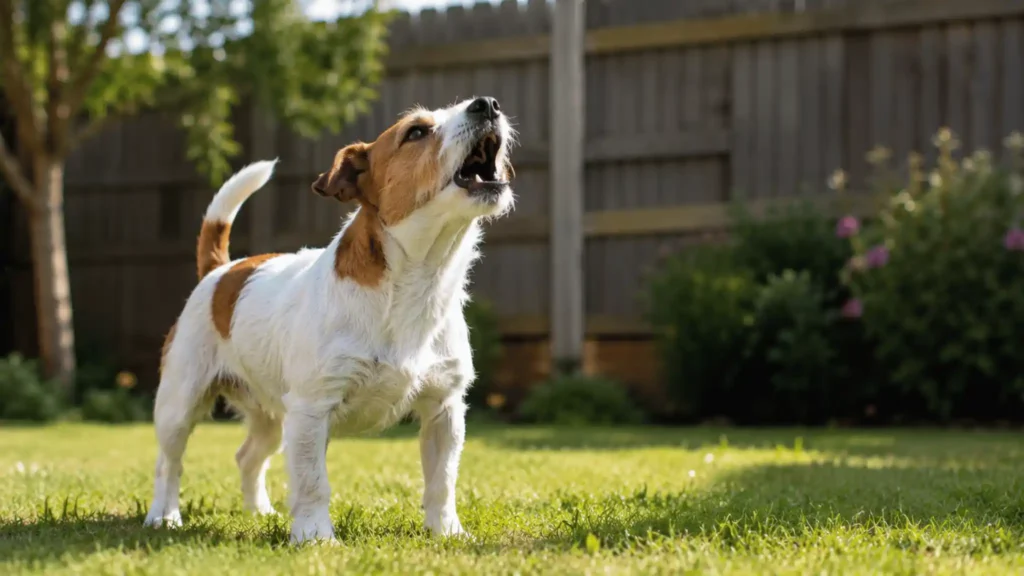
A dog who barks after you leave may be reacting to sounds outside, waiting for something to do, or struggling with being alone. The barking can sound the same in each case, but the right response is different.
This plan helps you find out what is happening while you are away, make the time alone easier, and check that your dog is actually more comfortable, not just quieter.
Table of Contents
Why Dogs Bark When You Leave
The ASPCA’s guide to barking describes several kinds of barking. When you are out, the most common are:
- Alert or territorial barking at people, animals, vehicles, or noises outside.
- Frustration or boredom when a dog has unmet needs for activity, company, or rest.
- Separation-related distress, where being apart from you is itself upsetting. It often comes with other signs such as pacing, panting, drooling, scratching at doors, or toileting indoors.
- Discomfort or an unmet need, such as needing to go outside, feeling too hot or cold, or being in pain.
When the barking starts is useful information, but it is not enough to identify the cause. A dog who barks as soon as the door closes may be reacting to your car leaving or a neighbor arriving. A dog who barks later may still be distressed. Look at the whole pattern before you decide what to work on.
Step 1: Watch What Happens With a Camera
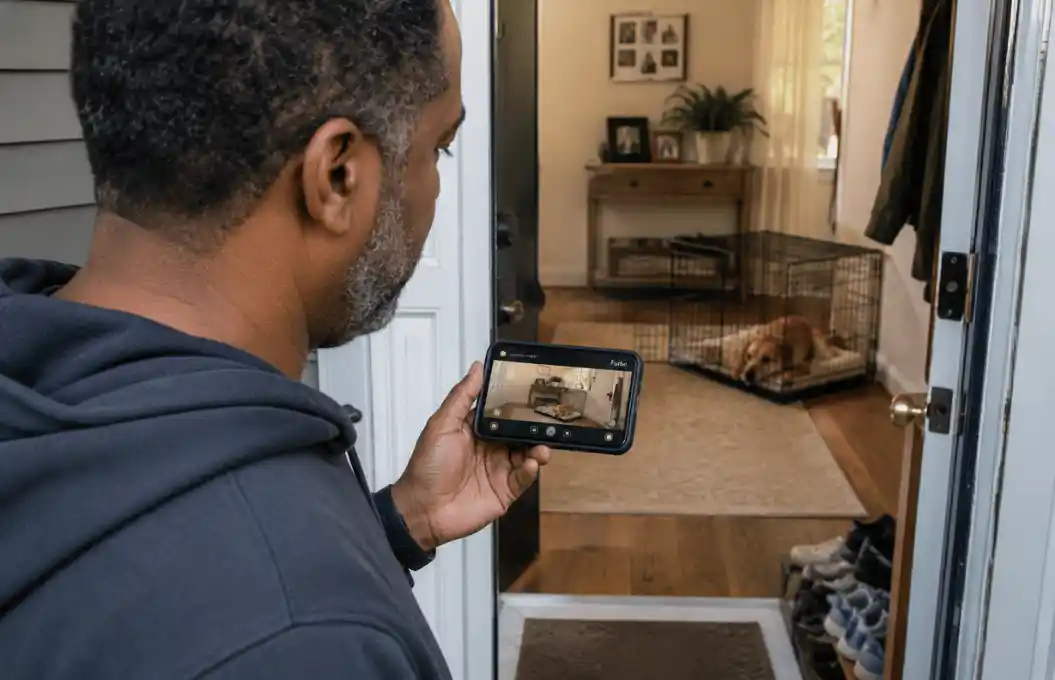
What you find when you come home, or what a neighbor reports, rarely shows the full picture. A camera lets you see what your dog is doing and what is happening around them. The RSPCA suggests filming your dog to understand how they behave when left.
Record an absence you already need to make. Do not leave for longer than usual to see how your dog copes. If the live view shows your dog in clear distress, keep that absence as short as you reasonably can and come back calmly.
When you watch the footage, note:
- What your dog was doing just before the barking started.
- Whether you can see or hear a trigger, such as a person passing, a delivery, or another dog barking.
- Their body language: relaxed and alert, or tense, restless, and unable to settle.
- Whether they stop and rest between bouts of barking.
- Anything else they do, such as pacing, whining, scratching at the door, or ignoring food.
If you are choosing a camera, our guide to dog cameras for separation anxiety compares features to look for.
Step 2: Record the Circumstances and Triggers
One recording can be misleading. Keep a simple log over several ordinary absences so patterns become clearer:
- The absence: time of day, how long you were gone, and who else was home.
- Before you left: exercise, meals, toilet break, and how your dog reacted to your preparations.
- Triggers: sounds or sights linked to barking bouts.
- Other behaviors: pacing, panting, drooling, trembling, destruction near doors or windows, or toileting indoors.
- Your return: how your dog greeted you and how quickly they settled afterward.
Patterns can point you in a direction, but they cannot diagnose anxiety or rule out a medical problem. Our guide to separation anxiety vs. normal behavior explains how to read what you see.
Step 3: Reduce Outside Triggers if the Footage Shows Alert Barking
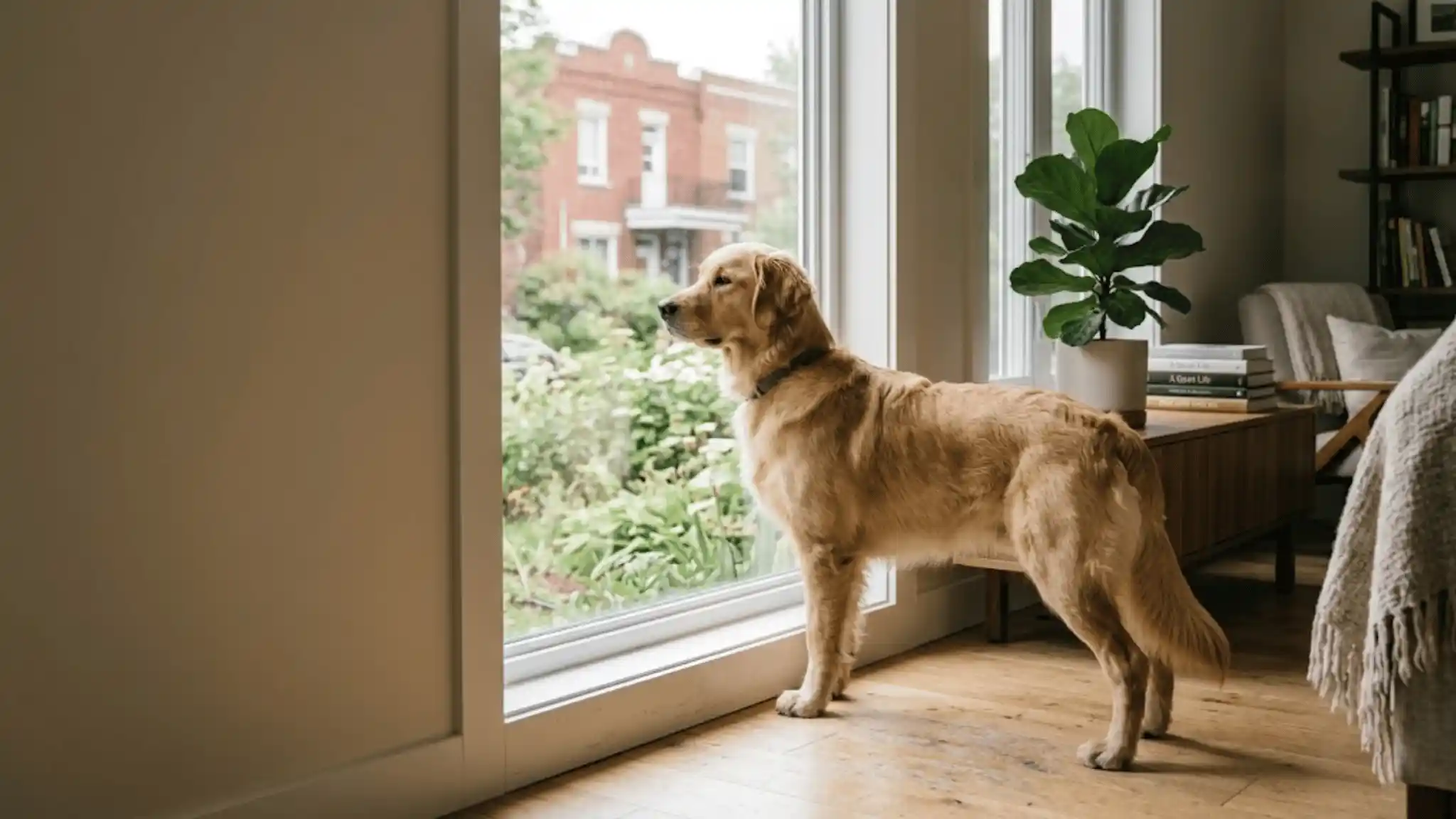
If your dog barks mostly in response to passers-by, deliveries, or noises, and otherwise rests calmly, changing the environment is a practical first step. The ASPCA recommends limiting what your dog can see and hear when barking is triggered by outside activity.
- Limit the view. Close curtains, use frosted window film, or move furniture so your dog cannot watch the street.
- Choose a quieter room. Set up the resting area away from the front door and street-facing windows.
- Mask sudden noises. A fan, white noise, or quiet background sound can soften outside sounds. Our article on music for dogs left alone looks at what the research shows.
- Practice while you are home. When a familiar noise happens, calmly reward your dog for noticing it and then looking back to you. Our guide to basic training for anxious dogs covers gentle reward-based training.
Avoid devices that interrupt barking with spray, sound, vibration, or shock. They target the noise rather than the reason for it, and AVSAB’s position statement on humane dog training advises against aversive methods because they can increase fear and stress. For barking without an obvious trigger, see why your dog may bark at nothing.
Step 4: Prepare a Comfortable Space and Suitable Activities
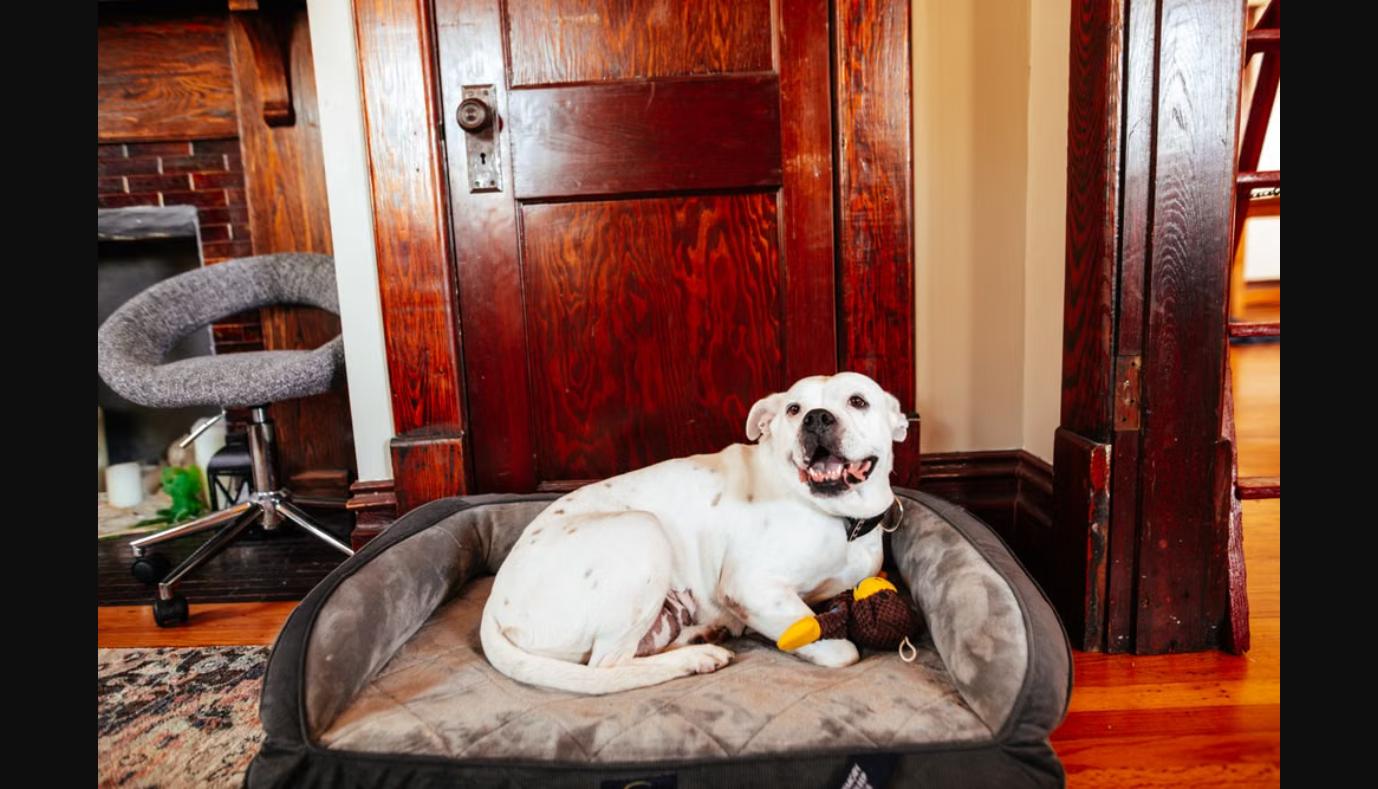
Set up the area where your dog will stay before you need to leave, and introduce it while you are home.
- A familiar resting place: a bed in a room where your dog already relaxes, with water and a comfortable temperature.
- Needs met beforehand: a toilet break and activity that suits your dog’s age and health, such as a sniffing walk or a short game.
- Something to do: a food puzzle or long-lasting chew can help some dogs settle. Try it first while you are home to check that it is safe for your dog and that they enjoy it. A dog who ignores food once you leave may be too worried to eat.
- Confinement only if comfortable: use a crate or closed room only if your dog already rests there calmly. Our article on crates and separation anxiety explains how to tell.
Step 5: First Steps if Footage Suggests Separation-Related Distress
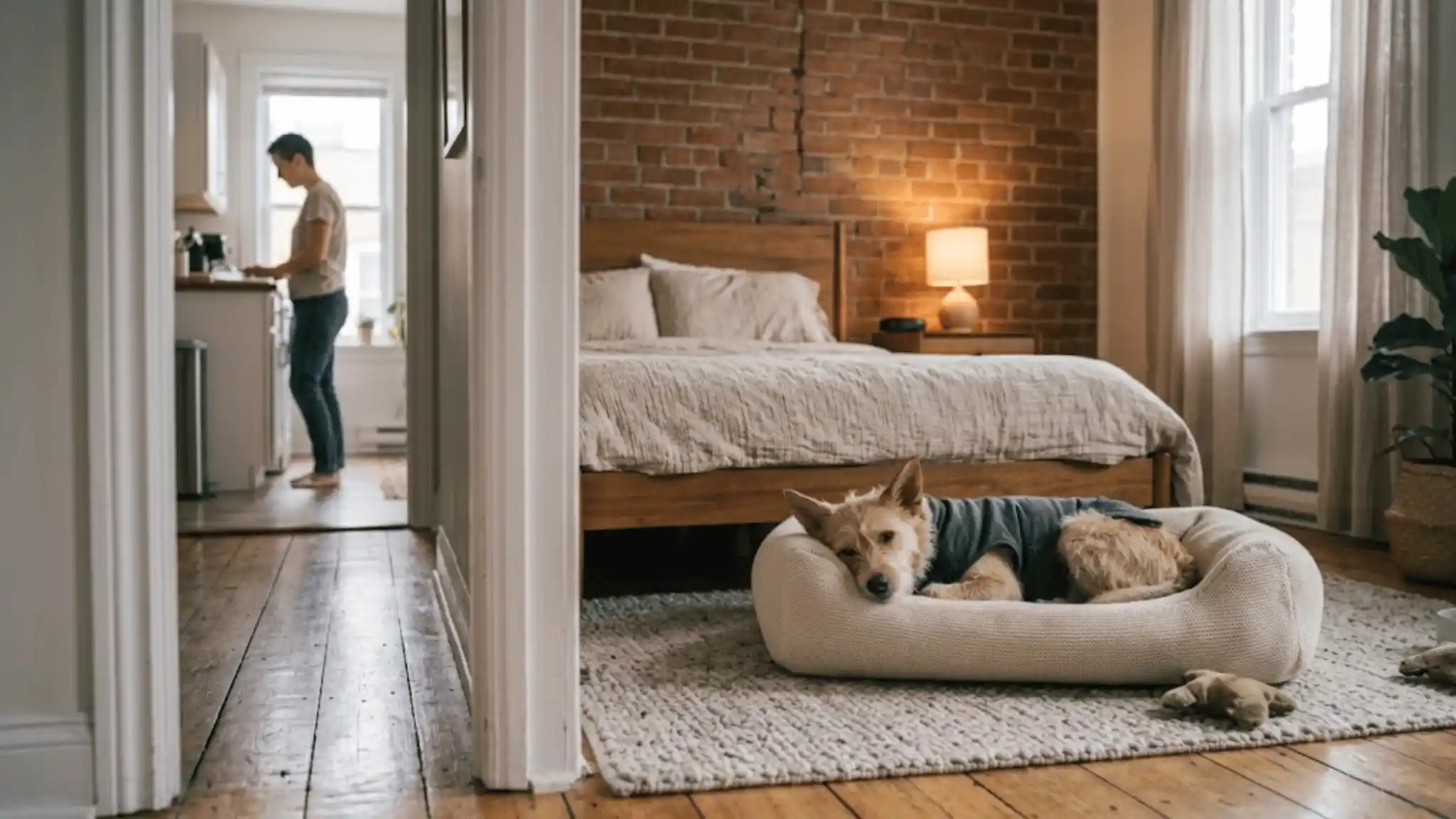
Separation-related distress is more likely when barking comes with signs of upset such as pacing, panting, drooling, trembling, attempts to get out, or toileting indoors, especially if your dog also becomes unsettled while you get ready to leave. The ASPCA and the Merck Veterinary Manual describe these signs.
While you plan next steps:
- Book a veterinary check. Your vet can look for medical causes and discuss whether medication could be part of a plan.
- Do not punish barking or mess. Punishment does not address the fear and can make it worse.
- Avoid absences your dog cannot cope with while you work on the problem, using the options in Step 6. The RSPCA advises against leaving a distressed dog to “cry it out.”
- Keep departures and returns calm. A relaxed, low-key routine is easier for many dogs than an emotional goodbye or an excited greeting.
Separation-related distress usually needs a gradual, individual training plan. Our guide to dog training for separation anxiety explains that process step by step, and our complete guide to dog separation anxiety covers the condition in more depth.
Step 6: Plan Necessary Absences Realistically
Most owners cannot avoid leaving, so plan ahead. Realistic options include:
- A family member, friend, or neighbor your dog knows staying with them.
- A dog sitter at home, or a walker who visits during longer absences. A walker’s visit can break up a long absence, but your dog is still alone before and after it, so it may not be enough for a dog who becomes distressed soon after you leave.
- Daycare, if your dog is comfortable around other dogs and new people.
- Taking your dog with you when the setting is calm and safe for them.
- Adjusting household schedules so your dog is alone less often while you work on the problem.
These arrangements are not a failure. They prevent repeated distressing experiences while your dog learns to cope, and the ASPCA lists several of them as ways to manage separation anxiety.
Step 7: Track Comfort and Know When to Get Help
Silence alone does not tell you whether your dog is coping. A dog can be quiet and still frozen, trembling, or hiding. Keep comparing footage and look for signs of comfort:
- Lying down and resting rather than pacing or watching the door.
- Eating a chew or food puzzle after you leave.
- A relaxed body and normal breathing.
- A calm greeting when you return, and settling soon afterward.
Contact your veterinarian if the barking starts suddenly, comes with other changes in behavior or health, or if your dog injures themselves trying to get out. The AAHA behavior management guidelines treat behavior changes as part of veterinary care.
Ask for behavior support if the barking is getting worse, if your dog shows distress even during short absences, or if you are not seeing progress. You can look for a Certified Applied Animal Behaviorist, a veterinary behaviorist through your vet, or a certified dog trainer who uses reward-based methods.
Sources