🐾 Does your dog panic when you leave? → Get the Free 7-Day Starter Plan

What Not to Do Dog Separation Anxiety: Common Mistakes to Avoid
What not to do dog separation anxiety? Discover 8 common mistakes that can make your dog's anxiety worse and learn what to do instead for a calmer time alone.

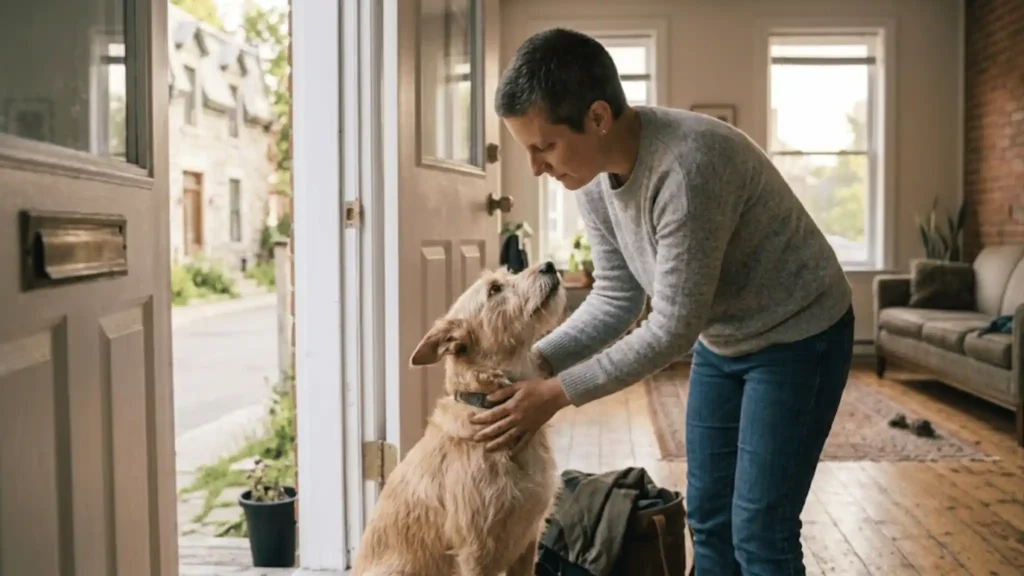
Knowing what not to do dog separation anxiety is just as important as knowing what to do. Separation anxiety is one of the most mismanaged conditions in dogs. Not because owners don’t care, but because the instinctive responses to a panicking dog can make the problem worse.
Here are the things that commonly backfire, why they backfire, and what to do instead.
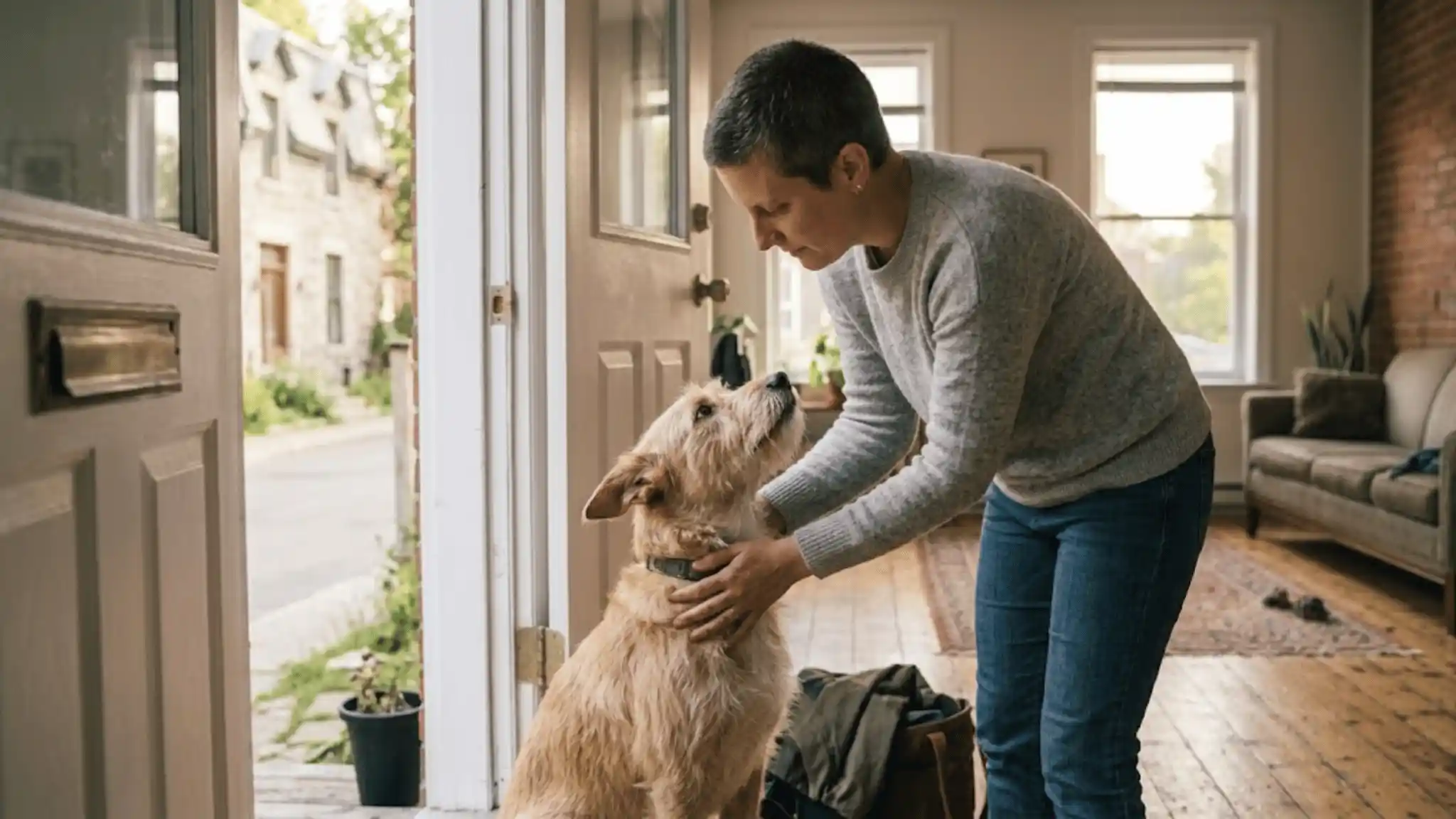
What Not to Do Dog Separation Anxiety: Don’t Force Crating
Crating is often recommended as a first step for dogs with separation anxiety. For some dogs it helps, the enclosed space feels safe, and the dog settles faster. For others, containment makes the panic worse. A dog that already fears isolation now also fears confinement.
How to tell which applies to your dog: set up a camera and leave for five minutes with the crate door open, then repeat with it closed. If the dog is more distressed with the crate closed, crating is making the situation worse. Don’t use it.
The dog’s behavior when alone matters more than whatever seems like it should be calming. Some dogs do better with free access to the whole space. Some do better in a confined area. The camera tells you which.
Don’t use long, drawn-out goodbyes
Long departure rituals extend the pre-absence window , the period during which the dog’s anxiety is already climbing. Ten minutes of “it’s okay, mama loves you, be a good boy” while putting on shoes and gathering keys is ten minutes of mounting stress before you’ve even left.
Keep departures brief and neutral. No fuss, no lengthy affection. This isn’t about ignoring the dog, it’s about not marking the departure as a significant emotional event. A calm departure gives the dog less to spiral around.
Don’t ignore pre-departure anxiety cues
The opposite mistake is also common: ignoring the dog entirely during the departure routine. The dog’s stress has already started, they’re following you around, panting, whining. Ignoring them doesn’t address the anxiety. It just means they experience it without any interaction.
The goal is to change what the departure cues predict. Keys jingling, shoes going on, bags being picked up, these are learned signals that you’re leaving. Desensitizing these signals (practicing them without actually leaving) is part of the protocol. Ignoring them isn’t.
Don’t punish panicking behavior
Coming home to a destroyed couch or a soiled floor is genuinely frustrating. Punishing the dog for it doesn’t work for a specific reason: the dog cannot connect the punishment to an action that happened hours ago. They don’t know what they’re being punished for.
Worse, the punishment creates a new association: your return home predicts something bad. This can increase the dog’s anxiety around your departures, because they’re now anticipating both your absence and punishment on your return.
Destruction and inappropriate elimination during alone time are symptoms of the anxiety, not behavioral choices the dog is making. Addressing the anxiety addresses the symptoms.
Don’t skip too far ahead in the protocol
Separation anxiety responds to gradual desensitization, absences that stay below the dog’s panic threshold. The protocol builds duration slowly, in small increments, because each successful absence below threshold teaches the dog that alone time is safe.
Jumping ahead and leaving for four hours when the dog is still panicking at twenty minutes undoes the progress. Each absence that goes beyond the dog’s threshold reactivates the fear response and makes the dog more sensitized, not less.
If you need to leave for longer than your dog’s current threshold, arrange management: a dog sitter, doggy daycare, or having someone stay home. The protocol can’t move forward if real-life absences are regularly exceeding what the dog can handle.
Don’t use flooding
Flooding means exposing the dog to the feared situation at full intensity until they stop reacting. In theory, the fear extinguishes because nothing bad actually happens. In practice, flooding separation anxiety doesn’t work and often causes lasting harm.
Dogs left to “cry it out” don’t learn that alone time is safe. They learn that nothing they do changes the situation a state called learned helplessness. The surface behavior (vocalizing) may stop, but the underlying anxiety has not resolved. These dogs are often more reactive and avoidant in other contexts as well.
Don’t add a second dog expecting it to help
Separation anxiety is specifically about the dog’s bond with their human. A second dog provides company, but not the presence the anxious dog is distressed about. Many dogs with separation anxiety show the same panic levels with or without a companion animal present.
A second dog may or may not help but it’s not a reliable treatment, and getting one specifically to “fix” separation anxiety frequently doesn’t work.
Don’t avoid leaving entirely
Complete avoidance of departures prevents panic but also prevents any possibility of progress. The protocol requires practice, repeated absences at sub-threshold durations that gradually build the dog’s tolerance. Never leaving means the dog never builds tolerance.
Avoidance is sometimes necessary short-term (to prevent flooding while you’re starting the protocol), but it’s not a long-term solution. The dog needs exposure, carefully managed, to learn that departures are safe.
What actually works
Systematic desensitization to departure cues and gradual duration extension is the evidence-backed approach. It’s slow, requires consistency, and needs absences to stay below the dog’s panic threshold, but it’s the method that produces lasting change. The full protocol is covered in the separation anxiety training guide.
For moderate to severe cases, medication from a veterinarian can lower the dog’s baseline anxiety enough that the behavioral protocol becomes effective. SSRIs, TCAs, and situational anxiolytics are all tools that a veterinarian familiar with behavioral conditions can discuss, the ASPCA’s guidance on separation anxiety outlines when medication is typically recommended. Medication and the behavioral protocol together outperform either alone.
FAQ
Is it okay to crate a dog with separation anxiety?
Only if the camera evidence shows the dog is less distressed when crated. Some dogs genuinely settle better in an enclosed space. Others panic more. Check before deciding, and don’t assume crating is helpful just because it seems like it should be.
Will getting another dog fix separation anxiety?
Rarely. Separation anxiety is about the owner’s absence, not companionship in general. A second dog is not a reliable treatment. If the dog is equally distressed with or without a companion present, adding a dog solves nothing and creates two dogs to care for instead of one.
My dog is destructive when I leave. Should I punish them?
No. Delayed punishment doesn’t work, the dog can’t connect it to behavior that happened hours ago. The destruction is a symptom of the anxiety. Punishing it doesn’t address the anxiety, and may make the overall situation worse by adding punishment to the dog’s already-negative experience of your returns.
- Dog training for separation anxiety : the full protocol
- Does ignoring a dog reduce anxiety? : the nuanced answer
- Best crates for dogs with separation anxiety : if crating is appropriate for your dog