🐾 Does your dog panic when you leave? → Get the Free 7-Day Starter Plan

How to calm dog anxiety naturally
How to calm dog anxiety naturally? Discover 7 gentle methods that soothe stress and fear fast, without any medication, and calm your dog for good, today

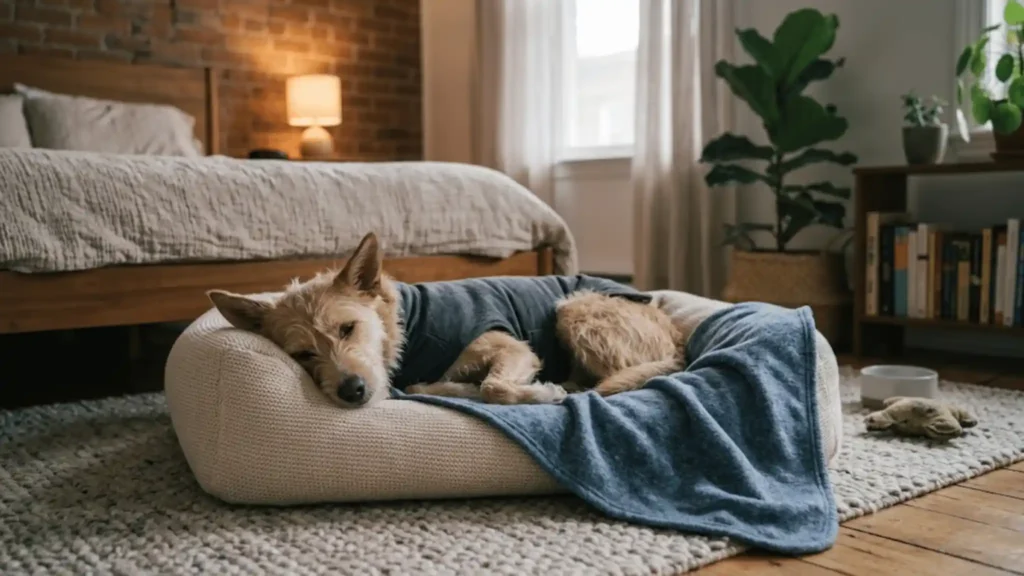
You can calm dog anxiety naturally with daily exercise, a predictable routine, a safe space, and calming aids like pheromones, but severe anxiety needs a vet.
How to calm dog anxiety naturally is one of the most searched questions among dog owners, but natural approaches vary widely in how well they actually work. Some have solid evidence behind them. Others are popular but unsupported. And a few can actually interfere with behavioral treatment if used incorrectly.
This covers the natural options that are worth considering, what the evidence shows, and where each one fits in a complete anxiety management plan.
Exercise: one of the most effective tools available
Regular physical exercise is one of the most evidence-backed interventions for anxiety in mammals, and it applies to dogs. Sustained aerobic exercise, 30 minutes or more of continuous activity, reduces cortisol, increases serotonin and dopamine, and improves sleep quality. A dog that is physically well-exercised has a lower baseline anxiety level than a dog that isn’t.
The type of exercise matters. Backyard fetch or a short walk doesn’t provide the same benefit as sustained aerobic activity, running, swimming, hiking, or activities that get the heart rate elevated for a meaningful period. The right amount depends on breed, age, and health, but most dogs doing enough exercise to sleep soundly afterward are in a good range.
Exercise alone won’t resolve moderate to severe anxiety, but it’s a foundational tool that makes other interventions more effective by lowering the baseline from which the dog starts.
Mental enrichment: underestimated and underused
Mental exercise is as tiring as physical exercise and has similar anxiety-reducing effects. Dogs who are cognitively engaged, solving problems, using their nose, working for food, have lower overall arousal levels than dogs sitting idle in a stimulating environment.
Practical options: food puzzles, sniff walks (the dog leads, spends time sniffing rather than covering distance), nose work games, training sessions, stuffed Kongs, and lick mats. Decompression walks in natural environments with access to sniffing are particularly effective because they engage the parasympathetic nervous system.
Pressure wraps
Products like the ThunderShirt apply gentle, constant pressure to the dog’s torso. The theory draws on work showing that deep pressure touch has calming effects in humans and some animals. The evidence in dogs is mixed, some studies show reduced anxiety signs, others show no significant effect compared to placebo.
Individual response varies substantially. Some dogs visibly relax when wearing a pressure wrap, while others ignore it or resist it. It’s worth trying for situational anxiety (storms, fireworks, car rides) since the cost is low and the potential benefit is real. It’s less useful as a standalone intervention for chronic anxiety or separation anxiety, where the underlying pattern needs behavioral treatment.
See the full anxiety wrap comparison for specific product recommendations.
Pheromone products (Adaptil)
Adaptil is a synthetic version of the dog appeasing pheromone (DAP) produced by nursing mothers. It’s available as a collar, diffuser, or spray. Research on its effectiveness is inconsistent, some studies show reduced anxiety signs, others show no benefit over placebo. The evidence is strongest for situational anxiety (vet visits, travel, new environments) and weakest for separation anxiety.
Adaptil is generally worth trying alongside behavioral treatment, with the understanding that response varies and it shouldn’t be expected to work as a standalone solution.
Supplements
The supplement market for dog anxiety is large and mostly under-researched. A few have more evidence than others:
L-theanine (found in green tea, available in dog supplements like Zylkene and Composure) has modest evidence for reducing anxiety in dogs in some contexts. Effects are mild and variable.
Melatonin may help with noise phobia and situational anxiety in some dogs. Dosing and timing matter, it’s used in the period before the anticipated trigger. Consult a vet for appropriate dosing.
Valerian has some evidence in humans but limited data in dogs. Commonly included in commercial calming products but the specific effect in dogs isn’t well established.
CBD products are widely marketed for dog anxiety. Current evidence in dogs is very limited, a few small studies suggest some effect on situational anxiety, but product quality varies enormously, regulation is minimal, and clear dosing guidelines don’t exist. If considering CBD, use a product with a certificate of analysis (COA) from a third-party lab confirming cannabinoid content and absence of contaminants.
No supplement replaces behavioral treatment for chronic or moderate-to-severe anxiety. They’re adjuncts, not solutions.
Music and sound environments
Research by psychologist and animal welfare scientist Dr. Lori Kogan and others has found that classical music and certain types of soft music reduce stress signs in kenneled dogs. The effect was more pronounced for classical music than for other genres and for heavy metal (which appeared to increase stress signs).
For dogs with anxiety when alone, playing music or a white noise machine can mask outside sounds that trigger barking and provide a consistent auditory environment. It’s a low-cost, low-risk addition to other management strategies.
Routine and predictability
Anxious dogs generally do better with predictable schedules. Knowing when feeding, exercise, and human interaction occur reduces the unpredictability that anxious dogs find difficult to regulate around. This isn’t a treatment for clinical anxiety, but it reduces the background noise of uncertainty that makes existing anxiety harder to manage.
So How to calm dog anxiety naturally, long term
Natural approaches are most useful as support alongside behavioral treatment, they lower the baseline, reduce situational spikes, and make the dog more responsive to training. They don’t address the behavioral patterns that maintain anxiety.
For separation anxiety specifically, no natural product addresses the core issue: the dog needs to learn, through systematic exposure, that being alone is safe. The separation anxiety protocol is the behavioral treatment. Natural approaches support it but don’t replace it.
For moderate to severe anxiety, prescription medication from a vet, including SSRIs, trazodone, or gabapentin, has substantially more evidence and effectiveness than any natural supplement. “Natural” doesn’t mean more effective. It means less regulated and less studied.
FAQ
What is the fastest natural way to calm a dog?
For immediate situational anxiety (arriving at the vet, fireworks starting), pressure wraps applied in advance, removing the dog from the triggering situation, and providing a familiar, covered resting space all produce relatively quick calming effects. Exercise an hour or two before anticipated triggers can reduce the dog’s reactivity. None of these are as reliable or fast-acting as situational medication for acute panic, but they’re worth having in the toolkit.
Does lavender help calm dogs?
A few small studies suggest inhaled lavender aromatherapy may reduce stress signs in dogs (reduced barking and movement in car travel, for example). The effect sizes are small and the studies are limited. Lavender oil should never be applied directly to skin or ingested, aromatherapy diffusion only, and in a space where the dog can leave if they want to avoid it.
Can I give my dog Benadryl for anxiety?
Diphenhydramine (Benadryl) is sometimes used for situational anxiety in dogs and can produce sedation. It’s not an anxiety medication, it’s an antihistamine, and the sedation effect is variable. It can cause paradoxical excitement in some dogs and doesn’t address the anxiety itself. Ask a vet before using it, confirm appropriate dosing, and don’t use it as a substitute for behavioral treatment.
- Dog training for separation anxiety : the behavioral treatment natural approaches support
- Best anxiety wraps for dogs : pressure wrap options with ratings
- Does ignoring a dog reduce anxiety? : when attention matters