🐾 Does your dog panic when you leave? → Get the Free 7-Day Starter Plan

How to Stop a Dog From Chewing Everything: 6 Solutions That Actually Work
How to stop a dog from chewing: 6 proven solutions for destructive chewing, from teething puppies to anxiety-driven habits. Fix it today.

Affiliate disclosure: This article and its sidebar contain affiliate links. If you buy through these links, PetCalmZone may earn a commission at no extra cost to you.
If you’re searching for how to stop a dog from chewing everything in sight, shoes, couch cushions, even charging cables, you’re not alone. Destructive chewing is one of the most common complaints from dog owners, but the good news is it’s fixable. In this guide, we cover 6 proven solutions, plus the best products on the market to help you stop the damage fast and redirect your dog toward healthy habits.
Table of Contents
- Understanding Why Dogs Chew
- 6 Ways to Stop Your Dog From Chewing
- Our Top Chewing Solution
- When Chewing Is Anxiety Driven
Learning to stop your dog from chewing starts with figuring out whether it’s boredom, anxiety, or a teething phase driving it.
Understanding Why Dogs Chew
Before you can stop the chewing, you need to understand what’s driving it. Dogs chew for several reasons: boredom, teething (especially in puppies), stress, anxiety, or simply because the behavior has become a habit. Each cause calls for a slightly different approach. According to the ASPCA, most destructive chewing responds far better to redirection than to punishment. For a full breakdown of triggers and root causes, check out our destructive chewing guide. If your dog chews primarily when left alone, it may be anxiety driven, a pattern closely tied to separation anxiety training.
How to Stop a Dog from Chewing: 6 Proven Ways
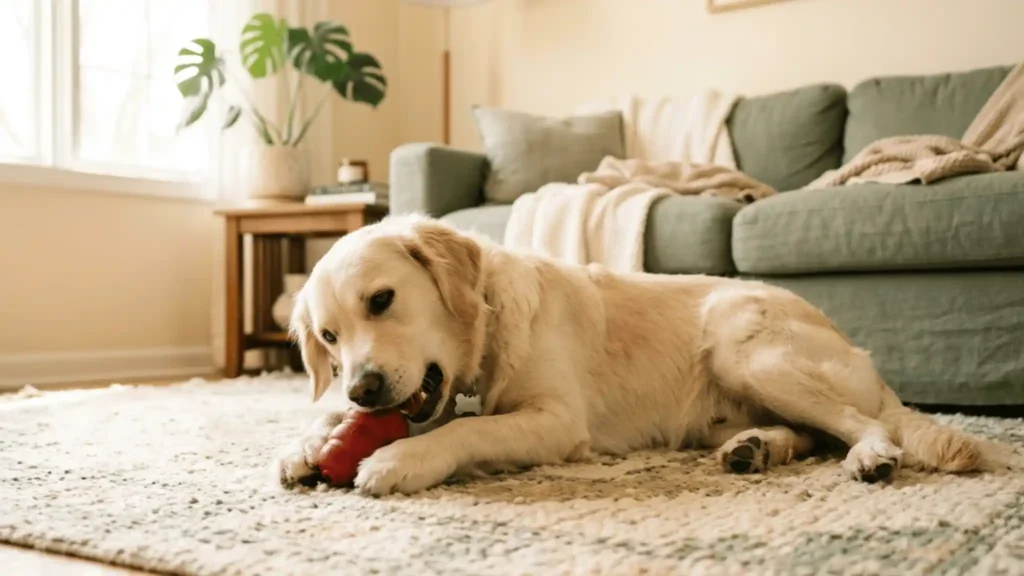
- Redirect to Appropriate Chew Toys : The most effective first step is giving your dog something they’re allowed to chew. The KONG Classic is the gold standard. Stuff it with peanut butter or kibble and it becomes a long lasting, mentally stimulating outlet. Your dog learns fast: this is mine, the couch is not.
- Durable Chew Alternatives for Power Chewers : Some dogs blow through flimsy toys in minutes. For strong chewers, the Benebone Wishbone is a game changer. Made with real flavor infused into nylon, it holds up to aggressive chewing and keeps dogs busy for hours without shredding.
- Bitter Deterrent Spray : For furniture legs, baseboards, cables, and other off limits surfaces, a deterrent spray creates an instant “not worth it” signal. Grannick’s Bitter Apple Spray is the go to recommendation from trainers and vets alike. Simply spray on target surfaces the taste is harmless but deeply unpleasant to dogs. Reapply every few days until the habit is broken.
- Crate Training During Unsupervised Time : When you can’t actively supervise your dog, a properly introduced crate prevents access to destructive opportunities. A crate should feel like a safe den, not a punishment. Introduce it gradually with treats and meals inside, and always provide a chew toy to keep them occupied while crated.
- Exercise and Mental Enrichment : A tired dog is far less likely to chew out of boredom. Beyond physical exercise, mental enrichment drains energy even faster. The Outward Hound Hide A Squirrel puzzle toy is a fan favorite dogs spend focused time hunting and extracting squeaky toys, satisfying natural instincts and burning mental energy without touching your belongings.
- Teach the “Leave It” Command : One of the most versatile obedience skills you can teach, “leave it” gives you real time control over what your dog puts in their mouth. Pair this with consistent redirection and positive reinforcement. For step by step guidance on this and other training approaches, see our overview of common dog behavior problems.
Our Top Chewing Solution
If you only try one product to stop your dog from chewing, make it the KONG Classic. It’s been the #1 recommended chew toy by veterinarians and trainers for decades and for good reason. The durable rubber construction holds up to aggressive chewing, while the hollow interior lets you customize the stuffing to your dog’s preferences. For maximum engagement, stuff it with peanut butter or wet food and freeze it overnight. A frozen KONG can keep most dogs occupied for 20–40 minutes long enough to break the cycle of boredom driven chewing.
When Chewing Is Anxiety Driven
Not all chewing is boredom or habit some dogs chew as a coping mechanism for stress. Key signs that anxiety is the root cause: your dog only chews when left alone, they target items that smell strongly of you (shoes, clothing, pillows), and the behavior is accompanied by other signs of distress like whining or pacing. If this pattern sounds familiar, the solutions above are still useful, but addressing the underlying anxiety is essential for lasting results. Our dedicated guide on separation anxiety training walks through the full behavior modification approach.
If your goal is to stop your dog from chewing for good, it comes down to two things: consistent redirection and giving your dog the right alternatives. With the right products a durable chew toy, a deterrent spray, and an enrichment puzzle plus a bit of training patience, most dogs improve significantly within a few weeks. Stay consistent, reward good choices, and you’ll both come out ahead.