🐾 Does your dog panic when you leave? → Get the Free 7-Day Starter Plan

Dog Breeds Prone to Anxiety, Ranked: What Research Reveals
Some dog breeds prone to anxiety are simply wired that way. Discover the 10 most anxiety-prone breeds, why they struggle, and how to help your dog feel calmer

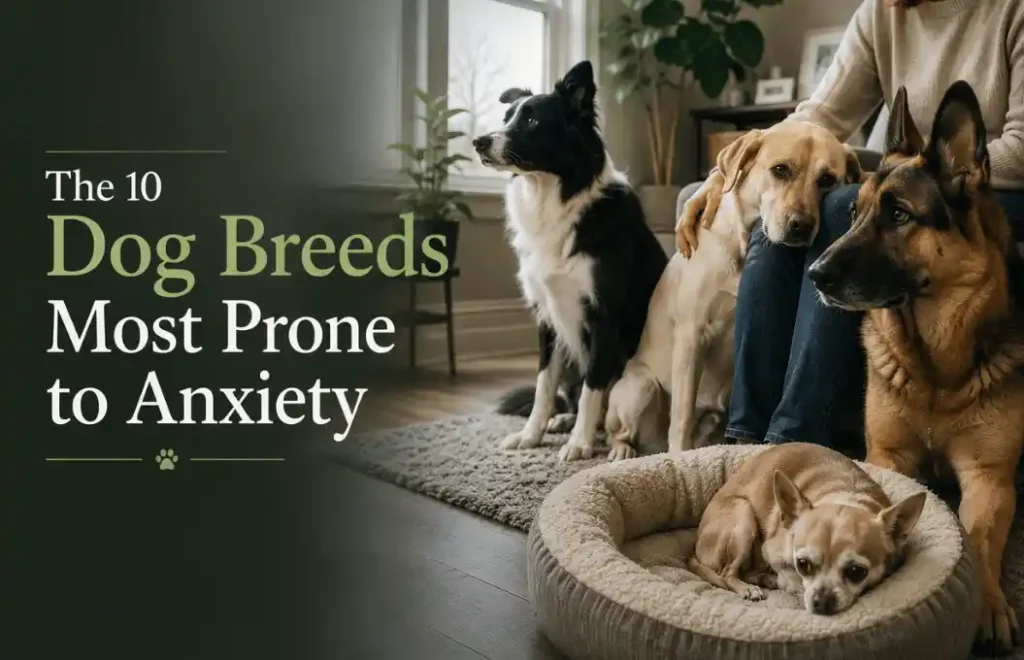
Dog breeds prone to anxiety share one thing: they were bred for jobs that kept them close to people. That is why a Border Collie stares, a Shetland Sheepdog trembles at distant thunder and a Miniature Schnauzer barks at every stranger.
Breed is not the whole story, but it matters. A 2026 Texas A&M study of 43,517 dogs found that 84% show at least mild fear or anxiety in everyday situations, and the rates vary widely by breed. Below, you will see which breeds rank highest and what that means for how you train and support your dog.
Key Takeaways
- Fear of unfamiliar dogs is the most common trigger, affecting 47.4% of dogs (Veterinary Research Communications, 2026).
- Herding breeds like Border Collies and Shetland Sheepdogs show some of the highest fear and compulsive behavior scores of any breed group.
- Labrador Retrievers consistently rank among the least fearful and least aggressive breeds, a useful contrast for prospective owners.
- Environment still matters: owner reunion behavior alone increases separation anxiety risk sixfold, regardless of breed (Generation Pup, 2024).
How Common Is Dog Anxiety, Really?
In May 2026, Dr. Bonnie Beaver at Texas A&M University published the most comprehensive canine anxiety prevalence study to date, analyzing 43,517 dogs enrolled in the Dog Aging Project. The findings, published in Veterinary Research Communications, were striking: 84% of dogs showed at least mild fear or anxiety in everyday situations, and 91% when grooming-related fears were included (Veterinary Research Communications, 2026).

The study also broke down fear by trigger type: 47.4% of dogs fear unfamiliar dogs, 42.9% react to unfamiliar noises, and 29.4% are stressed by unfamiliar situations. Fear of unfamiliar people affected 22.3% of dogs. That’s not a niche problem. It’s a majority experience for dog owners everywhere.
The 2020 University of Helsinki study across 13,715 dogs and 264 breeds remains the definitive breed-level dataset, finding 72.5% of dogs displayed at least one anxiety-related behavior, with noise sensitivity the most common trait at 32% (Scientific Reports, 2020).
Top 10 Most Anxiety-Prone Dog Breeds Ranked
Dog breeds prone to anxiety include some of the most popular family dogs, and genetics play a bigger role than most owners realize. Based on behavioral genetics studies, here are the breeds consistently ranked highest for anxiety-related traits. For a complete overview of how breed influences anxiety behavior, visit our guide: Dog Anxiety by Breed: Complete Owner’s Guide.
- Shetland Sheepdog: Highest overall fearfulness and noise sensitivity
- Lagotto Romagnolo: Extreme noise sensitivity and general fear
- Border Collie: High fearfulness, compulsive behaviors, and separation anxiety risk
- Spanish Water Dog: Strong fear of strangers and novel situations
- Miniature Schnauzer: Elevated aggression-fear and hyperactivity
- German Shepherd: Noise phobia and separation distress
- Australian Shepherd: Herding-driven anxiety and separation sensitivity
- Vizsla: One of the most velcro breeds, with severe separation anxiety
- Cavalier King Charles Spaniel: Strong attachment and distress when alone
- Bichon Frisé: High anxiety and separation sensitivity
Breed Anxiety Risk Comparison
| Breed | General Anxiety Risk | Separation Anxiety Risk |
|---|---|---|
| Shetland Sheepdog | Very High | High |
| Lagotto Romagnolo | Very High | Moderate |
| Border Collie | High | High |
| Spanish Water Dog | High | Moderate |
| Miniature Schnauzer | High | Moderate |
| German Shepherd | High | High |
| Australian Shepherd | High | High |
| Vizsla | Moderate–High | Very High |
| Cavalier King Charles Spaniel | Moderate–High | High |
| Bichon Frisé | Moderate | High |
Breed-by-Breed Research Highlights
The breeds that repeatedly score highest in research share something in common: high cognitive drive, sensitivity, and historical roles that demanded constant responsiveness to their environment.

1. Border Collie
Border Collies were among the breeds with the highest rates of compulsive behaviors, particularly staring, shadow-chasing, and fly-snapping. These behaviors are linked directly to their herding heritage: Border Collies were bred to fixate intensely and react instantaneously. Without enough physical exercise and mental stimulation, that drive turns inward, resulting in obsessive behaviors, pacing, and intense anxiety. They need a job to feel secure. Our guide to Border Collie separation anxiety shows what this looks like when they are left alone.
What this means for owners: Puzzle feeders, agility training, and herding sports aren’t luxuries. They’re mental health interventions for this breed. Understanding breed-specific triggers is key, and our breed anxiety guide dives deeper into what drives these behaviors.
2. Australian Shepherd
Like Border Collies, Aussies are high-drive herding dogs. They bond intensely with their owners and suffer when left alone. Separation anxiety is extremely common in this breed, often showing up as destructive behavior or non-stop barking. They cannot tolerate long alone time.
3. Labrador Retriever
Labrador Retrievers are people-oriented to an extreme degree. That strong attachment is exactly what makes them prone to separation anxiety. They struggle when their person is gone. Despite their easygoing reputation, Labs are one of the most common breeds seen in anxiety-related vet consultations.
4. German Shepherd
German Shepherds are highly sensitive and deeply loyal. They read their environment constantly and can become hypervigilant, always scanning for threats. Without proper socialization from an early age, this vigilance turns into fear-based anxiety.
5. Vizsla
The Vizsla is sometimes called the “Velcro dog” because they attach so strongly to their owners that any separation feels catastrophic. They are one of the breeds most likely to develop clinical separation anxiety and do best in homes where someone is present most of the day. See our Vizsla separation anxiety guide for a step-by-step plan.
6. Bichon Frisé
Small, social, and companion-bred, the Bichon Frisé was never meant to be alone. They thrive on human company and can develop anxiety quickly when routines are disrupted or when left for long stretches. Here is how to handle Bichon Frise separation anxiety in practice.
7. Toy Poodle
Poodles are highly intelligent, which means they notice everything. Toy Poodles in particular are sensitive to changes in their environment, tension in the household, or inconsistent routines. That sensitivity, combined with their small size, makes them prone to generalized anxiety. For the alone-time side of it, read our Toy Poodle separation anxiety guide.
8. Cocker Spaniel
Cocker Spaniels are gentle, emotionally sensitive dogs that do not handle conflict or stress well. They can pick up on their owner’s emotions easily and mirror them. Anxiety in this breed often manifests as submissive urination, excessive licking, or hiding. We cover what happens when they are left alone in Cocker Spaniel separation anxiety.
9. Chihuahua
Chihuahuas are often miscategorized as “feisty” when they are actually fearful. Much of their reactive, shaking, or aggressive behavior stems from anxiety, especially around strangers or loud environments. Early socialization is critical for this breed. Owners will find a full plan in Chihuahua separation anxiety.
10. Golden Retriever
Golden Retrievers are famously friendly, but that sociability comes with a downside. They form deep attachments and can struggle significantly with separation. Noise sensitivity (thunderstorms, fireworks) is also very common in this breed.
Miniature Schnauzer: A Special Case
The University of Helsinki study found Miniature Schnauzers showed 10.6% aggression toward strangers, among the highest of any breed tested. While not always framed as “anxiety,” stranger-directed aggression frequently masks fear-based responses. A Miniature Schnauzer barking furiously at a visitor isn’t necessarily bold. It’s often frightened.
Breed Anxiety Quick Reference
| Breed | Most Common Anxiety Type | Biggest Challenge |
|---|---|---|
| Border Collie | Under-stimulation anxiety | Needs a “job” every day |
| Australian Shepherd | Separation anxiety | Cannot tolerate long alone time |
| Labrador Retriever | Separation anxiety | Destructive when bored/alone |
| German Shepherd | Fear-based / hypervigilance | Requires early, broad socialization |
| Vizsla | Separation anxiety (severe) | Needs near-constant companionship |
| Bichon Frise | Routine disruption anxiety | Very sensitive to schedule changes |
| Toy Poodle | Generalized anxiety | Picks up on household tension |
| Cocker Spaniel | Emotional mirroring anxiety | Absorbs owner’s stress |
| Chihuahua | Fear-based anxiety | Often mistaken for aggression |
| Golden Retriever | Noise sensitivity + separation | Struggles with storms and fireworks |
Separation Anxiety: Which Breeds Struggle Most When Left Alone?
In 2024, the Generation Pup longitudinal study tracked 46.9% of puppies showing separation-related behaviors (SRBs) at just six months of age. Breeds developed to work closely alongside humans, and those bred for constant companionship, tend to struggle the most.
- Vizsla: nicknamed “Velcro dogs,” bred as close-working hunting partners
- German Shepherd: highly bonded to their primary handler, so long absences are particularly disruptive
- Australian Shepherd: intense handler focus inherited from herding work
- Cavalier King Charles Spaniel: bred exclusively as a companion, so being alone goes against their nature
- Bichon Frisé: comfort-oriented lap dogs with limited tolerance for solitude
The critical finding from Generation Pup: Owner behavior upon reunion increased SRB risk by sixfold when owners “fussed” over their returning dogs. Aversive training techniques and inconsistent house-training also significantly elevated risk.
Which Breeds Are Least Prone to Anxiety?

The University of Helsinki study found Labrador Retrievers showed only 0.4% aggression toward strangers, one of the lowest rates across all 264 breeds tested. Golden Retrievers, Greyhounds, and many large Molosser breeds showed similarly calm profiles.
| Breed | Why They’re Lower Risk |
|---|---|
| Labrador Retriever | Bred for cooperative work with humans and historically selected against fearfulness |
| Golden Retriever | People-oriented and emotionally stable, with strong selection for trainability and temperament |
| Greyhound | Despite racing background, adult Greyhounds are often remarkably calm indoors |
| Bernese Mountain Dog | Draft and farm breed with a steady temperament selected for decades |
| Pug | Low drive and comfort-oriented, with a limited reactive baseline |
Even low-risk breeds can develop anxiety. A 2025 Scientific Reports study found that adverse experiences in the first six months of life significantly increased fearfulness and aggression in adulthood across all breeds (Nature, 2025).
Why Are Some Breeds More Anxious?
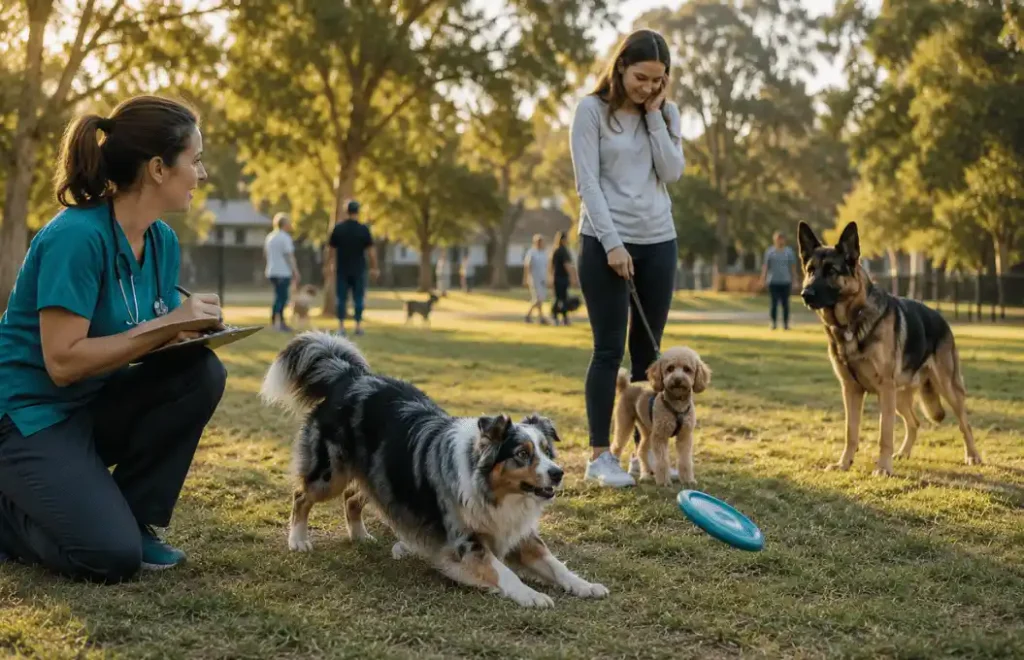
Breed-specific anxiety usually comes down to three factors: how the breed was originally developed (herding, guarding, companionship), how strongly they bond with humans, and how sensitive their nervous system is genetically. Working breeds like Border Collies and German Shepherds were selectively bred for alertness and responsiveness, traits that translate directly into anxiety when those instincts have no outlet. Companion breeds like Bichons and Toy Poodles were bred to be close to humans at all times, which makes separation distressing at a neurological level.
Does Breed Genetics Determine Anxiety, or Can Environment Override It?
The Finnish study showed clear breed-level patterns across 264 breeds. But the Generation Pup study, which followed individual puppies longitudinally and controlled for owner behavior, found breed showed no significant independent association with separation-related behaviors once those variables were factored in.
In 2025, a Scientific Reports study confirmed: early-life adversity (abuse, relinquishment, poor socialization) was strongly associated with fearfulness and aggression in adult dogs, across all breeds. A poorly socialized Border Collie and a poorly socialized Labrador may end up in similar places emotionally.
- Know your breed’s baseline risk: it tells you where to focus prevention effort
- Prioritize early socialization: the 0-to-6-month window appears critical for fearfulness outcomes
- Review your reunion routine: calm, low-drama returns are consistently recommended by veterinary behaviorists
- Avoid aversive training: the Generation Pup study found 2+ aversive techniques significantly increased SRB risk
Breed-Specific Management Tips

- High-drive herding breeds (Border Collie, Aussie): Prioritize mental stimulation. Puzzle feeders, nose work, agility training, and new commands burn energy at the cognitive level. An hour of sniff work can be more calming than two hours of running.
- Attachment-prone breeds (Vizsla, Lab, Golden): Work on independence training from puppyhood with short, positive alone-time sessions that gradually increase. Never make departures dramatic. Consider a dog walker or daycare if your schedule requires long absences.
- Sensitive companion breeds (Bichon, Cocker Spaniel, Toy Poodle): Keep routines extremely consistent. Feed, walk, and play at the same times daily. These dogs are emotional barometers, and a calm, predictable environment is their best medicine.
- Fear-reactive breeds (Chihuahua, German Shepherd): Invest heavily in socialization from 8–16 weeks. The socialization window closes fast, and gaps create lasting anxiety triggers.
What About Mixed Breed Dogs?
Mixed breeds can inherit anxiety tendencies from any breed in their genetic background. A Lab-Aussie mix combines the separation sensitivity of both parent breeds, potentially making separation anxiety more likely, not less. Many mixed breeds show lower anxiety than purebreds due to greater genetic diversity, but breed is a predisposition, not a destiny. Poodle crosses are a common example, and we cover both Cockapoo separation anxiety and Bernedoodle separation anxiety.
What You Can Do
If your dog shows signs of anxiety, natural support options can make a real difference. Explore our research-based guide to the best calming supplements for dogs to find the right solution for your breed.
- Rule out physical causes first: Thyroid disorders, chronic pain, and neurological conditions can mimic or worsen anxiety.
- Identify the specific anxiety type: Noise phobia, separation anxiety, and generalized fearfulness each respond to different interventions.
- Use systematic desensitization: Gradual, controlled exposure to triggers remains the gold standard for noise phobia and separation anxiety.
- Consider calming supplements: Products containing L-theanine, melatonin, or adaptil have evidence behind them for mild-to-moderate anxiety.
- Work with a professional for severe cases: A veterinary behaviorist can prescribe anti-anxiety medication alongside behavioral modification, a combination that consistently outperforms either alone.
For a full breakdown of anxiety signs, causes, and treatments, read our Complete Guide to Dog Separation Anxiety. If your dog is already showing signs of anxiety, start with our guide on How to Calm an Anxious Dog, with 9 methods ranked by speed and effectiveness.
Frequently Asked Questions
What dog breed has the most anxiety?
No single breed holds the top spot, but Lagotto Romagnolos, Shetland Sheepdogs, Spanish Water Dogs, and Miniature Schnauzers consistently score highest across noise sensitivity, fearfulness, and aggression in the University of Helsinki’s 13,715-dog study.
Is dog anxiety genetic or environmental?
Both. Breed genetics establish a baseline risk profile, but environment strongly shapes outcomes. Early-life adversity and owner behavior can amplify or dampen genetic predispositions considerably.
Can a naturally calm breed still develop anxiety?
Yes. Even breeds with low baseline fearfulness can develop significant anxiety following trauma, poor socialization, or chronic stress.
At what age does dog anxiety typically appear?
Separation-related behaviors appear early: 46.9% of puppies show them at six months. Noise phobia often emerges in adolescence and can intensify as dogs age.
Are small dog breeds more anxious than large breeds?
Not necessarily. Breed function and socialization history are stronger predictors than body size.
Can I use calming supplements for high-anxiety breeds?
Yes. Calming supplements with L-theanine, melatonin, or CBD are generally well tolerated by most dogs and work best as part of a broader management plan. Check with your vet first.
Sources: Dr. Bonnie Beaver, Texas A&M / Veterinary Research Communications, May 2026 (PMC). University of Helsinki / Scientific Reports, 2020 (PMC). Generation Pup / PMC, 2024 (PMC). Scientific Reports / Nature, 2025 (Nature).