🐾 Does your dog panic when you leave? → Get the Free 7-Day

Cure Dog Separation Anxiety Fast: 7 Proven Steps That Work

If your dog barks for hours the moment you leave, destroys furniture, or has accidents despite being fully housetrained, you already know how desperate this gets. You need to cure dog separation anxiety fast. Not in six months. This week.
Here’s the honest part: you can’t eliminate deep-rooted separation anxiety overnight. But you can see real improvement in days when you stack the right techniques. This is a 7-step protocol built on behavioral science and backed by veterinary research, ranked from what works fastest to what takes longer but matters most.

Why “fast” is relative — and what you can actually achieve in days
Set expectations before you start. Dogs with mild separation anxiety can show major improvement in 1–2 weeks. Moderate cases typically need 3–6 weeks of consistent work. Severe cases — self-injury, total destructive meltdowns, complete inability to be alone — often require a veterinary behaviorist and possibly medication before training can even begin.
“Cure” is also worth examining. Separation anxiety doesn’t always disappear permanently. What you’re building is resilience. Your dog learns that being alone is safe. With the right tools and consistency, most dogs reach a point where they handle normal alone time without distress.
Step 1: Identify your dog’s anxiety severity (takes 10 minutes)
You can’t cure dog separation anxiety fast if you’re treating the wrong severity level. Misidentifying this is the most common reason training fails.
Set up a phone or camera to record your dog after you leave. Watch the footage.
Dogs with mild anxiety whine for a few minutes, then settle. Occasional pacing or watching the door, but eventually they lie down. If this is your dog, Steps 2–4 alone can resolve things relatively quickly.
Dogs with moderate anxiety vocalize constantly, destroy things near exits (doors, windows), or have accidents that never happen when you’re home. They never fully settle. This level needs structured desensitization plus calming aids.
Dogs with severe anxiety injure themselves trying to escape, scream without letup, or vomit from stress. Stop here and call your vet before continuing. Severe cases need professional guidance — often medication. Training alone won’t work, and forcing it can make things worse.
Once you know your dog’s severity, you can set a realistic timeline.
Step 2: Start departure desensitization today
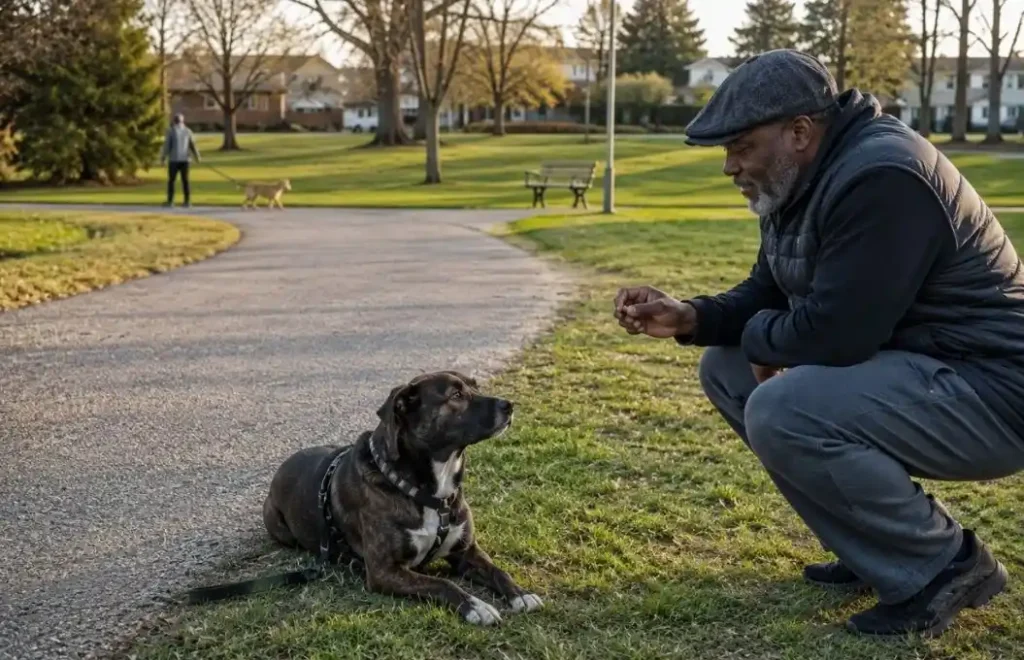
This is the most evidence-backed method to cure dog separation anxiety fast — or as fast as biology allows. Departure desensitization means teaching your dog that your absence is no big deal, by building up alone time in tiny increments.
Pick up your keys. Put them down. Do nothing. Repeat until your dog stops reacting to the sound.
Next, put on your shoes and sit back down. Don’t leave. Wait until your dog is relaxed, then take your shoes off.
Then: open the front door, step outside for three seconds, come back in. No drama. No big greeting. Just matter-of-fact.
The goal is to stay below your dog’s anxiety threshold at every session. If your dog starts panting, pacing, or whining, you went too far too fast. Back up to a duration where they stayed calm and build from there.
Practice 5 to 10 minutes daily — multiple short sessions, not one long one. Dogs learn through repetition. Most mild-to-moderate cases start showing real improvement within a week of consistent sub-threshold practice.
See the full departure training protocol →
One rule: don’t leave your dog alone longer than they can handle while you’re training. Every long, panicked session undoes progress. If you have a job, use a dog walker, neighbor, or daycare to cover those gaps during the training period.
Step 3: Add a calming aid to accelerate progress
Behavioral training works. Pairing it with a calming aid can help your dog stay under threshold during sessions — which means faster learning. Think of calming aids as lowering the anxiety baseline so training actually sticks.
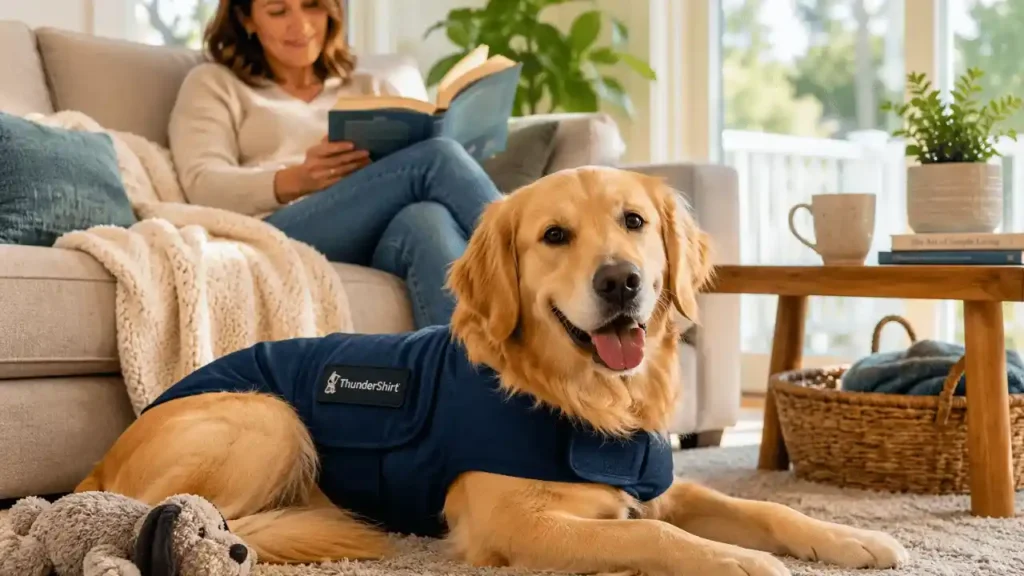
ThunderShirt
ThunderShirt uses gentle, constant pressure — similar to swaddling an infant — to reduce anxiety signals in the nervous system. In studies, about 80% of dogs show calmer behavior while wearing one. Put it on 10–15 minutes before a training session or before you leave. Don’t wait until your dog is already spiraling.
→ Check ThunderShirt on Amazon | Starting at $45
Adaptil diffuser or collar
Adaptil releases a synthetic version of the dog-appeasing pheromone that nursing mothers produce. It’s not sedating. It signals safety at a biological level. The diffuser is better for home anxiety; the collar works if anxiety follows your dog to new places. Most dogs need 2–4 weeks of consistent exposure before the full effect kicks in. Start this one immediately.
→ Check Adaptil on Amazon | Diffuser starter kit ~$35
Zesty Paws Calming Bites
Zesty Paws Calming Bites combine L-theanine, suntheanine, and chamomile in a chewable treat. They can take the edge off within 30–60 minutes. Not a cure, but useful during high-stress training sessions or before a situation you know will be hard.
→ Check Zesty Paws on Amazon | Starting at $28
ThunderShirt vs Adaptil — full comparison →
Step 4: Create a safe space your dog actually wants to use
A crate done wrong is a punishment. Done right, it’s your dog’s favorite room.
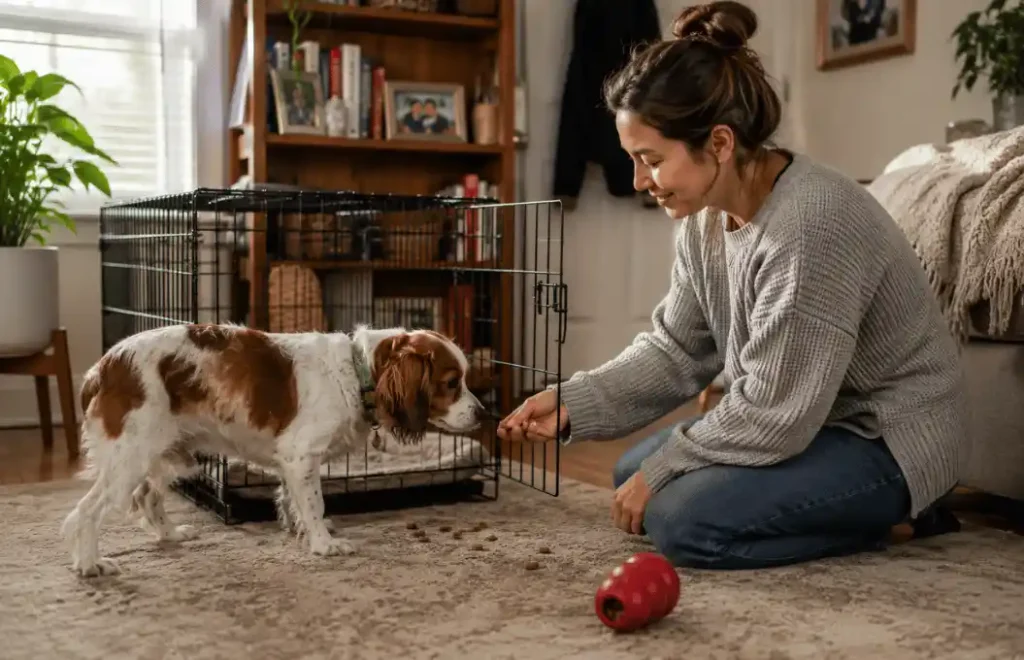
If your dog associates the crate with being trapped or abandoned, rebuild that association first. Start feeding every meal inside the crate with the door open. Toss high-value treats inside randomly throughout the day — no closing the door. Let your dog choose to go in. Once they’re walking in confidently on their own, close the door for 30 seconds while you’re still in the room. Build up from there.
A crate isn’t mandatory. Some dogs do better with a dog-proofed room or a baby-gated area. The goal is a space that feels secure.
Add something with your scent (an old t-shirt) and a long-lasting food toy like a Kong Classic stuffed with frozen peanut butter. A frozen Kong buys 15–30 minutes of focused licking, which is genuinely calming for anxious dogs — and creates a positive association with the space at the same time.
Best crates for dogs with separation anxiety →
Step 5: Fix your arrivals and departures ritual
Your homecoming might be making your dog’s anxiety worse. That surprises a lot of people.
When you come home to a dog who’s been anxious and greet them with high-energy excitement, you’re accidentally confirming that your absence was something to be upset about. You’re telling them the event was big and emotional.
Keep your pre-departure routine calm. Skip the long goodbye. Say a simple, neutral phrase in a flat tone and leave. Dramatic farewells spike cortisol before you’ve even walked out the door.
When you get home, come in quietly. Don’t greet your dog until they’re calm — four paws on the floor, no jumping. Wait it out. This might take 2–3 minutes. Once they’ve settled, give calm, quiet affection.
This doesn’t mean ignoring your dog. It means teaching them that your comings and goings are boring, routine events. That’s exactly what you want them to believe.
Step 6: Use puzzle toys and enrichment to break the panic loop
Anxiety runs on a feedback loop: boredom feeds anxiety, anxiety prevents rest, lack of rest makes everything worse. Enrichment interrupts that loop.
Licki Mats with soft food (peanut butter, plain yogurt, wet dog food) work well for anxious dogs because repetitive licking triggers a calming neurological response. Freeze them the night before for a longer-lasting effect.
Snuffle mats and food-dispensing puzzles engage your dog’s nose and problem-solving brain — both of which are incompatible with panicking. A dog that’s actively sniffing and working a puzzle is not spinning at the front door.
Build a rotation of 4–5 enrichment options and cycle through them so novelty stays high. Give these only when you leave, never randomly during the day. Your dog will start to associate your departure with the exciting thing about to appear — not with dread.
Step 7: Know when to call a vet or behaviorist
No honest guide on curing dog separation anxiety fast skips this: sometimes you need professional help, and asking early is smarter than waiting until your dog has injured themselves.
Call your vet if your dog’s anxiety is severe, if you’ve been consistent for 3–4 weeks and see no progress, if your dog is hurting themselves trying to escape, or if things are getting worse despite your efforts.
Your vet may discuss fluoxetine (the canine equivalent of Prozac) or clomipramine — the two FDA-approved medications for canine separation anxiety. Neither is fast-acting. Both take 4–6 weeks to reach full effect. They’re not sedatives; they reduce baseline anxiety so behavioral training can actually work. They work best combined with training, not instead of it.
Purina Pro Plan Calming Care is a non-prescription probiotic containing Bifidobacterium longum BL999, with clinical evidence showing reduced anxious behavior over 6 weeks. Worth starting immediately since it takes time to build up.
→ Check Purina Calming Care on Amazon | Starting at $30/month
Full dog separation anxiety treatment guide →
For certified behaviorists, the IAABC directory at iaabc.org is the most reputable resource. Look specifically for a CSAT — Certified Separation Anxiety Trainer. They specialize in exactly this problem.

FAQ
How fast can you cure dog separation anxiety?
Mild cases can show meaningful improvement in 1–2 weeks with consistent departure desensitization and calming aids. Moderate cases typically take 3–6 weeks. Severe cases — self-injury or non-stop screaming — often need veterinary medication alongside behavioral work and can take several months. There’s no universal timeline.
What calms a dog with separation anxiety immediately?
Nothing eliminates it immediately, but several things lower the acute stress response within minutes to hours. ThunderShirt can calm some dogs within 15 minutes. Zesty Paws Calming Bites work within 30–60 minutes. A frozen Kong or Licki Mat engages the calming licking reflex right away. These support training — they don’t replace it.
Can separation anxiety go away on its own?
Rarely. In very mild cases — usually young puppies new to being alone — anxiety sometimes resolves as the dog matures. But in established cases it tends to stay stable or get worse without intervention. Waiting usually makes things harder to treat.
Should I crate my dog with separation anxiety?
It depends. Some anxious dogs find a crate genuinely comforting — a small, den-like space that feels secure. Others escalate in a crate, especially if they weren’t properly introduced to it. If your dog injures themselves trying to escape, the crate is making things worse. A baby-gated room with familiar smells is often a better starting point for those dogs.
Is there a medication that works fast?
Fluoxetine and clomipramine are the two FDA-approved options for canine separation anxiety, but both take 4–6 weeks to reach full effect. Trazodone is sometimes prescribed for acute situations and can work within a couple of hours — always under veterinary supervision.
Final verdict
Start with the camera and departure desensitization today. Add a ThunderShirt or Adaptil while the behavioral foundation builds. If you’re not seeing progress after a month, call your vet — not because you failed, but because some dogs need pharmaceutical support to get calm enough to learn.
Your dog isn’t trying to punish you when they panic. They genuinely believe something terrible is happening. These steps are how you teach them otherwise.
→ Check ThunderShirt on Amazon | → Check Adaptil on Amazon | → Check Zesty Paws on Amazon
