🐾 Does your dog panic when you leave? → Get the Free 7-Day Starter Plan

What Age Do Puppies Get Separation Anxiety? (It’s Not Just Puppies)
Wondering what age do puppies get separation anxiety? It often starts at just 8 weeks old, causing genuine panic when left alone. Catch signs and stop it now.

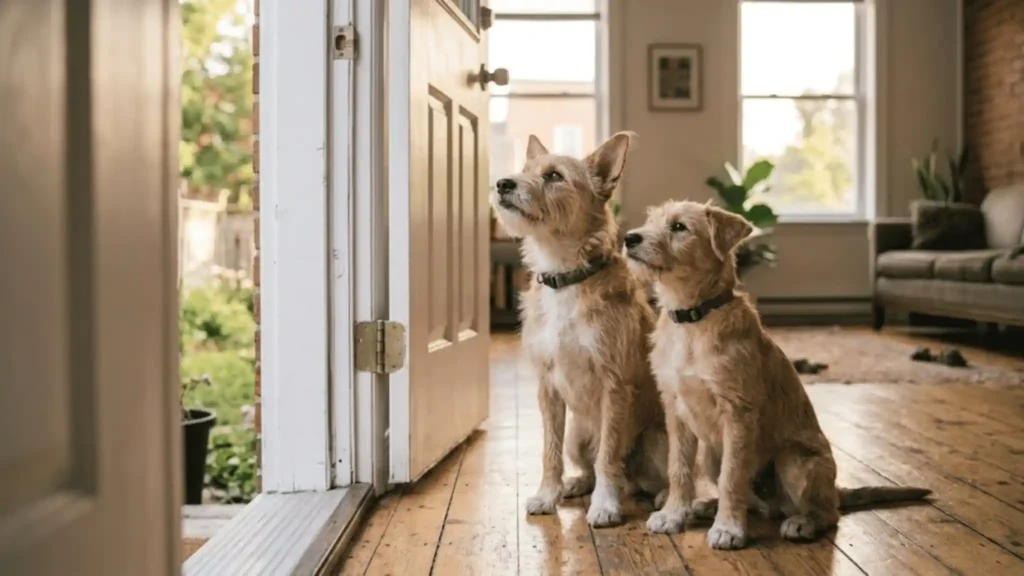
What age do puppies get separation anxiety? It can start as early as 8 to 11 weeks old, though dogs can also develop it as middle-aged adults or in their senior years. The trigger matters as much as the age.
What Age Do Puppies Get Separation Anxiety? The First Fear Window (8-11 Weeks)

Between approximately 8 and 11 weeks, puppies go through a developmental fear period. During this window, they’re more sensitive to scary experiences, and those experiences can leave a lasting impression. A puppy who has repeated panic-level experiences of being alone during this window can form an early association between solitude and danger.
This is one reason behaviorists recommend against leaving young puppies alone for extended periods too early. Short, calm alone-time exposures, gradually increasing, help the puppy learn that being alone is normal and safe. Prolonged distress during the fear period can set up anxiety that persists into adulthood.
Adolescence: 6-18 months
Adolescent dogs are in a second period of neurological reorganization. Behaviors that seemed stable can shift a dog who was calm alone at four months may start showing anxiety at eight months. This isn’t regression. It’s a normal part of development that creates a temporary window of increased vulnerability.
Changes in routine are also common during adolescence (the owner returns to work, the dog starts being left alone more) and can coincide with this developmental window in a way that looks like sudden onset but is really the combination of timing and circumstance.
Adult onset: triggered by life events
Many dogs develop separation anxiety in adulthood, not as a developmental issue but as a response to a specific event or change. Common triggers include:
- Schedule changes. A dog used to constant human presence suddenly left alone for eight hours after a household change, job change, or return to in-office work.
- Loss of a companion. The death or departure of another pet or human the dog was bonded to.
- A traumatic event. A storm, injury, or other frightening experience that generalizes into broader anxiety.
- Rehoming or adoption. Dogs entering new homes are frequently anxious about what predictability means in the new environment. This often looks like separation anxiety and usually improves as the dog settles, but for some it persists.
- Extended time together. Long periods of 24/7 proximity (illness, extended leave, working from home) followed by a sudden return to normal separation can destabilize a dog that had previously been calm alone.
Senior dogs: anxiety in later life
Anxiety that appears or worsens in an older dog warrants a veterinary evaluation before behavioral work begins. Cognitive dysfunction syndrome (CDS), similar to dementia in humans, can cause increased anxiety, nighttime restlessness, and changes in how the dog responds to being alone. Medical conditions causing pain or discomfort also increase anxiety levels.
A dog showing new anxiety symptoms at 10 or 12 years old is more likely experiencing a medical or cognitive change than a new behavioral problem. The vet visit should come first.
What the onset typically looks like
Separation anxiety often develops gradually, which is why owners sometimes miss the early signs. Before a dog is openly panicking, they may show:
- Excessive following (velcro behavior)
- Watching from windows or doors after the owner leaves
- Panting or yawning when departure cues appear
- Reluctance to eat when alone, even if normally food-motivated
- Restlessness or pacing in the first minutes after being left
A camera pointed at the dog during the first 30 minutes alone will often reveal anxiety that isn’t visible at departure or arrival. The dog may appear fine when you leave and fine when you return, but distressed in between.
Risk factors across all ages
Certain factors make any dog more likely to develop separation anxiety regardless of age:
- A history of rehoming or multiple placements
- Breeds with strong human-bonding tendencies (Vizslas, Weimaraners, Belgian Malinois, some herding breeds)
- Dogs with generally anxious temperaments
- Prior trauma or neglect
- Single-owner households with very consistent schedules (when that schedule breaks, there’s nothing familiar to fall back on)
When to start the protocol
Early intervention is significantly easier than treating established separation anxiety. If you notice early signs, excessive following, anxious departure cues, restlessness in camera footage, starting the desensitization protocol at that stage is much more efficient than waiting until the dog is panicking.
The protocol is the same regardless of age of onset. For senior dogs with suspected cognitive or medical involvement, the vet visit happens first, medication may be part of the picture before behavioral work begins. For all other cases, the separation anxiety training guide covers the step-by-step approach.
Most owners see meaningful progress within two to four weeks of consistent, correctly-paced desensitization, though the exact age a dog first shows separation anxiety does influence recovery speed. Puppies and adolescents tend to respond fastest because the association between solitude and panic hasn’t had years to become entrenched. Dogs whose anxiety appeared later in life, especially after a triggering event, may need a slower pace and more repetitions at each stage. Tracking sessions on video helps confirm whether the dog is truly relaxed before increasing duration, rather than guessing from behavior at the door.
FAQ
Can separation anxiety suddenly appear in an older dog?
Yes. Unlike puppies, senior dogs rarely develop separation anxiety out of nowhere. Sudden onset in an older dog is often linked to a medical issue or cognitive dysfunction syndrome (CDS), so a vet visit should come first.
Is separation anxiety a sign of dementia in dogs?
It can be. Cognitive dysfunction syndrome, similar to dementia in humans, often causes increased anxiety, nighttime restlessness, and changes in how a senior dog responds to being alone.
Should I see a vet before starting training for a senior dog?
Yes. For senior dogs with suspected cognitive or medical involvement, the vet visit happens first. Medication may be part of the treatment before behavioral training begins.
- Dog training for separation anxiety: the full protocol
- What not to do with a dog that has separation anxiety: avoid these common mistakes
- How to calm dog anxiety naturally: supportive tools alongside the protocol

