🐾 Does your dog panic when you leave? → Get the Free 7-Day Starter Plan

Dog Anxiety at the Vet: How to Help Your Dog Feel Safer

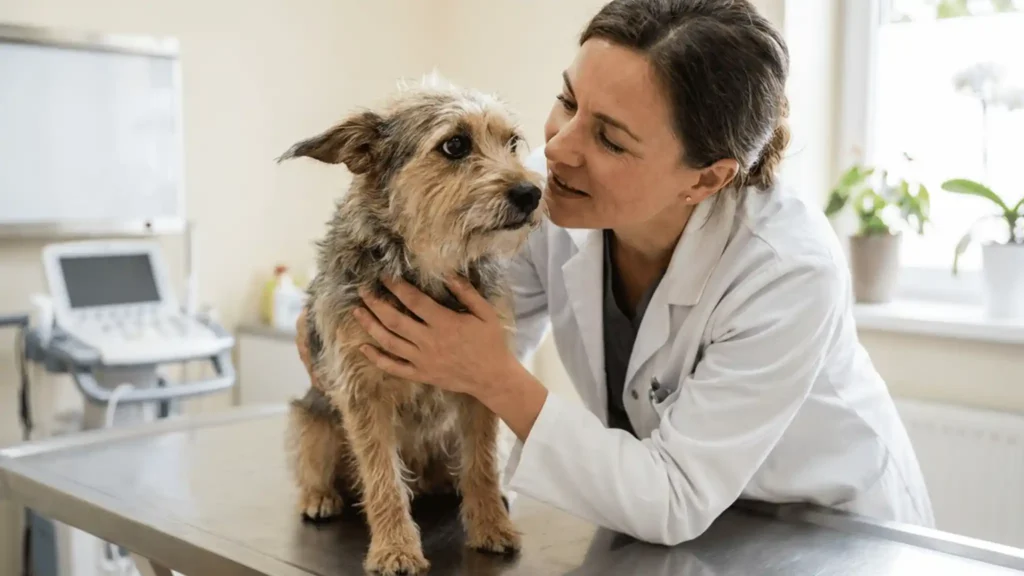
Does your dog shake, drool, or dig in their heels the moment they smell the clinic? Here’s why vet visits hit anxious dogs so hard, and the before-during-after approach that actually helps.
Emma Reynolds · Guides & How-To
This post may contain affiliate links. We may earn a small commission if you buy through our links, at no extra cost to you.
Dog anxiety at the vet is a fear response to the clinic itself, not a sign your dog is “being difficult.” The smells, the restraint, the memory of past pain: all of it adds up before anyone has even touched them. Most dogs improve with a mix of pre-visit prep, handling techniques that keep them in control of the interaction, and, for tougher cases, medication prescribed specifically for the appointment. None of it means dragging your dog through the door and hoping for the best.
Why dog anxiety at the vet happens
A veterinary clinic packs more anxiety triggers into fifteen minutes than almost anywhere else your dog goes. Unfamiliar smells hit a dog’s nose long before they hit yours: other animals, disinfectant, fear pheromones left behind by the last stressed patient. The waiting room puts them close to strangers with no way to increase distance. Then in the exam room, they lose control over what happens to their own body: lifted onto a table, restrained for a shot, ears and mouth handled by someone they’ve never met.
For a lot of dogs, dog anxiety at the vet takes root after just one bad experience, a painful procedure, a rough hold, a loud clipper, for the association to stick. After that, the car ride, the parking lot, even the smell of the building can trigger the same fear before anyone has laid a hand on them.
Puppies who missed proper socialization tend to struggle more, and so do dogs who are naturally anxious in general, but dog anxiety at the vet shows up across breeds and temperaments. But plenty of confident, well-adjusted dogs develop vet-specific fear from one hard visit alone.
Signs your dog is anxious at the vet
Some dogs make it obvious. Others go quiet in ways that get mistaken for calm, but dog anxiety at the vet still follows a recognizable pattern.
Obvious signs: trembling, panting when it isn’t hot, drooling, resisting on the exam table, trying to back out of the room, growling or snapping when approached.
Subtler signs: refusing treats they’d normally grab without hesitation, freezing instead of struggling, whale eye (showing the whites of the eyes), lip-licking, yawning outside of tiredness, a tucked tail, flattened ears.
A dog who won’t take food somewhere they’d normally eat without a second thought is telling you something about their dog anxiety at the vet. That’s usually the clearest single sign the stress has crossed a real threshold, not just mild nerves.
Before the appointment
Most of the work for managing dog anxiety at the vet happens before you ever walk through the door.
Schedule a happy visit. Call ahead and ask if your dog can come in briefly with no procedure at all, just to get weighed, grab a few treats from the staff, and leave, a simple way to ease dog anxiety at the vet over time. Fear Free certified clinics are set up for exactly this. A few of these visits, unconnected to anything painful, slowly rewrite the association your dog has with the building.
Practice handling at home. Get your dog used to the things a vet exam involves before it’s actually happening: touching paws, looking in ears, lifting the lips to check teeth, a gentle hold for a few seconds. Pair each with a treat. This is often called cooperative care, and dogs who’ve practiced it tend to handle the real exam better simply because none of it is new.
Teach a muzzle as something good, not a punishment. If your dog has ever snapped at the vet out of fear, a basket muzzle is probably going to be part of future visits. Introduce it at home first: treats through the front, short sessions, building up duration slowly, so it isn’t one more scary surprise on top of an already stressful day.
Time the appointment on purpose. This alone can lower dog anxiety at the vet. Ask for the first slot of the day or right after a lunch break, when the waiting room is quietest and the exam rooms haven’t picked up the smell of a dozen other stressed animals.
Talk to your vet about pre-visit medication. For moderate to severe cases, this is often the single biggest change you can make, and it’s not the same thing as sedating a dog for a procedure. Gabapentin and trazodone are commonly prescribed to be given the night before and again a couple of hours before the appointment, specifically to lower baseline anxiety so the visit itself is less traumatic. Set this up with your vet ahead of time and test a trial dose at home on a quiet day first. A small number of dogs get wobbly instead of calm, and you want to know that before appointment day.
Bring your dog hungry. Unless your vet has told you to fast them for a procedure, skip the meal beforehand so treats actually work as reinforcement against dog anxiety at the vet once you’re there.
During the appointment
Stay in the room. Your presence does real work even when you’re not saying anything. Dogs read a calm, unbothered owner as a sign the situation is safe, which matters a lot for dog anxiety at the vet. You don’t need to narrate reassurance, just avoid sending your own tension down the leash.
Bring treats the vet team can use too. Something soft and fast to eat, cut-up cheese or hot dog rather than dry kibble, so the team can reward calm behavior in the moment, not just you.
Ask for a non-slip surface. A towel or yoga mat on a slippery exam table removes one more thing that feeds dog anxiety at the vet.
Request a Fear Free-trained team member if one’s available. These are staff trained in low-stress handling: positioning that doesn’t pin the dog down more than necessary, catching stress signals before they escalate to a bite, and pacing the exam around what the dog can actually tolerate instead of rushing through.
Don’t punish fear responses. Growling, freezing, or trying to leave is communication, not disobedience. Correct a dog for showing fear and you take away their ability to warn you before things escalate. It doesn’t make the fear disappear.
After the visit
Most dogs settle within an hour of getting home. If yours stays unusually withdrawn, won’t eat, or seems on edge well past that, mention it at the next visit. It’s a sign the dog anxiety at the vet ran deeper than typical mild stress.
If your dog just had a hard visit, don’t wait until the next appointment is looming to start repairing it. Book a happy visit or two in the weeks after, one of the most effective ways to counter dog anxiety at the vet while the memory is still fresh.
What calming products can (and can’t) do
A calming wrap like a ThunderShirt, a pheromone spray such as Adaptil (the Amazon-available equivalent is ThunderEase) on the car or carrier before you leave, or an L-theanine chew such as Native Pet Calming Chews given ahead of time can all lower dog anxiety at the vet enough that the other techniques on this page land better. None of them will make a dog with a genuine phobia comfortable on their own. Think of them as lowering the floor, not fixing the fear.
→ See our full breakdown: Best Calming Supplements for Dogs
→ Compare two of the most recommended non-prescription options: ThunderShirt vs Adaptil
FAQ
Is it normal for my dog to shake at the vet?
Yes. Trembling is one of the most common stress responses in dogs and doesn’t necessarily mean the fear is severe. Worth addressing with the steps above, but it’s not unusual, and it’s not a sign you’ve done something wrong.
Should I ask for sedation for every visit?
Not necessarily. Medication for dog anxiety at the vet, like gabapentin and sedation for a specific procedure are prescribed for different reasons. Talk to your vet about what your dog actually needs. For a lot of dogs, consistent handling practice plus a lower-dose anti-anxiety medication is enough without full sedation.
My dog was fine at the vet as a puppy and now hates it. What changed?
Something likely happened along the way: a painful procedure, a rough hold, or just a buildup of stressful visits over time. It doesn’t take one dramatic event: dog anxiety at the vet often builds from repeated mild stress rather than one dramatic incident.
Can I just avoid the vet if my dog hates it that much?
Skipping care isn’t a real fix and brings its own risks. Happy visits, handling practice, and pre-visit medication exist so avoidance isn’t the only option. Most dogs can get past dog anxiety at the vet to a manageable place with consistent work.
Quick takeaway
- Happy visits and at-home handling practice do more long-term good than anything you can do in the waiting room
- Pre-visit medication like gabapentin or trazodone is a legitimate, common tool for moderate to severe cases. Set it up with your vet in advance
- Never punish a fear response. Growling and freezing are communication, not defiance
If your dog’s vet anxiety is part of a bigger pattern of stress, the free 7-Day Dog Anxiety Starter Plan walks through the daily habits and environment changes that lower baseline anxiety across every trigger, not just the clinic.
This article is for informational purposes only and does not replace professional veterinary advice. If your dog’s anxiety is severe or getting worse, talk to your vet or a certified veterinary behaviorist.
Related Guides
- Dog Car Anxiety: Why It Happens and How to Help
- ThunderShirt vs Adaptil: Which Works Better?
- Best Calming Supplements for Dogs
- Dog Anxiety Attack: A Guide
- Natural Remedies for Dog Anxiety: What Works
Emma Reynolds is the founder and lead writer at PetCalmZone. After adopting Milo, a rescue dog with separation anxiety and hypervigilance, she dove deep into canine behavior science and evidence-based calming techniques. She has completed independent training in dog behavior and canine emotional wellness, and reviews veterinary research regularly to keep every guide practical and trustworthy. Her mission: help dog owners feel less guilty and more confident supporting an anxious dog.