🐾 Does your dog panic when you leave? → Get the Free 7-Day Starter Plan

Dog Having Anxiety Attack: Signs, What to Do, and How to Prevent Them


Affiliate disclosure: This article and its sidebar contain affiliate links. If you buy through these links, PetCalmZone may earn a commission at no extra cost to you.
If you’ve noticed your dog having anxiety attack symptoms: shaking, panting, pacing, maybe trying to escape, it’s distressing to watch. You want to help but don’t know if you’re making it worse. And if these episodes keep happening, you want to know why and how to stop them.
Here’s what a dog anxiety attack actually is, how to recognize one in progress, and what to do, and not do, when it’s happening. Just as important: sudden shaking, drooling, or collapse is not always anxiety. Seizures, fainting, pain, and poisoning can look similar, so this guide also covers how to tell them apart and when an episode needs a vet right away.
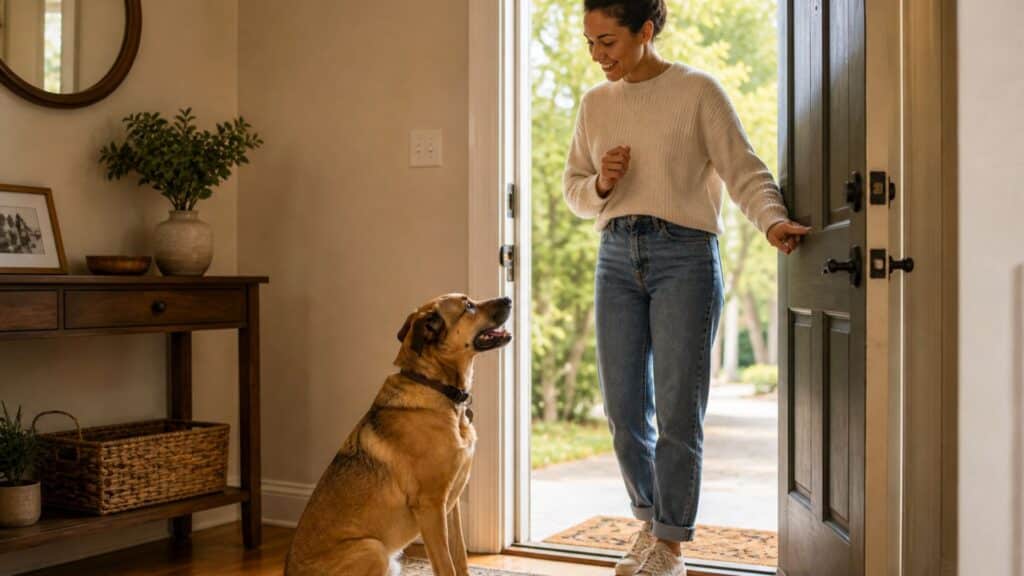
What is a dog anxiety attack?
“Anxiety attack” isn’t a formal veterinary diagnosis, but it describes something real: an acute, sudden spike in anxiety that’s more intense and more visible than baseline anxiety. Think of it as the nervous system going from low-level stress to full panic mode. For a broader overview of how anxiety shows up in dogs day-to-day, see the AKC’s guide to anxiety in dogs.
Veterinary references such as the Merck Veterinary Manual describe fear, anxiety, and phobias in dogs rather than “panic attacks” as a diagnosis, and we can’t know whether a dog experiences panic the way a person does. But dogs clearly have acute fear and stress episodes: moments where the response fires hard and the dog becomes visibly distressed, unable to settle, and sometimes dangerous to themselves. That’s what most owners mean when they say “anxiety attack.”
A dog anxiety attack is different from chronic, low-level anxiety. It has a beginning, a peak, and an end, usually triggered by something specific: a loud noise, being left alone past their threshold, an unfamiliar person or animal, or a past trauma trigger.
Signs your dog is having an anxiety attack
The signs of a dog anxiety attack look different from baseline stress. They’re more intense and often escalate rapidly.
Physical signs: Heavy panting despite cool temperatures, trembling or shaking, excessive drooling or foaming at the mouth, dilated pupils, rapid heart rate (you can feel this by placing your hand on the chest), and in severe cases vomiting or diarrhea from the stress response overloading the digestive system.
Behavioral signs: Frantic pacing, destructive behavior at exits (clawing, chewing), frenzied attempts to escape a confined space, self-harm (chewing their own paws or legs), inability to respond to their name or basic commands, and hiding. Some dogs go the opposite direction and become hyperattached: pressing against you, climbing on you, refusing to move away.
Vocalization: Intense barking, howling, or whining, often at a pitch or volume you don’t hear from them normally.
The key difference between normal anxiety and a dog anxiety attack: during the acute episode, normal interventions often don’t work. The dog may not respond to commands they know perfectly well, not because they’re ignoring you, but because the stress response has hijacked their cognitive function. The Merck Veterinary Manual notes that highly aroused dogs react reflexively through fight-or-flight responses, which affects their decision-making and interferes with learning. A dog in full panic is not in a state where learning happens.
One important caution: trembling, drooling, panting, dilated pupils, and restlessness are not specific to anxiety. They also show up with pain, nausea, overheating, poisoning, and in the warning phase some dogs show before a seizure. A single episode of sudden shaking is not proof that your dog had an anxiety attack, especially if there was no obvious trigger.
Dog Anxiety Attack vs. Seizure or Fainting
Owners often describe very different events with the same words: “shaking,” “collapsed,” “panicked.” The patterns below can help you describe what you saw, but they are general tendencies, not a way to diagnose your dog at home. Only a veterinary exam, ideally with a video of the episode, can sort out the cause.
| Anxiety or fear episode | Seizure | Fainting (syncope) | |
|---|---|---|---|
| Awareness | Awake and aware, though may not respond to commands | Often reduced or lost; may not respond to you at all | Brief loss of consciousness |
| Body | Trembling, pacing, hiding, trying to escape; can usually stand and walk | Stiffening, jerking, paddling, chomping; may urinate or defecate | Sudden weakness or wobbliness, then a limp collapse with little movement |
| Trigger | Often a recognizable one: noise, departures, visitors, car rides | Often none; can happen at rest or during sleep | Often exertion, excitement, coughing, or straining |
| Afterward | Settles gradually as the trigger fades | May be confused, wobbly, restless, or temporarily blind for minutes to hours | Usually recovers within seconds to minutes |
The overlap is real. According to VCA Animal Hospitals, some dogs hide, whine, act anxious, tremble, or salivate for seconds to hours before a seizure, which can look exactly like anxiety. Fainting is usually caused by reduced blood flow to the brain, often from a heart rhythm or heart muscle problem, according to VCA’s guide to syncope, so a fast recovery is not reassuring on its own.
Shaking without collapse has its own list of causes. Dogs can tremble from cold, pain, nausea, low blood sugar, and tremor disorders such as idiopathic tremor syndrome, where the dog stays alert. Poisoning is a major cause too: in a retrospective study of 198 dogs with generalized tremors, intoxication was the most common cause. Moldy food or compost, slug bait, some insecticides, and human medications are among the exposures vets ask about.
When Sudden Shaking or Collapse Is an Emergency
Don’t wait for an episode to pass if you see any of the following. Call your vet or the nearest emergency clinic right away:
- A seizure lasting more than 5 minutes, or seizures that keep coming back without your dog fully recovering in between. Cornell’s Riney Canine Health Center describes a seizure that doesn’t stop on its own, typically more than five minutes, as status epilepticus, which needs emergency treatment.
- More than one seizure in 24 hours (a cluster).
- Collapse or loss of consciousness, even if your dog seems normal again a minute later.
- Inability to stand or walk, a head tilt, or a sudden loss of balance.
- Trouble breathing, or gums that look pale, gray, or blue.
- A swollen belly with retching that brings nothing up, especially with restlessness and drooling.
- Heavy panting and drooling in heat or after exercise, which can signal overheating.
- Any chance your dog ate something toxic: medications, cannabis, xylitol gum, chocolate, rodent or slug bait, moldy food or compost. Call your vet or the ASPCA Animal Poison Control Center (888-426-4435, a fee may apply) without waiting for symptoms to get worse.
During a seizure, keep your hands away from your dog’s mouth, move them away from stairs and hard furniture if you can do so safely, and time the episode. If you can, film it: a short video is one of the most useful things you can bring to the vet.
What to do when your dog having anxiety attack symptoms appear
These steps help you manage a dog anxiety attack in the moment, not train your dog out of it.
Stay calm yourself
Dogs read their owners constantly. If you become anxious or frustrated watching your dog panic, they pick that up and it escalates the episode. Calm, quiet presence is the most useful thing you can offer. Slow your movements, lower your voice, and if possible, lower your physical position (sitting or crouching).
Remove or reduce the trigger if possible
If the anxiety episode was set off by something specific (a noise, a visitor, another dog) and you can reduce that trigger, do it. Move your dog to a quieter room, ask the visitor to step outside, turn on white noise. You’re not “rewarding” the anxiety by removing the stressor. You’re managing an acute episode so your dog can return to a state where they can function.
Offer a safe space
If your dog has a crate, a specific room, or a spot they normally go to when stressed, give them access to it. Don’t force them in: give them the option. Dogs in a panic state often seek small, enclosed spaces. It’s a self-soothing behavior: lower stimulation, walls on multiple sides, feeling enclosed.
Use gentle physical contact if your dog accepts it
For dogs who find contact comforting, slow, firm strokes (not quick patting) along the back can help. Focus on the shoulders and back rather than the face or head. Coming at a panicked dog’s face can intensify anxiety or trigger a defensive snap. If your dog moves away, let them. Forcing contact during a panic episode is counterproductive.
Try a ThunderShirt if one is available
Pressure wraps like ThunderShirt seem to help some dogs during acute episodes, especially noise-triggered ones. Research results are mixed and many dogs show no clear change, so think of a wrap as an optional comfort tool, not a treatment. If your dog isn’t already wearing one and is too agitated to put it on, wait until the peak of the episode passes.
→ Check ThunderShirt on Amazon
Let it settle, but watch for red flags
A fear or anxiety episode with a clear trigger usually eases gradually once the trigger is gone or reduced. How long that takes varies a lot from dog to dog, and no fixed timeline is backed by research. Your job during this time is containment and comfort, not training or correction.
Waiting is only appropriate when your dog is clearly awake, aware, and able to move normally. If your dog collapses, can’t stand, doesn’t seem to know you, has trouble breathing, may have eaten something toxic, or isn’t settling even after the trigger is gone, stop waiting and call a vet. See the emergency signs above.
Don’t try to get your dog to “work through it” by exposing them to more of what’s frightening them: that’s desensitization, and it only works in a controlled, planned context with the dog below their threshold.
What not to do
A few things make a dog anxiety attack worse, not better.
Don’t punish the behavior. Yelling at, hitting, or using aversive methods on a panicking dog intensifies the fear response. The destructive behavior and vocalization during a panic episode aren’t choices your dog is making. They’re symptoms. Punishment teaches the dog that scary situations also mean punishment, adding a new layer of fear.
Don’t force reassurance. Holding a panicking dog against their will, restraining them, or physically preventing them from moving to a different spot tends to escalate things. Offer comfort, but don’t impose it.
Don’t expose them to the trigger to “get over it.” Flooding (forced exposure to a fear trigger at full intensity) is a recognized behavioral technique, but it requires professional oversight and can go badly wrong. During an anxiety episode is not the time for improvised exposure therapy.
Don’t assume it’ll get better on its own. A single severe episode isn’t necessarily a crisis, but if anxiety attacks are recurring, they often worsen without intervention, as repeated frightening experiences can make a dog more sensitive to the same triggers. Recurring episodes are also a reason to have a vet rule out medical causes.
How to prevent future anxiety attacks
Managing a dog anxiety attack in the moment is the short game. Preventing recurrence is the actual goal.
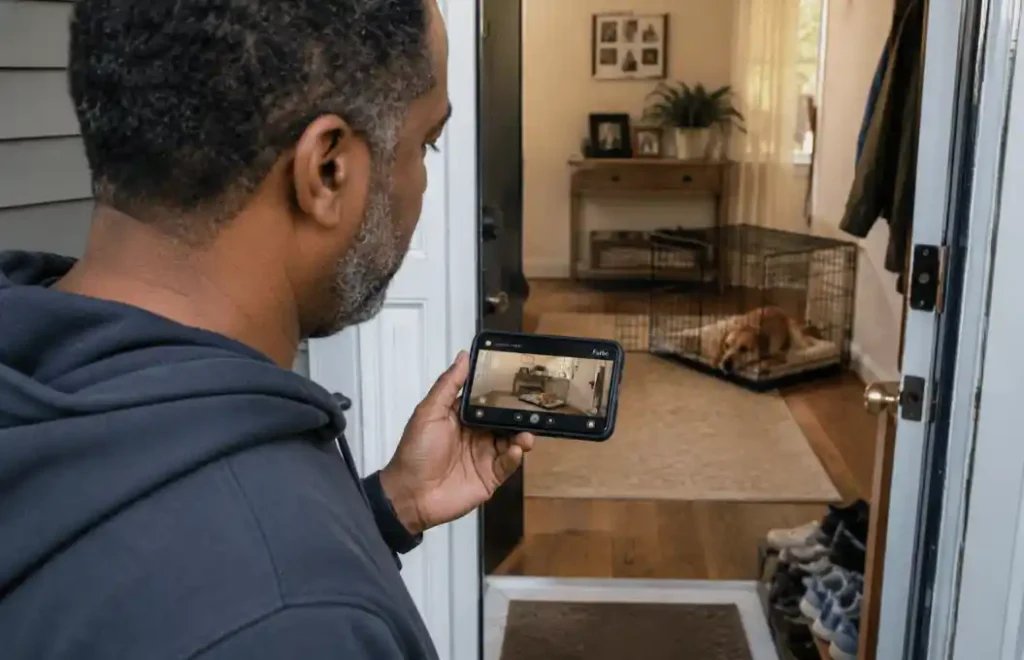
Identify and track triggers. Keep notes on when episodes happen, what preceded them, and how long they lasted. Patterns emerge faster than you’d expect. A dog who seems to have random anxiety attacks usually has patterns: times of day, specific sounds, specific people, specific environments. The episode tracking checklist below gives you a simple format.
Behavioral modification for the specific trigger. Once you’ve identified the trigger, systematic desensitization is the evidence-based approach. For separation anxiety, this means departure training starting with absences shorter than the threshold where anxiety kicks in. For noise anxiety, it means gradual sound exposure at low volume, paired with positive reinforcement, over weeks. Full separation anxiety protocol →
Daily calming aids to lower the baseline. Products like Adaptil (pheromone diffuser) and Purina Pro Plan Calming Care (probiotic supplement) are designed for daily use over several weeks. Some owners notice a calmer baseline, but the evidence is limited and results vary from dog to dog, so don’t count on them to prevent episodes on their own. They’re best seen as an add-on to behavioral work and veterinary advice, not a replacement. Full guide to anxiety treatment options →
Predictable routine. Anxiety is harder to trigger in dogs who have consistent, predictable daily schedules. Feeding times, walk times, and sleep schedules all contribute to a stable nervous system baseline. Disruption, even positive disruption, can temporarily raise anxiety levels.
Exercise. Not as a cure, but as a useful contributor. Appropriate daily exercise and mental enrichment help many dogs settle more easily. Exercise alone won’t resolve true anxiety, but a bored, under-exercised dog has one more source of stress to cope with.
When to call a vet
If you see any of the emergency signs listed above, don’t wait: go to a vet or emergency clinic now. Outside of those situations, book a vet appointment if:
- this is the first episode of its kind, or you aren’t sure it was anxiety;
- episodes happen without a clear trigger;
- your dog injures themselves during an episode;
- vomiting or diarrhea comes with the episodes;
- episodes are getting longer, more intense, or more frequent;
- your dog becomes aggressive during episodes (a safety issue);
- behavioral work isn’t making a dent after several weeks of consistent effort.
The Merck Veterinary Manual stresses that medical causes, including pain, should be ruled out before a problem is treated as purely behavioral. That’s why a vet visit comes before, not after, a long stretch of home management.
For dogs with severe or recurrent episodes, situational medication, prescribed ahead of known triggers like thunderstorm season or holiday fireworks, is a legitimate tool. Trazodone and alprazolam are examples of medications vets may prescribe for situational anxiety, and dexmedetomidine oral gel is FDA-approved for noise aversion in dogs. For ongoing anxiety, fluoxetine and clomipramine are FDA-approved for canine separation anxiety, and the Merck Veterinary Manual notes they work best when combined with behavior modification. All of these require a veterinary exam: dosing, side effects, and drug interactions differ between dogs, and some anti-anxiety drugs can occasionally make a dog more agitated instead of calmer. If your regular vet isn’t equipped to manage complex behavioral cases, the American College of Veterinary Behaviorists directory can help you find a board-certified veterinary behaviorist near you.

What If Your Dog Has Repeated Unexplained Episodes?
Episodes that come and go without a clear trigger are exhausting, especially when your dog seems completely normal by the time you reach the clinic. A normal exam doesn’t mean nothing happened. Seizures, fainting, and some toxin exposures can leave no visible signs between episodes, and some dogs with seizures go months between them.
Bring evidence, not just a description
Your vet only sees your dog between episodes. A phone video and a written log, like the checklist below, often tell them more than any description can. Several logged episodes can reveal a pattern, such as episodes after exercise, after meals, at night, or after time in the yard.
Ask for a step-by-step diagnostic plan
If cost is a concern, say so. Ask your vet which tests would be most informative first, what each costs, and what results would change the next step. If episodes keep happening without answers, ask whether a referral to a veterinary neurologist, cardiologist, or board-certified veterinary behaviorist makes sense.
If the medication doesn’t seem to work
Don’t stop, double, or combine medications on your own. Tell your vet exactly what you’re seeing. Some daily medications take weeks to show their full effect, the dose or drug may need adjusting, the trigger may need behavioral work that medication alone can’t replace, or the episodes may not be anxiety at all. A medication that isn’t helping is a good reason to revisit the diagnosis.
If car rides make vet visits hard
Fear of the car shouldn’t keep your dog from care. Ask your clinic whether they can review videos remotely, offer a house call, schedule a quieter appointment, or prescribe a pre-visit plan. Never give human sedatives or leftover medication without your vet’s guidance. In an emergency, go anyway.
Dog Episode Tracking Checklist
Fill this in as soon as possible after each episode, while details are fresh:
- When and where: date, time, and what your dog was doing just before (sleeping, eating, playing, alone, in the car).
- Symptoms, in order: shaking (whole body or one part), drooling, panting, pupil size, stiffness or paddling, collapse, urination, vocalizing.
- Awareness: did your dog respond to their name or look at you?
- Duration: start and end time, measured with a clock or phone.
- Possible triggers: noises, visitors, departures, weather, exercise, heat.
- Possible exposures in the last 24 hours: new food or treats, trash, compost or moldy food, plants, garden or pest products, medications or cannabis in the home, sugar-free products.
- Medications and supplements: names, doses, and time of the last dose.
- Recovery: how long until your dog was fully normal, and any wobbliness, confusion, apparent blindness, unusual hunger, thirst, or sleepiness afterward.
- Gum color, if you can check safely: pink, pale, gray, or blue.
- Video: a phone recording, ideally from the start of the episode.
FAQ
How long does a dog anxiety attack last?
There’s no reliable standard duration. A fear or anxiety episode with a clear trigger usually eases gradually once the trigger fades, but some dogs stay on edge much longer, especially when the trigger continues, such as being left alone. An episode that doesn’t ease after the trigger is gone, or that involves collapse or loss of awareness, needs a vet.
Can dogs have anxiety attacks in their sleep?
What looks like an anxiety attack during sleep is usually normal dreaming: twitching, whimpering, paddling legs. A dreaming dog can usually be woken easily. If your dog is stiff, hard to wake, or confused afterward, or wakes already in a panic, tell your vet, since seizures can also happen during sleep.
Should I comfort my dog during an anxiety attack?
Yes, if your dog welcomes it. Fear is an emotional reaction, not a behavior your dog is performing for attention, so calm comfort is unlikely to make it worse. Calm presence, access to a safe space, and gentle contact (if accepted) help. Forced restraint or obvious distress on your part can make things worse.
What’s the fastest thing to stop a dog anxiety attack?
There’s no instant fix. Remove or reduce the trigger if possible, give your dog access to their safe space, and stay calm nearby. A pressure wrap may help some dogs who already accept one. Calming products work differently from dog to dog and shouldn’t be relied on to stop an episode in progress. The goal in the moment is management, not elimination.
Are anxiety attacks dangerous for dogs?
Anxiety itself is rarely life-threatening, but the behavior during an episode can be. Self-injury from escape attempts (broken teeth, torn nails, cut paws, impact injuries) is a real risk. The other hidden danger is mistaking a seizure, fainting episode, or poisoning for anxiety, which is why unexplained episodes deserve a vet visit.
Can a dog have a seizure and act normal afterward?
Yes. Recovery varies: some dogs are confused, wobbly, restless, or temporarily blind for minutes to hours, while others seem back to normal quickly. A quick recovery doesn’t rule out a seizure, so any suspected seizure is worth a vet exam, ideally with a video.
Can a dog have seizures only occasionally?
Yes. Seizure frequency varies widely. Cornell’s Riney Canine Health Center notes that some dogs never have another seizure, some have a mild one about once a year, and even well-managed epileptic dogs can have occasional breakthrough seizures. Infrequent episodes still deserve a vet visit and a written log.
Why does my dog suddenly collapse and then recover?
A brief collapse with a quick recovery can be fainting (syncope), which is often linked to heart rhythm or heart muscle problems, or a short seizure. Low blood sugar and other metabolic problems are also possible. Because some of these causes are serious, call your vet the same day after any collapse, and seek emergency care if it happens again or your dog doesn’t fully recover.
What if my dog’s anxiety medication isn’t helping?
Talk to your vet before changing anything. Some daily medications take weeks to show their full effect, the dose or drug may need adjusting, behavior work may be missing, or the episodes may not be anxiety at all. Never stop, double, or combine medications on your own.
What should I record to show my veterinarian?
A video of the episode, start and end times, what your dog was doing just before, the symptoms in order, whether your dog responded to you, possible toxin exposures, current medications, and how long recovery took. The Dog Episode Tracking Checklist in this article covers each point.
Bottom line
The worst thing you can do during a dog anxiety attack is panic yourself, force your dog through the fear, or assume they’ll get over it with time. The best thing is calm management in the moment and a real plan for preventing recurrence.
If dog anxiety attacks are recurring or severe, start with a vet visit to rule out medical causes and discuss whether situational medication makes sense. Then put behavioral work in place. Anxiety attacks are treatable, but they don’t treat themselves.
→ Check ThunderShirt on Amazon | → Check Adaptil diffuser on Amazon | Full anxiety treatment guide →
Sources
This article is written for general information by the PetCalmZone editorial team and is not a substitute for a veterinary exam. It draws on the following veterinary references:
- Behavior Problems of Dogs, Merck Veterinary Manual
- Epilepsy in Small Animals, Merck Veterinary Manual
- Managing Seizures, Riney Canine Health Center, Cornell University College of Veterinary Medicine
- Seizures and Syncope, VCA Animal Hospitals
- Syncope (Fainting) in Dogs, VCA Animal Hospitals
- Generalized Tremors in Dogs: 198 Cases (2003–2023), Journal of Veterinary Internal Medicine, 2025
- Animal Poison Control Center, ASPCA