🐾 Does your dog panic when you leave? → Get the Free 7-Day Starter Plan

Senior Dog Anxiety: Warning Signs and How to Really Help
Is your senior dog suddenly anxious? Learn the real warning signs of senior dog anxiety, what causes it, and simple ways to help them feel calm again.

📌 This post contains affiliate links. We may earn a small commission if you buy through our links, at no extra cost to you. Always consult your veterinarian before giving your dog any medication or supplement.
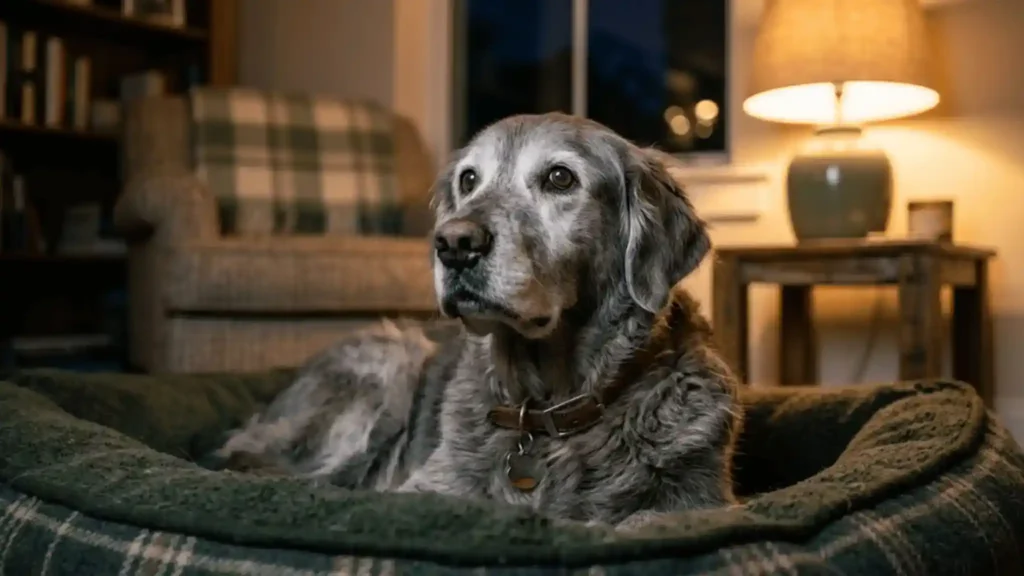
Your dog used to sleep through the night. Now they’re pacing the hallway at 2 a.m., following you from room to room, or panicking when you close the bathroom door. If your senior dog has suddenly become anxious, or a mild case has gotten noticeably worse, you’re not imagining it, and you’re not alone. Senior dog anxiety is common, it has real underlying causes, and in most cases it’s manageable once you know what you’re actually dealing with.
Here’s how to tell what’s driving it, and what actually helps.
Is This Actually Anxiety, or Just Aging?
This is the first question to answer, because the two overlap a lot in older dogs. Some behaviors that look like distress, including confusion, restlessness, and changes in sleep, can also be signs of normal cognitive aging, pain, or a medical issue that needs a vet’s attention rather than a calming chew.
That said, this is a real, well-documented condition in senior dogs, and it’s often triggered or worsened by the physical changes of aging rather than replaced by them. If you want the fuller picture of what this looks like across all life stages first, our guide to dog anxiety symptoms is a good starting point before you narrow in on the senior-specific signs below.
Common Signs of Senior Dog Anxiety
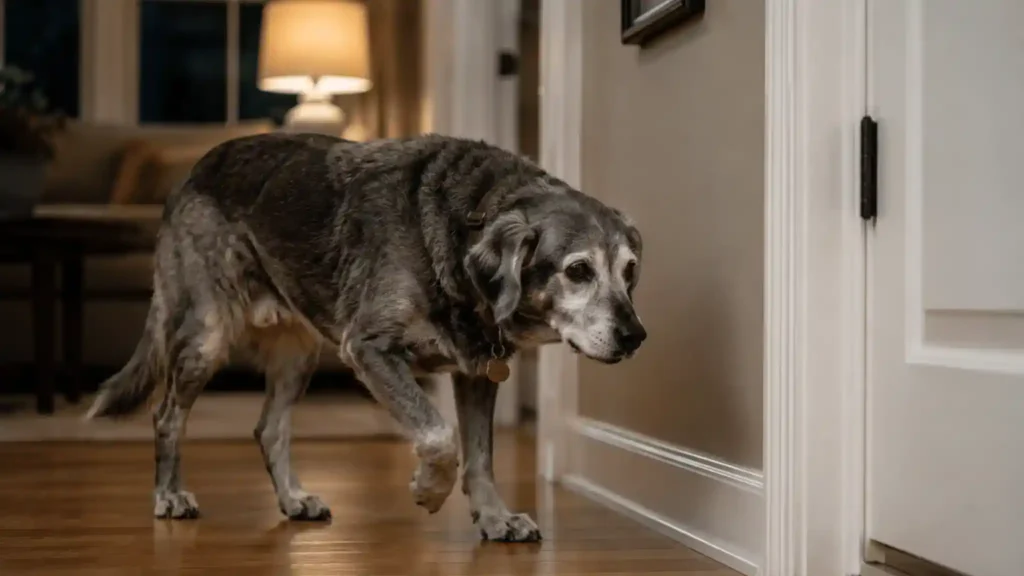
Watch for these, especially if they’re new or have gotten more frequent in the last few months:
- Nighttime pacing or restlessness: unable to settle, wandering the house after dark
- New or worsening separation distress: panicking when you leave, even for short errands, when they used to be fine alone
- Increased clinginess: following you from room to room, unable to relax unless they can see you
- Vocalizing more: whining, barking, or howling without an obvious trigger
- House soiling despite being fully trained: can be stress-related, but can also be a medical issue, so this one always warrants a vet check
- Heightened startle response: reacting more strongly than before to noises, sudden movement, or changes in routine
What Causes Anxiety to Develop or Worsen With Age
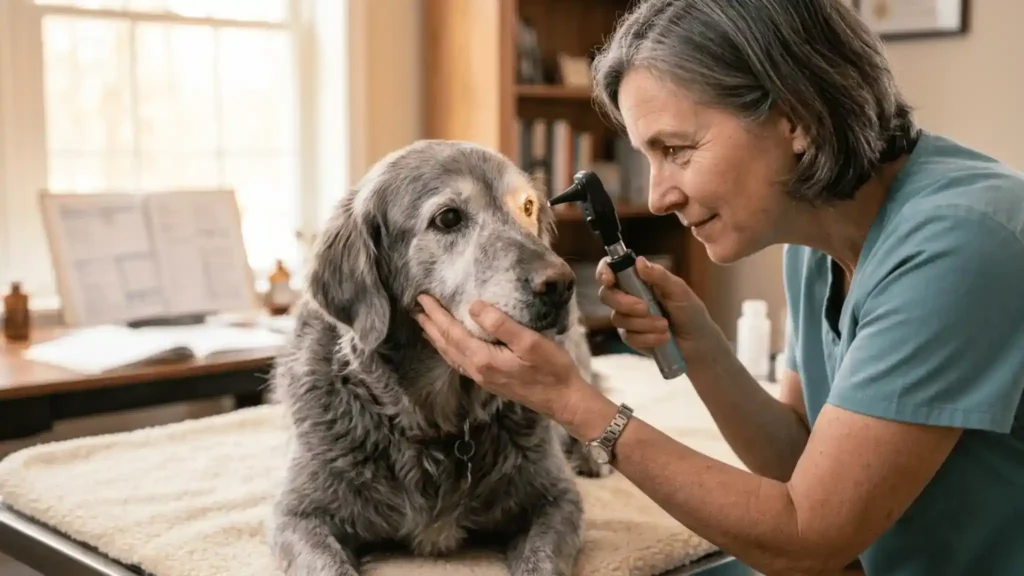
This rarely comes out of nowhere. A handful of age-related changes tend to be behind it:
Declining hearing and vision. A dog who’s losing their sight or hearing can’t rely on the senses that used to make the world feel predictable. Sudden sounds or unexpected touches become startling instead of routine, and disorientation itself becomes a source of stress.
Pain and physical discomfort. Arthritis and other age-related pain make dogs more physically vulnerable, and vulnerability tends to show up as clinginess or hypervigilance. Pain is also one of the most commonly missed causes of new behavior changes, so it’s always worth ruling out first.
Cognitive dysfunction (CCD). Similar to dementia in humans, canine cognitive dysfunction can cause disorientation, disrupted sleep-wake cycles, and confusion that reads as distress, especially at night. This is a medical condition your vet should be involved in diagnosing.
Changes in routine or household. Older dogs generally cope with change less flexibly than younger ones. A move, a new pet, a family member leaving, or even rearranged furniture can trigger a stress response that wouldn’t have fazed them a few years earlier.
Interestingly, age itself is one of the biggest risk factors for separation-related distress specifically, we break down exactly when and why in at what age do dogs develop separation anxiety, which is worth reading if your dog’s symptoms center mainly around being left alone.
How to Help Your Senior Dog Cope
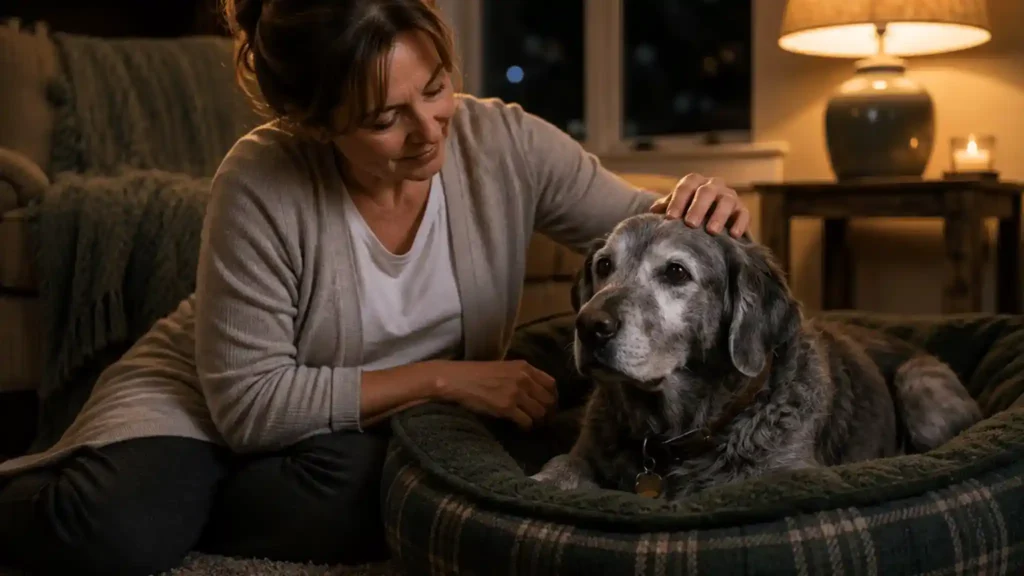
Start with a vet visit, not a product. Because pain, hearing/vision loss, and cognitive dysfunction can all look like it, ruling out (or identifying and treating) an underlying medical cause should always come first. A dog whose real issue is undiagnosed arthritis won’t improve from calming chews alone. (Source for the medical causes of behavior changes: ASPCA, Behavior Problems in Older Dogs.)
Keep the routine predictable. Consistent feeding, walking, and bedtime schedules give an anxious senior dog something stable to rely on, which matters more as their senses become less reliable.
Add light for vision loss and nighttime pacing. A dim nightlight in hallways and near the bed can significantly reduce disorientation-driven restlessness in dogs with declining eyesight.
Keep gentle exercise going. Short, low-impact walks and mental enrichment (sniffing games, food puzzles) help regulate mood and tire out an anxious mind without stressing aging joints.
Calming Products That May Help
Once medical causes have been checked, these two products are worth discussing with your vet. Check the current label and ingredient list before buying.
Zesty Paws Senior Advanced Calming & Cognition Soft Chews are marketed for calming and cognitive support in older dogs. Check the current label and ingredient list, and ask your vet before starting. Pros: chew format. Cons: not a substitute for a CCD diagnosis if symptoms are significant.
→ Check Zesty Paws Senior Calming & Cognition Chews on Amazon
VetriScience Composure Chews are marketed for everyday stress and situational triggers. Check the current label and ingredient list, and ask your vet before regular use in an older dog. Cons: best suited to mild-to-moderate cases rather than acute panic.
→ Check VetriScience Composure Chews on Amazon
When to See a Vet, and When Medication Might Be Needed
Book a vet visit if it’s new, sudden, or severe, if it’s paired with house soiling, appetite change, or disorientation, or if calming products and routine changes aren’t making a meaningful difference after a few weeks. For dogs whose symptoms are significant enough that over-the-counter options aren’t enough, our guide to anxiety medication for dogs walks through the prescription and vet-guided options, including what’s appropriate for older dogs with other health considerations.
Go Deeper on Age-Related and Separation Anxiety
Senior anxiety often overlaps with separation anxiety specifically. These guides go further:
- Dog Separation Anxiety: Complete Owner’s Guide: our full pillar guide to causes, signs, and treatment.
- At What Age Do Dogs Develop Separation Anxiety?: how risk changes across a dog’s life, including into their senior years.
- Best Calming Supplements for Dogs: our full product roundup if you want more options than the two above.
FAQ
Can dogs develop anxiety later in life even if they never had it before?
Yes. New anxiety in an older dog is common and is often linked to declining hearing or vision, pain, cognitive dysfunction, or a change in routine, rather than a change in personality. It’s always worth a vet check to rule out a medical cause first.
Is my senior dog’s nighttime pacing anxiety or dementia?
It can be either, and the two often overlap. Canine cognitive dysfunction (CCD) frequently causes disrupted sleep and nighttime restlessness that looks like anxiety. Your vet can help distinguish between the two, and treatment often addresses both together.
Are calming chews safe for older dogs?
Safety depends on the product and on your dog. Senior dogs are more likely to have health conditions or take medication, so ask your vet before starting any calming chew.
When should I consider anxiety medication for my senior dog?
If your dog’s anxiety is severe, doesn’t improve with routine changes and calming products after a few weeks, or is significantly affecting their quality of life, talk to your vet about prescription options, since some are well suited to older dogs even alongside other health conditions.
Bottom Line
New or worsening anxiety in a senior dog is common, has real physical causes, and is very often manageable. Start with a vet visit to rule out pain, hearing or vision loss, and cognitive dysfunction, keep their routine as predictable as possible, and ask your vet whether a calming chew could be part of the plan, not a replacement for the vet visit. If it’s severe or not responding to those steps, prescription options exist and are safe for many senior dogs under veterinary guidance.
→ Read: Dog Separation Anxiety: Complete Owner’s Guide
→ Read: Dog Anxiety Symptoms: How to Tell If Your Dog Is Anxious
→ Read: At What Age Do Dogs Develop Separation Anxiety?
→ See: Best Anxiety Medication for Dogs

