🐾 Does your dog panic when you leave? → Get the Free 7-Day Starter Plan

Do Calming Chews Work for Dogs? Evidence and Safety
Explore what studies can and cannot tell us about calming chews, formulation differences, potential risks and veterinary guidance.

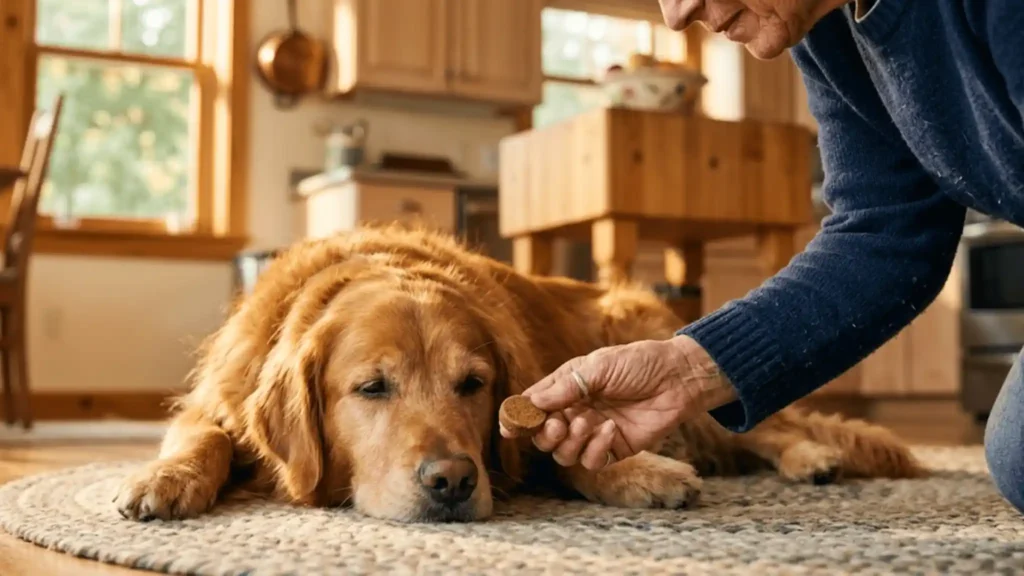

Some calming products have been studied in dogs, but the findings do not establish that calming chews as a category reliably treat anxiety. Results depend on the formulation, situation and individual dog.
A chew is a delivery format, not evidence of effectiveness. Non-prescription availability and natural ingredients do not guarantee safety or freedom from sedation. Persistent fear, panic or self-injury needs veterinary assessment rather than reliance on a supplement.
This page includes commercial recommendations and affiliate links in the article and/or sidebar. If you buy through a qualifying link, PetCalmZone may earn a commission at no extra cost to you. This does not establish that a product is effective or suitable for your dog. See our Affiliate Disclosure.
Table of Contents
If you’re specifically considering a CBD-based chew, the AVMA’s overview of cannabis use in pets is worth a read before you buy.
What are calming chews for dogs?
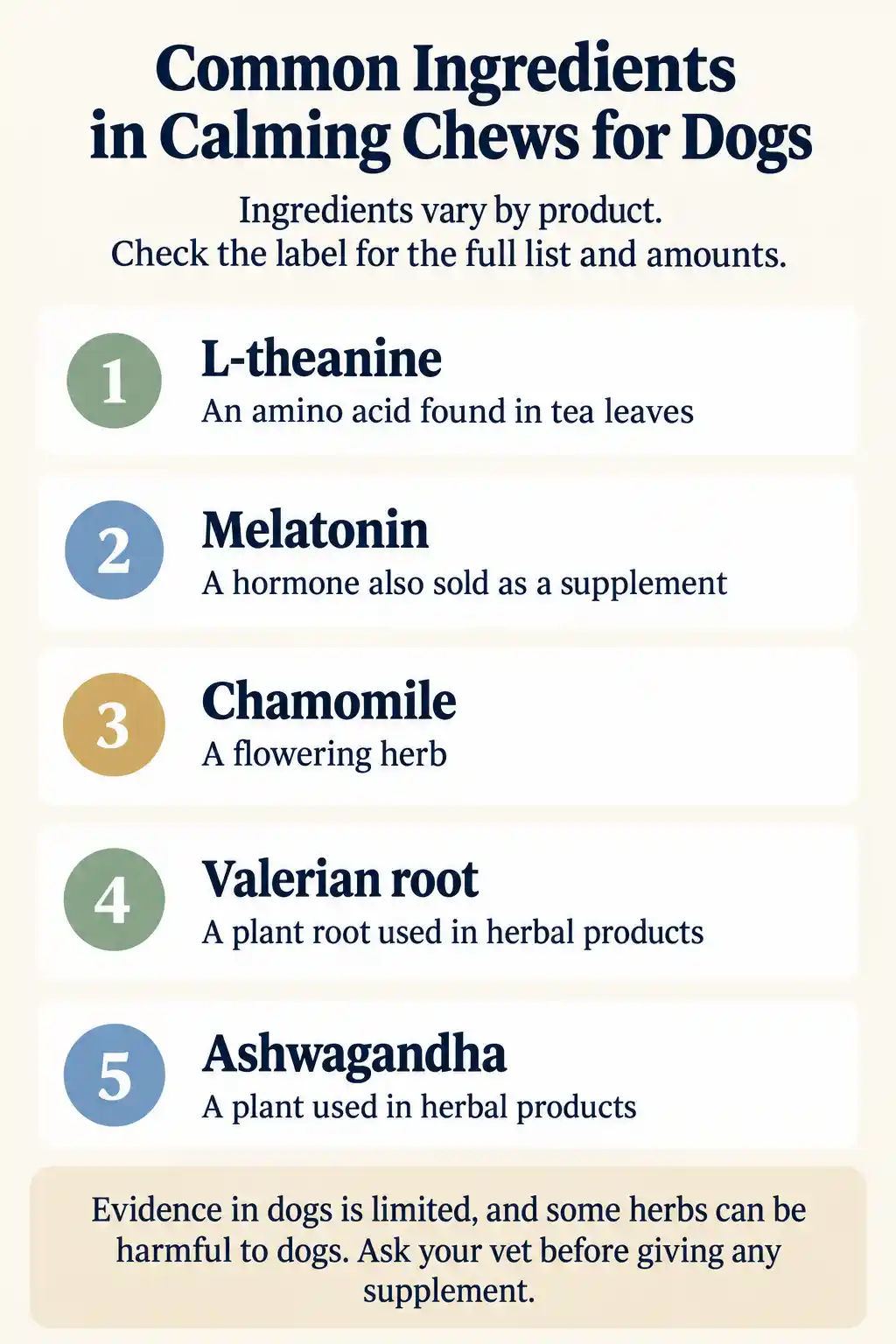
Calming chews are sold as supplements and usually combine ingredients such as L-theanine, melatonin, chamomile, valerian root or ashwagandha.
Ingredients and Evidence Limits
L-theanine has been studied in specific veterinary products. One 2015 open-label study involved Anxitane tablets in dogs with storm sensitivity; it was not a trial of all calming chews. An uncontrolled study cannot establish how much improvement was caused by the product.
Melatonin, valerian, chamomile and ashwagandha occur in some products, but mechanisms and marketing claims do not establish a proven anxiety treatment. Evidence in dogs is limited or formulation-specific. Do not use a universal minimum dose or assume that a combination has been tested.
Check the complete ingredient list and declared quantities with your veterinarian. Avoid xylitol-containing products and do not combine supplements or medicines without checking interactions.
Read the 2015 open-label study of Anxitane in storm-sensitive dogs. Its results concern that product and setting, not every calming chew.
Do calming chews work for dogs with separation anxiety?
A supplement should not replace a diagnosis or behavior plan for separation anxiety or noise fear. Evidence for individual products is limited, and a result in one dog cannot be predicted from the ingredient name alone.
Related resources: How to kennel train a dog with separation anxiety.
Do calming chews work for dogs with noise phobia and situational stress?
Evidence for noise fear is limited. The 2015 open-label study involved storm-sensitive dogs, and an open-label design cannot show how much of the change came from the product. Ask your vet about options for fireworks or storms and about behavior work.

Related resources: fireworks.
What to expect: realistic results
Results are hard to predict. Calmer settling does not necessarily mean fear has resolved, and some dogs show no change.
If your dog is injuring themselves, unable to eat, persistently panicking or suddenly behaving differently, contact a veterinarian. These situations need assessment rather than an OTC product trial.
Are calming chews safe for dogs?
Calming chews may cause digestive upset, drowsiness or other adverse effects, and ingredients can interact with medicines. Ask your veterinarian before starting a product, particularly for puppies, senior dogs, pregnant or nursing dogs, or dogs with health conditions.
How long do calming chews take to work?
There is no onset time or dosing schedule that applies to all chews. Follow the checked product instructions and your veterinarian’s advice; do not give extra chews because the dog still appears stressed. Discuss what to monitor and when to stop or reassess.
Discussing a Product Trial
Before a trial, ask your vet which signs to track, such as the trigger, how long episodes last and any side effects. Agree on a review date, and call your vet if your dog seems unwell.
What to Look for on the Label
Look for a complete ingredient list, declared quantities and evidence for the exact formulation. Third-party testing can help assess the tested product’s contents; it does not prove that the product treats anxiety.
Related resources: Best calming treats for dogs · Best calming supplements for dogs.
So, Should You Try Calming Chews for Your Dog?
If you try a calming chew, choose one with a complete label, ask your vet first, and track the trigger, the behavior and any side effects.
Persistent fear, panic or self-injury needs veterinary assessment. A supplement is not a substitute for a diagnosis or a behavior plan.

Related resources: Complete guide to dog separation anxiety · How to calm an anxious dog.