🐾 Does your dog panic when you leave? → Get the Free 7-Day Starter Plan

Essential Oils for Dog Anxiety: Evidence and Exposure Risks
Review the limited evidence for essential oils and dog anxiety, exposure risks and when to seek veterinary advice.

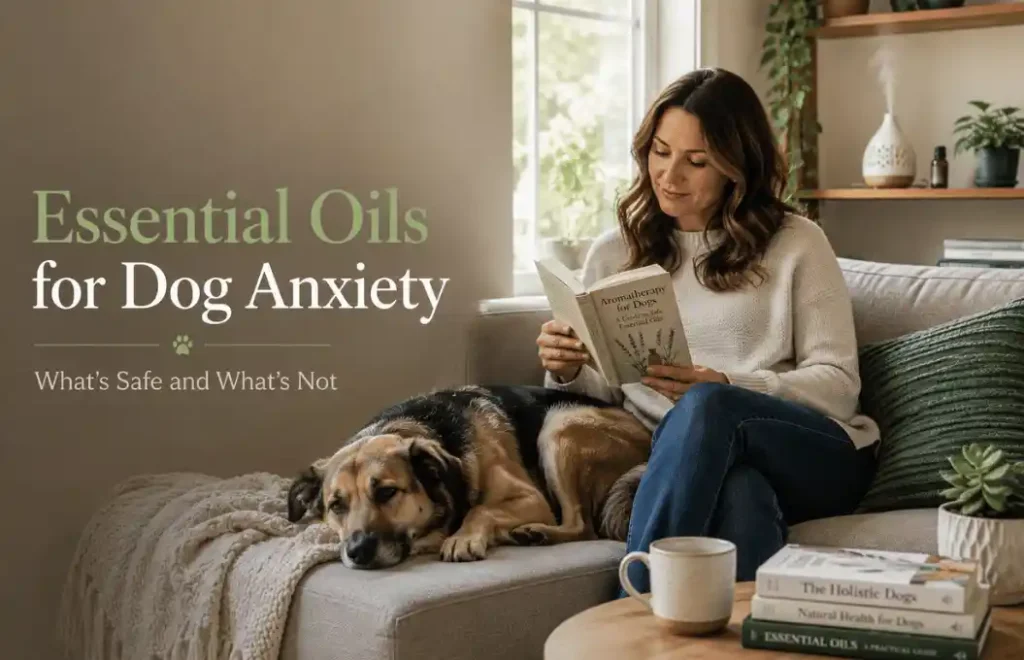
Essential oils are not an established treatment for canine anxiety. Small aromatherapy studies cannot identify a universally safe oil, concentration or home routine. Less movement or vocalization does not necessarily establish relief of fear.
This page includes commercial recommendations and affiliate links in the article and/or sidebar. If you buy through a qualifying link, PetCalmZone may earn a commission at no extra cost to you. This does not establish that a product is effective or suitable for your dog. See our Affiliate Disclosure.
Table of Contents
- Do Essential Oils Work for Dog Anxiety?
- Why a Safer-Oils List Does Not Establish Safety
- Essential Oils That Are Toxic to Dogs
- Preventing Exposure
- Quick Takeaway
- Frequently Asked Questions
Do Essential Oils Work for Dogs Anxiety?
Exposure can occur through inhalation, contact with skin or fur, and ingestion during grooming. Risk depends on the oil, concentration, delivery method and animal’s health. Natural or lower-risk does not establish safety.
Why a Safer-Oils List Does Not Establish Safety
Lists of oils said to be safer for dogs are common online, but no list can establish safety. Risk depends on the oil, the concentration, how the dog is exposed and the dog’s health. If you still want to use a scented product, ask your vet first and keep your dog out of the room.
Essential Oils That Are Toxic to Dogs
Examples of oils associated with toxicity include tea tree, pennyroyal, cinnamon and eucalyptus. The type and concentration of the oil, exposure route and health of the animal matter. This list is not exhaustive; absence from it does not mean an oil is safe.
Preventing Exposure
Do not apply concentrated essential oils to your dog, add oils to food or water, or make an oil spray for bedding using an online dilution recipe. Store products where pets cannot reach them and avoid contact with spills.
Do not use a diffuser as an anxiety treatment. The Merck Veterinary Manual advises keeping pets out of the room while a diffuser is in use and ventilating afterward. A dog remaining near a diffuser does not establish that exposure is safe. Ask your veterinarian about products used in the home, especially with respiratory or other health problems.
If exposure is suspected, stop the source and contact your veterinarian or an animal poison service promptly. Seek urgent care for breathing difficulty, tremors, marked weakness or collapse. Do not induce vomiting unless directed by a veterinary professional.
The Merck Veterinary Manual guidance on essential-oil toxicoses describes exposure risks and prevention.
Quick Takeaway
Evidence for essential oils as an anxiety treatment is limited, and exposure can harm pets. Avoid home dosing or dilution recipes. Use a veterinary assessment and behavior plan for anxiety.
Related resources: → Read: Natural Remedies for Dog Anxiety: What Studies Show · → Full guide: Dog Separation Anxiety: The Complete Owner’s Guide (2026).
Frequently Asked Questions
Can I put lavender oil directly on my dog?
Do not apply concentrated essential oils to your dog. Skin contact and ingestion during grooming can cause harm. Ask a veterinarian about suspected exposure or proposed products.
Is a diffuser safe to run around dogs?
There is no universal safety guarantee. Exposure risks depend on the oil, diffuser and animal. Keep pets out of the room during use and ventilate afterward; do not treat a diffuser as anxiety therapy.
What’s a safer alternative to essential oils for dog anxiety?
Start with veterinary assessment, a predictable environment and an appropriate behavior plan. Ask your vet about support products. Pheromones and chews are not risk-free, and they do not work for every dog.
If you are building a calming routine for your dog that goes beyond aromatherapy, the free Calm Dog Checklist covers environment setup and daily habits to discuss with your vet.
📘 Get the Free Calm Dog Checklist →
This article is for informational purposes only and does not replace professional veterinary advice. If you suspect your dog has been exposed to a toxic substance, contact your vet or the ASPCA Poison Control immediately.

