🐾 Does your dog panic when you leave? → Get the Free 7-Day Starter Plan

Home Remedies for Dog Separation Anxiety: What Helps and What Doesn’t
Homeopathic remedies lack solid evidence for dog separation anxiety. See which home steps and calming aids have more support and when to call a vet.

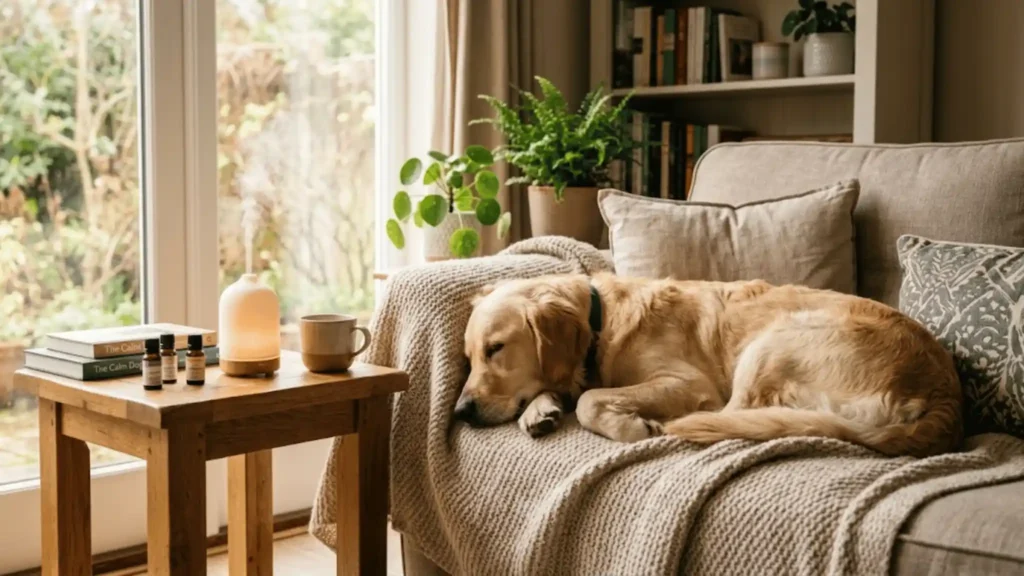
Homeopathic remedies for dog separation anxiety are one of the first things owners search for online. Many people want to try something at home before booking a trainer or a vet, and that instinct makes sense. There is a lot you can do at home. But the word “remedy” covers very different things. Veterinary behavior guidance includes gradual desensitization and counterconditioning as components of a treatment plan. Calming aids have limited or mixed evidence. Homeopathy has no good evidence in dogs. This guide explains where each option stands so you can decide what to try first.
Disclaimer: This article is for general information and does not replace advice from a veterinarian. Talk to your vet before giving your dog any supplement, medication or calming product, especially if your dog has a health condition or takes other medication. PetCalmZone may earn a commission from qualifying purchases made through links on this page, at no extra cost to you. As an Amazon Associate, we earn from qualifying purchases.
Table of Contents
- Behavioral approaches
- Over-the-counter calming aids
- Remedies with little or no support
- When home remedies aren’t enough
- FAQ
- Bottom line
Not every home remedy belongs on a list of remedies for dog separation anxiety. Some have more evidence behind them than others.
Behavioral approaches
Departure desensitization
Gradual desensitization is one behavior approach used for separation anxiety. The principle: practice absences shorter than what triggers your dog’s anxiety, repeatedly, and gradually build duration over days and weeks. Your dog learns that departures always end and never last long enough to panic about.
It requires patience and consistency, and it’s slower than owners expect. Veterinary behavior guidance includes gradual desensitization and counterconditioning as components of a treatment plan. The AVMA says all aspects of veterinary medicine should be held to the same professional standards. A full step-by-step protocol is here: separation anxiety treatment guide →
Departure cue desensitization
If your dog starts showing stress signals before you’ve even left (when you pick up keys, put on shoes, or reach for your coat), start there. Repeat departure cues constantly without leaving: grab your keys and sit down, put your coat on and watch TV, pick up your bag and stay home. The goal is for these cues to stop predicting a departure.
Low-key departures and arrivals
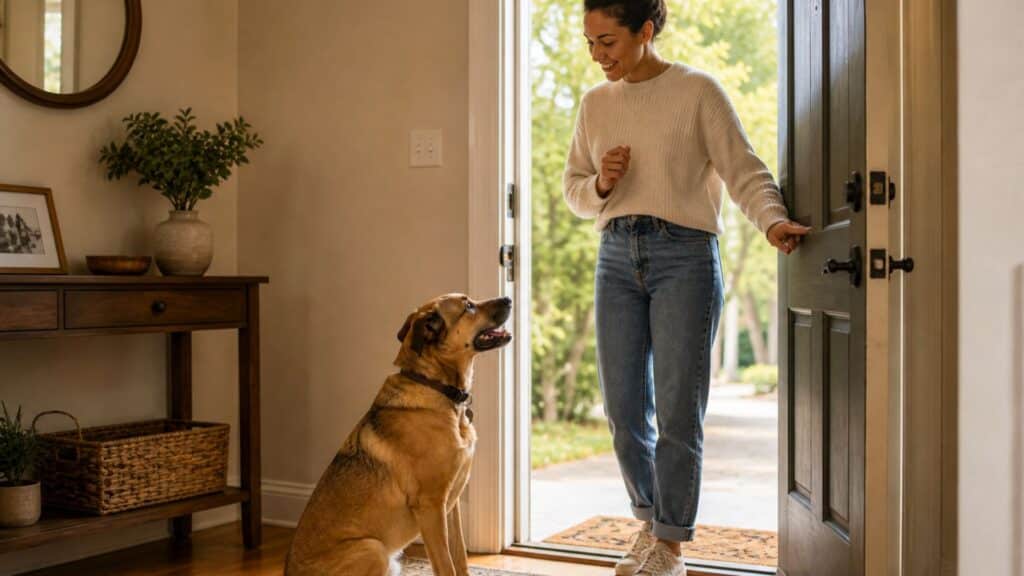
Many trainers suggest keeping departures and returns matter-of-fact: a brief word and no dramatic petting ceremony. It may feel odd, but the aim is to keep transitions calm.
Safe space setup
A dedicated, comfortable space your dog chooses to retreat to can be part of a management plan. This might be a crate (if your dog is genuinely crate-trained and comfortable, not just contained), a specific room, or a corner with their bed and a worn piece of your clothing. The key word is “safe”: a dog who chooses to go there because they feel secure, not a dog who’s locked in against their will.
Best crates for anxious dogs →
Exercise before absences
A walk or play session before you leave is an easy step to add to your routine. It will not fix separation anxiety on its own.
Background sound
Some owners leave a TV, radio or white noise machine on as part of their routine. It is not a treatment for separation anxiety, so treat it as an optional management step.
Over-the-counter calming aids

ThunderShirt (pressure wrap)
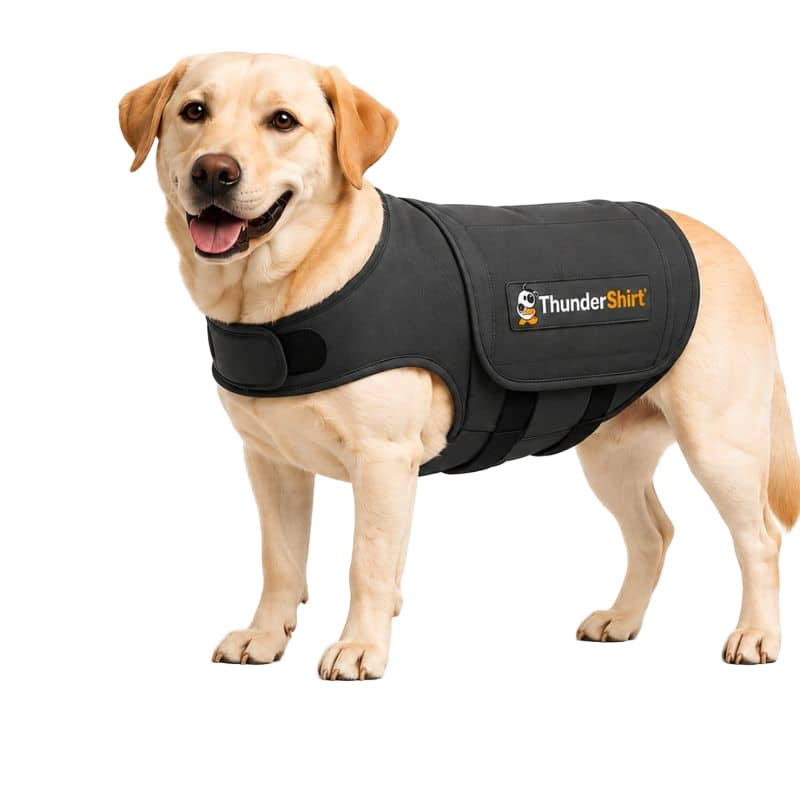
The ThunderShirt applies steady, gentle pressure around the torso. Owners often try it for noise anxiety and situational stress. The research is mixed. Treat it as an optional extra during training, not as a treatment on its own. Make sure it fits well, and take it off if your dog seems more stressed. → Check ThunderShirt on Amazon
Adaptil (pheromone diffuser refill)
Adaptil makes synthetic copies of a pheromone linked to nursing mother dogs. The product linked here is a ThunderEase refill powered by ADAPTIL. It requires a compatible plug-in diffuser, sold separately, so check compatibility before ordering. Some owners place the diffuser near the spot where their dog spends time alone. Studies in dogs have reported mixed results, and it does not replace behavior work. Results vary from dog to dog, so judge it over time and not after a few days. → Check the ThunderEase refill on Amazon
Full Adaptil vs ThunderShirt comparison →
Calming chews (L-theanine / chamomile)
Many calming chews contain L-theanine, chamomile or similar ingredients. Some owners give them before predictable triggers such as vet visits or car rides. Evidence for these ingredients in dogs is limited, and results vary from dog to dog and from product to product. Check the ingredient list, follow the label, and ask your vet if your dog has a health condition or takes medication. A chew will not replace desensitization training. → Check Zesty Paws on Amazon
Purina Pro Plan Calming Care (probiotic)
Purina Pro Plan Calming Care contains Bifidobacterium longum BL999, a probiotic strain. A conference abstract reported improvements in some stress-related behaviors and stress markers in dogs given this strain. It describes a small crossover study of 24 anxious Labrador retrievers over six weeks, run by Purina researchers. The cited source is a conference abstract, not a full study report. The abstract does not report separation anxiety results separately, so it does not show that the product treats it. If you try it, ask your vet first, especially if your dog has digestive problems or health conditions.
Melatonin
Melatonin is sold as a sleep and calming supplement. Evidence for separation anxiety specifically is limited, and it should not be relied on for severe cases. The right amount depends on your dog’s weight, health and other medications, so ask your vet before giving it. Never use a product that contains xylitol, which is toxic to dogs.
Homeopathic remedies for dog separation anxiety
Homeopathic products, such as diluted arnica or aconite, are not backed by good clinical evidence for separation anxiety in dogs. They are diluted so heavily that they may contain little or none of the original substance. The AVMA says all aspects of veterinary medicine, including complementary and alternative approaches, should be held to the same professional standards. We found no good clinical evidence for homeopathy in dogs with separation anxiety. Any improvement an owner notices may come from other changes at home, from time passing, or from the extra attention that comes with giving a daily remedy. If you still want to try one, talk to your vet first and do not use it in place of behavior work or veterinary care.
Remedies with little or no support
CBD oil. Published research on pet CBD products is limited, and quality varies a lot. Cornell researchers report one study in which dogs given CBD chews before a stressful event showed fewer stress-related behaviors, but they say more research is needed. The FDA has not approved CBD for animals. Talk to your vet before trying any CBD product. CBD vs calming chews comparison →
Getting another dog. Another dog may not ease separation anxiety, particularly when your dog is attached to a specific person. Results depend on the individual dog.
Punishing anxiety behavior. Punishment is not recommended. It does not address the cause of the behavior and can add to your dog’s fear.
Ignoring the problem. Signs of distress that continue or get worse need veterinary assessment.
When home remedies aren’t enough
The appropriate plan depends on the dog’s signs, medical assessment, and response to treatment. For severe cases (self-injury during escape attempts, complete inability to function when alone, anxiety that doesn’t respond to weeks of consistent desensitization training), professional support is the right next step.
A Certified Separation Anxiety Trainer (CSAT) provides a structured, monitored program. A veterinary behaviorist or your regular vet can evaluate whether medication such as fluoxetine or clomipramine is appropriate as part of a treatment plan. These are not defeats. Professional support is often part of the plan for severe anxiety. Full guide to anxiety treatment options →
FAQ
What calms a dog with separation anxiety naturally?
Veterinary behavior guidance includes gradual desensitization and counterconditioning as components of a treatment plan. Low-key departures and arrivals, exercise before absences and background sound are low-cost steps some owners add. Calming aids such as pheromone products and L-theanine chews have limited or mixed evidence. Talk to your vet before using any supplement.
Does lavender oil help dogs with separation anxiety?
Evidence is limited and mixed, and it does not show that lavender treats separation anxiety. Essential oils can irritate dogs, and some are toxic, so never apply them to your dog’s skin or let your dog lick them. Ask your vet before using any essential oil in your home, especially if you also have cats or birds.
Does leaving a worn piece of clothing help an anxious dog?
This is an informal practice, not a treatment. Some owners leave a worn piece of clothing with their dog because it costs nothing. Do not leave it where a dog that chews or swallows fabric can reach it, because it can be shredded or swallowed. It will not be enough alone for severe anxiety.
Can I treat dog separation anxiety without a trainer?
That depends on the dog’s signs and medical assessment. Many owners begin desensitization at home. If your dog shows severe or persistent distress, or hurts itself, contact your vet or a qualified professional such as a CSAT or veterinary behaviorist promptly.
How quickly do home remedies work for dog separation anxiety?
It depends on the method and on the dog. There is no single onset time that applies to all products and dogs. If your dog is hurting itself, contact a vet quickly. For persistent distress, contact your vet promptly, or a qualified trainer for behavior support.
Bottom line
Veterinary behavior guidance includes gradual desensitization and counterconditioning as components of a treatment plan. Exercise, a comfortable resting spot and background sound are low-cost additions that do not replace a treatment plan. Calming aids like Adaptil, ThunderShirt, calming chews and probiotics have limited or mixed evidence, so treat them as optional extras and not as a replacement for training. Homeopathic remedies lack good evidence.
If your dog panics, gets hurt or does not improve, talk to your vet or a qualified separation anxiety professional. Medication and professional support can be part of the plan.
→ Check ThunderShirt on Amazon | → Check the ThunderEase refill on Amazon | → Check Zesty Paws on Amazon