🐾 Does your dog panic when you leave? → Get the Free 7-Day Starter Plan

Cockapoo Separation Anxiety: Why It Happens and What Helps
Cockapoos are bred from two of the most people-focused dogs around. That's what makes them wonderful - and what makes separation anxiety so common. Here's why it happens and what actually fixes it.

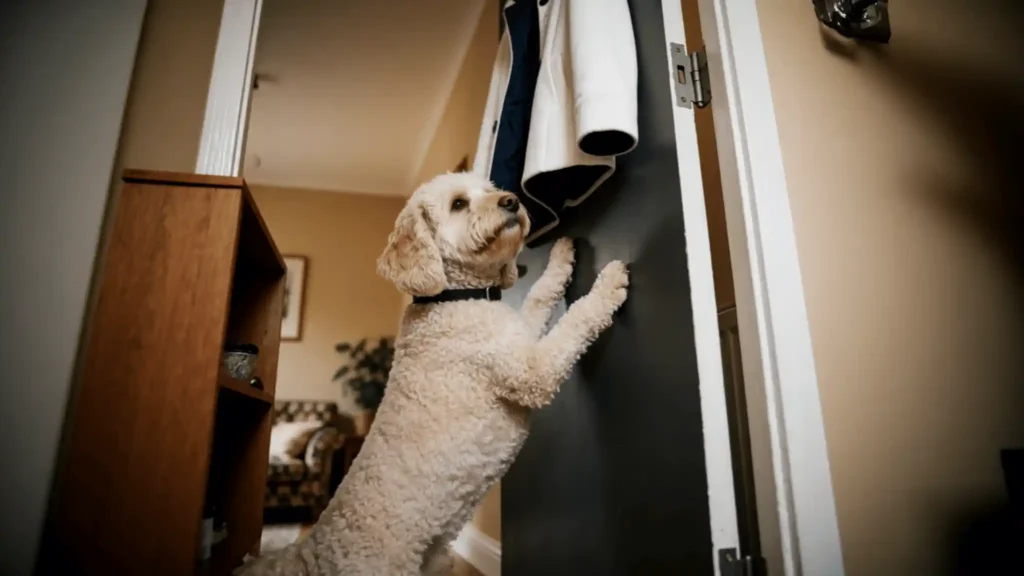
Cockapoo separation anxiety can be difficult to distinguish from other causes of barking or restlessness. This guide covers signs to record, careful practice and when to seek veterinary help.
Why a Cockapoo may struggle with being alone
Cockapoos are Cocker Spaniel–Poodle crosses. Parentage alone does not determine a dog’s ability to cope with separation. Assess the individual’s health, history, routine changes and behavior during absences; anxiety is not the default outcome of this cross.
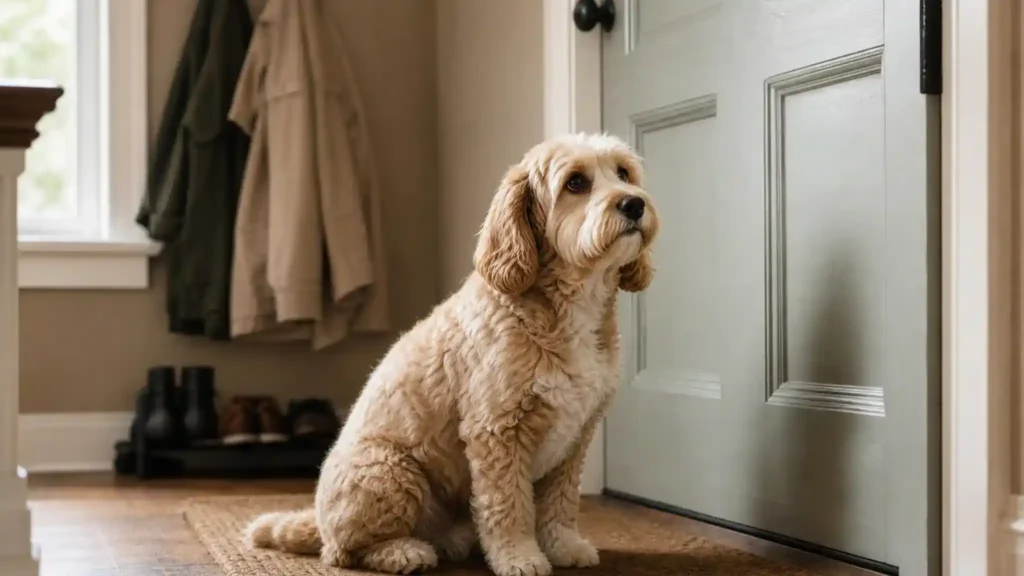
Signs of Cockapoo separation anxiety
Record who was present during necessary absences and whether your dog remained relaxed. Comfort with your partner suggests a different pattern from distress when you leave despite that partner being present.
These signs can have other causes. Record the context and discuss persistent or concerning behavior with your veterinarian.
Signs vary between dogs and are not always obvious. Video can help document behavior, but the pattern and possible medical causes should be assessed with a professional.
Signs to look for on camera while you’re away:
- Barking, whining, or howling, often starting within minutes of you leaving
- Pacing near the door or around the house
- Chewing or scratching at exit points
- Destructive behavior focused on your belongings: clothes, cushions, shoes
- Refusal to eat or engage with toys left behind
- Toileting accidents in a housetrained dog
- Self-soothing behaviors like excessive licking or chewing paws
Following you around does not by itself diagnose anxiety. If departure cues trigger trembling, whining or other distress, document the response and discuss it with your veterinarian. These signs do not establish a breed-specific prognosis.
Comfortable distance without withdrawing affection
Carrying or cuddling a Cockapoo does not establish that the owner caused separation anxiety. Offer opportunities for relaxed rest at a manageable distance, and increase difficulty only when the dog is comfortable.
An individualized approach to alone-time practice
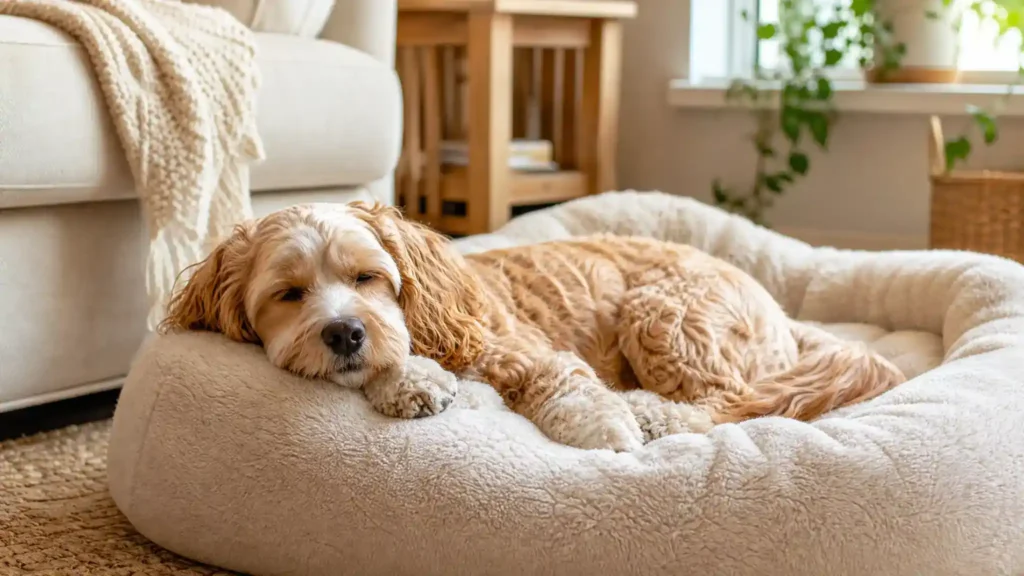
Systematic desensitization: short absences, below the panic threshold
Start with a separation your dog can handle without signs of distress, which may be only a moment out of sight. Monitor body language rather than waiting for barking to stop. If distress appears, end the attempt calmly and make the next session easier. Increase duration only after repeated relaxed sessions; do not follow a fixed schedule. Veterinary treatment may also include other behavioral techniques and, where appropriate, medication.
Avoid jumps to a duration your dog has not comfortably practiced. If a session causes distress, reduce difficulty and review the plan rather than assuming a fixed number of weeks has been lost.
Teach a place command before you start alone training
Reward relaxed behavior on a comfortable mat if your dog enjoys it. A place cue is optional support, not a prerequisite or a substitute for addressing separation distress. Do not require a stay while your dog is anxious.
Introduce comfortable practice gradually
Help a puppy settle into the home before increasing separation demands. Practice only distances and durations the puppy tolerates calmly. Affection and contact need not be withdrawn; ask for advice if even brief separation is upsetting.
Calming supplements during the training phase
Evidence for calming supplements in dogs is limited and varies by ingredient and formulation. Research on an ingredient does not establish that a particular chew treats separation anxiety, and effects cannot be assumed for this breed. Ask your veterinarian whether a supplement is appropriate, including possible side effects and interactions. Supplements do not replace an individualized behavior plan. Related resources: best calming supplements for dogs
For the full step-by-step training approach, see our complete guide to dog separation anxiety.
What doesn’t work
Punishment. Telling your dog off for anxiety-driven destruction after the fact, when you return home, doesn’t connect the reprimand to the behavior. The dog has no idea what it’s being corrected for. It just learns that your returns are unpredictable and stressful.
Flooding. Leaving the dog alone for long periods and hoping it learns to cope rarely works with Cockapoos. More often it produces a dog that is progressively more distressed with each long absence, and the anxiety becomes harder to treat.
Another dog as a fix. Some Cockapoos have general aloneness anxiety and do settle better with a companion. Others are specifically attached to their person and won’t settle regardless of who’s present. Check your camera footage with and without a companion before making that decision.
When to involve your vet
Consult your veterinarian for persistent or severe distress, appetite changes or self-injury. Medication may be considered alongside a behavior plan, depending on diagnosis, risks and response. Do not start or adjust medication without veterinary guidance.
A certified separation anxiety trainer (CSAT) is also worth considering for dogs where home attempts haven’t moved the needle. They work remotely via camera, which means the sessions happen in your dog’s actual environment.
Frequently asked questions
Are Cockapoos more anxious than other small breeds?
The sources checked do not establish a reliable separation-anxiety ranking between Cockapoos, Shih Tzus and Pugs. Assess your dog individually rather than predicting severity from parentage.
How long can a Cockapoo be left alone?
There is no universally suitable Cockapoo alone-time limit. Age, health, toileting needs and observed comfort matter. Arrange care when a planned absence exceeds your dog’s current relaxed tolerance.
Do working Cocker Spaniel vs show Cocker Spaniel crosses affect anxiety levels?
Working or show ancestry may inform discussions about activity preferences, but it does not provide a validated prediction of separation anxiety in a Cockapoo. Observe your own dog rather than treating lineage as a risk score.
My Cockapoo is fine when my partner is home but panics when alone. Is that separation anxiety?
If your Cockapoo is comfortable with your partner but distressed only when completely alone, the pattern suggests a difficulty with being alone rather than clear evidence of attachment to one specific person. If distress occurs when you leave despite familiar company, that is a different pattern. Share recordings with your veterinarian; neither scenario is a diagnosis on its own.
Can separation anxiety in Cockapoos be prevented?
Comfortable, gradual practice may help develop alone-time skills, but prevention is not guaranteed. Keep practice below the dog’s distress threshold and seek advice if distress persists. Carrying your dog is not proof of a cause.
Related guides

