🐾 Does your dog panic when you leave? → Get the Free 7-Day Starter Plan

Goldendoodle Separation Anxiety: Signs and How to Treat It
Goldendoodle separation anxiety can be tough. Learn the signs, common triggers, and proven ways to help your Goldendoodle stay calm and confident alone.


Goldendoodle separation anxiety is a common worry for owners, and it helps to know why. Golden Retrievers and Poodles were both developed to work closely with people, so a Goldendoodle often expects company. When the family leaves, some of these dogs struggle.
This guide covers why that can happen, what the signs look like, what to check before you assume anxiety, and what a calm training plan looks like.
Table of Contents
Why Goldendoodles can struggle when left alone
Goldendoodles are a cross between Golden Retrievers and Poodles. Golden Retrievers were bred to retrieve for hunters, and Poodles were working water retrievers. Both jobs meant paying close attention to a person, so many Goldendoodles are social dogs that like to know where their family is.
That does not mean every Goldendoodle will develop separation anxiety. No study that we found ranks Goldendoodles against other breeds, and a cross can take after either parent. Your own dog’s behavior is a better guide than the breed label.
Routine matters too. Many Goldendoodles live in busy homes with kids, remote workers or stay-at-home parents. When the schedule changes and the house is suddenly empty, the dog may have little practice at being alone.
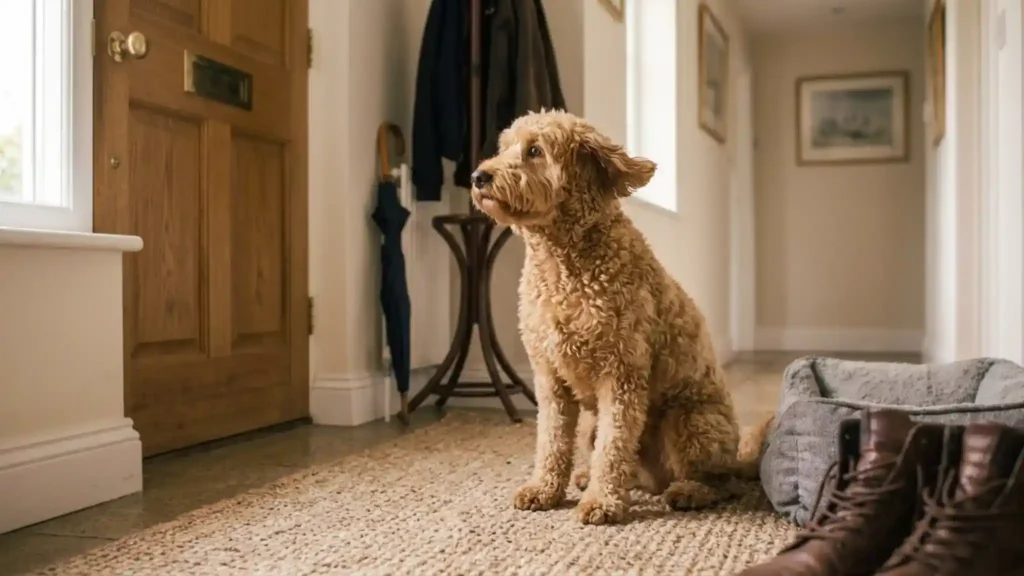
Goldendoodle details that change the plan
Some Goldendoodle traits can look like anxiety or make training harder. Check these first.
- Size. Goldendoodles range from miniature to standard. Pick toys, puzzle feeders and baby gates for your dog’s real size, and plan bathroom breaks around a small bladder if you have a mini or a puppy.
- Ears and skin. Floppy ears and thick, curly coats can trap moisture and tangles. Ear or skin discomfort can cause scratching, head shaking and restlessness, so ask your vet to check before you blame anxiety.
- Mixed temperament. One Goldendoodle may be calm and another very energetic. Plan exercise and enrichment for your dog’s own level instead of a breed average.
None of this replaces a vet check. It helps you separate physical causes from separation distress.
Signs of Goldendoodle separation anxiety
Before you assume separation anxiety, set up a camera. Boredom and frustration can look the same from the doorway, and they need different fixes. Signs of genuine separation distress on camera include:
- Barking, whining or howling that starts soon after you leave and continues
- Pacing between rooms or near exits
- Destructive behavior, often focused on the door or items with your scent
- Refusing food or treats left behind
- Accidents despite being housetrained
- Heavy drooling or panting
At home, a dog that follows you everywhere, cannot settle in another room or waits outside the bathroom door may be telling you something. It is a clue, not a diagnosis, so record what you see and share it with your vet.
Watch what happens when you pick up your keys, put on shoes or grab your bag. A dog that goes from calm to frantic at those cues has learned that they come before you leave.
Mild vs severe: what you’re dealing with
In milder cases, a dog shows some distress after you leave and then settles. In more serious cases, distress lasts most of the time you are gone. The most serious cases involve self-injury, escape attempts or refusing food and water, and your dog may hurt its paws or mouth trying to get through a door.
Severity shapes the plan. Milder cases may respond to careful training. Moderate or severe cases usually need your veterinarian involved alongside behavior work.
What actually works
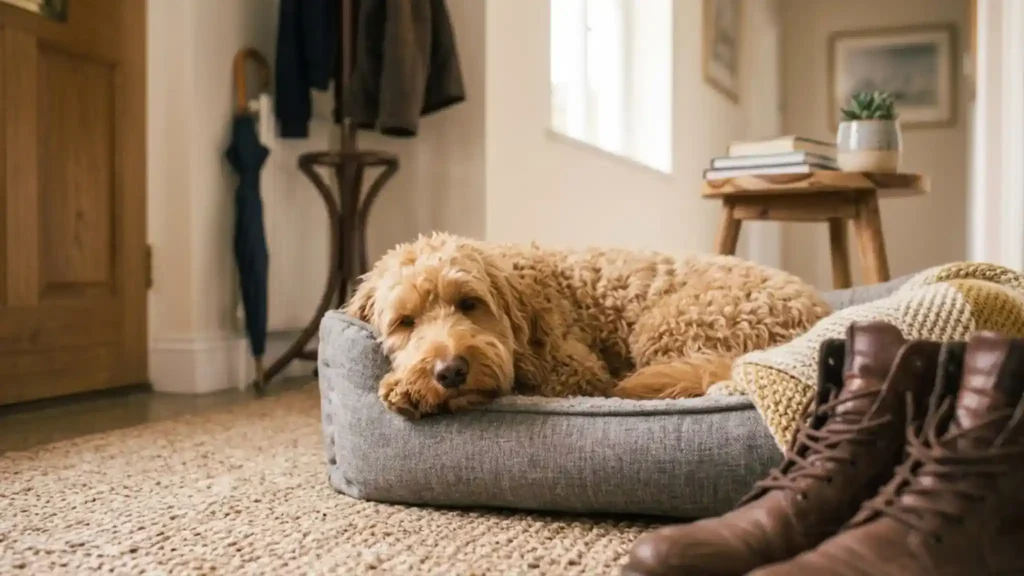
Teach independence before working on absence
Before you practice leaving, practice calm in a separate room while you are still home. Give your Goldendoodle a chew or puzzle feeder in another room and step away. Come back before your dog finishes and before any distress shows. Repeat this daily, and add time only when your dog stays relaxed.
Desensitize departures gradually
Start with an absence your dog handles easily, which may be only a few seconds. Come back before your dog reacts, then lengthen the time in small steps. The numbers are not a schedule. If your dog is barking or pacing, you moved too fast, so go back to the last easy level.
Keep returns calm. Greet your dog quietly, wait until they settle and then give attention.
Neutralize departure cues
Pick up your keys and put them back down. Put your shoes on and stay home. Grab your bag and sit on the couch. Repeat these cues out of context until they stop predicting your departure.
Use calming support strategically
Evidence for calming supplements in dogs is limited and varies by ingredient and formulation. Research on an ingredient does not establish that a particular chew treats separation anxiety, and effects cannot be assumed for this breed. Ask your veterinarian whether a supplement is appropriate, including possible side effects and interactions. Supplements do not replace an individualized behavior plan. Related resources: best calming supplements for dogs
For a step-by-step training protocol, see our complete guide to dog separation anxiety.
Common mistakes
Crating a dog that has not been trained to accept the crate. For some Goldendoodles a crate is a safe den. For others it adds panic. If your dog is already anxious and dislikes the crate, do not use it to contain separation anxiety. A baby-gated room is a gentler option.
Long absences too soon. If you leave for a full workday while working on separation anxiety, distress repeats every day and progress stalls. If you can, use a dog walker, daycare or a trusted neighbor during training. Shorter, more consistent practice works better than occasional long absences.
Punishment after the fact. Scolding your dog over a destroyed couch teaches nothing useful, since dogs cannot connect your reaction to something that happened hours ago. It only adds stress to an already anxious situation.
When to involve a vet
If your dog is injuring itself, cannot settle or has stopped eating, contact your veterinarian promptly. For persistent or severe distress, consult your veterinarian or a board-certified veterinary behaviorist. Prescription medication may be considered alongside behavior modification. Reconcile (fluoxetine) and Clomicalm (clomipramine) are veterinary products approved in the United States for canine separation anxiety as part of a behavior management plan. Suitability, response, side effects and monitoring depend on the individual dog. Do not start, combine or adjust medication without your veterinarian. Related resources: veterinary behaviorist
Also worth ruling out: pain, ear or skin problems, hearing or vision changes and other medical conditions. If your Goldendoodle developed separation anxiety suddenly without a clear trigger, get a physical check first.
Frequently asked questions
Are Goldendoodles more prone to separation anxiety than other breeds?
No study that we found ranks Goldendoodles against other breeds. Both parent breeds are social, and many Goldendoodles are raised with constant company, which can make the first stretches alone harder. Treat your own dog’s behavior as the guide.
How long can you leave a Goldendoodle alone?
There is no number that fits every dog. Start from the longest time your dog stays relaxed on camera and build from there. Puppies need much shorter gaps and frequent bathroom breaks, so ask your vet what suits your puppy’s age.
Does getting a second dog help with Goldendoodle separation anxiety?
Not reliably. Some dogs relax with a companion and others stay distressed because they miss a particular person. Do not get a second dog as a substitute for an individual assessment, and watch how your dog behaves when it is alone in a room with another person at home.
Can Goldendoodle separation anxiety be cured completely?
Many dogs improve with appropriate support, but a permanent cure cannot be promised. Monitor behavior after major routine changes and adjust the plan if distress returns. Severe cases usually need your veterinarian involved.
At what age does it typically show up?
Signs can appear at any age. Owners often report that a change such as a new work schedule, a move or a loss in the household came first. Tell your vet if signs start suddenly, since pain and other medical problems can cause similar behavior.
Related guides