🐾 Does your dog panic when you leave? → Get the Free 7-Day Starter Plan

Best Training Tools for Dogs That Actually Work (2026)
Looking for training tools for dogs that actually work? We compared clickers, treat pouches, harnesses, and long lines to find the honest picks worth buying.

The best training tools for dogs are not the flashiest ones on the shelf. They are the few that actually change behavior, and this guide breaks down exactly which ones earn a spot in your kit.
This post contains affiliate links. If you buy through our links, we may earn a small commission at no extra cost to you.
The right tool won’t train your dog. But the wrong one will slow you down.
Table of Contents
- Our top pick for most owners
- The best dog training tools, compared
- Who should get what: a simple decision guide
- How we evaluated these tools
- What to skip
- FAQ
- The bottom line
Most dog training gear is either unnecessary or overpriced. The basics work fine, and they’re cheap. The problem is knowing which basics, and why, before you buy six things you’ll never use. This list narrows it down to the best dog training tools worth actually owning.
For broader guidance on humane, evidence-based training methods, see the American Kennel Club’s training resources.
This list comes from real training sessions: puppies, adult dogs with established bad habits, reactive dogs, pullers. We included only what we’d actually use. No gimmicks, no shock collars dressed up as “gentle corrections,” no products that exist to make owners feel like they’re doing something.
[→ Full training guide: Dog training: the complete guide for every owner]
Our top pick for most owners
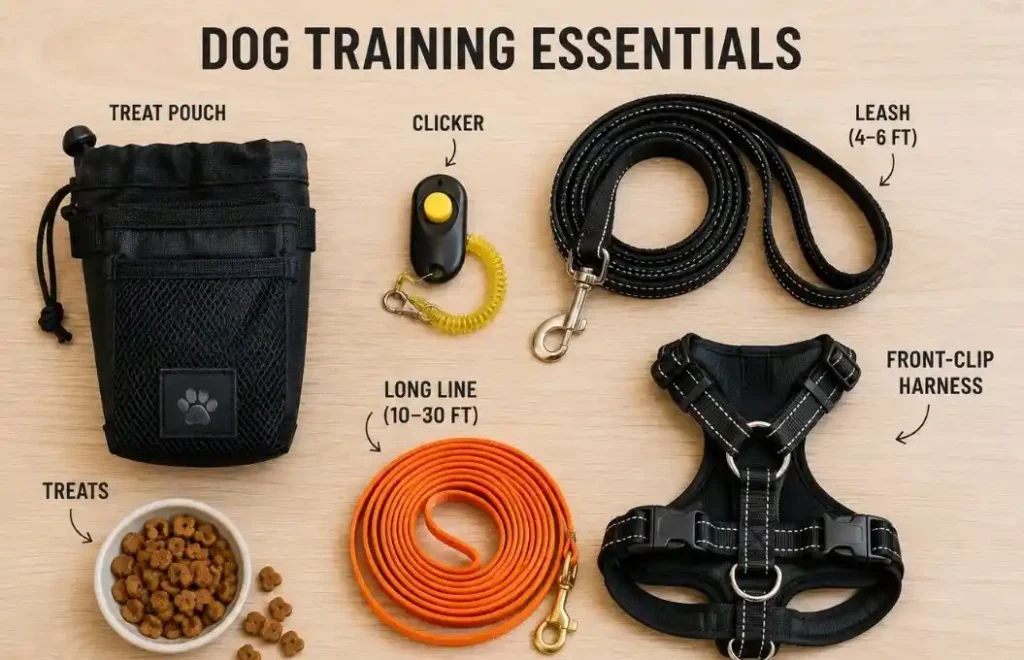
A basic clicker + a silicone treat pouch. Under $20 combined. If you’re just getting started, you don’t need anything else for the first month of training.
Everything else on this list is genuinely useful, but this is where to start.
The best training tools for dog, compared
Here’s how we scored each category: effectiveness (does it actually help the dog learn faster?), durability, ease of use, and value. Products are ranked within each category.
Best clicker: PetSafe Clik-R
Score: 9/10
The click is crisp and consistent, louder than a box clicker, which matters outdoors. The finger strap keeps it in your hand without thinking about it. The button has a short, satisfying press that doesn’t require force.
- Price: ~$5
- Best for: all dogs, all skill levels
- Limitation: slightly loud for noise-sensitive dogs
Runner-up: Karen Pryor i-Click: quieter, shorter travel on the button, better for sensitive dogs or indoor sessions. Slightly more expensive but worth it if your dog startles easily.
Best treat pouch: Paw Lifestyles dog treat pouch
Score: 8.5/10
Magnetic closure so treats don’t spill when you’re moving. Clips to a waistband or belt loop. Wipes clean in seconds. The opening is wide enough to grab treats without fumbling, which matters because timing matters.
- Price: ~$12
- Best for: everyday training sessions
- Limitation: not big enough for larger kibble-based rewards
Runner-up: Ruffwear Treat Trader: more durable, better for outdoor use, but overkill for most people and costs three times as much.
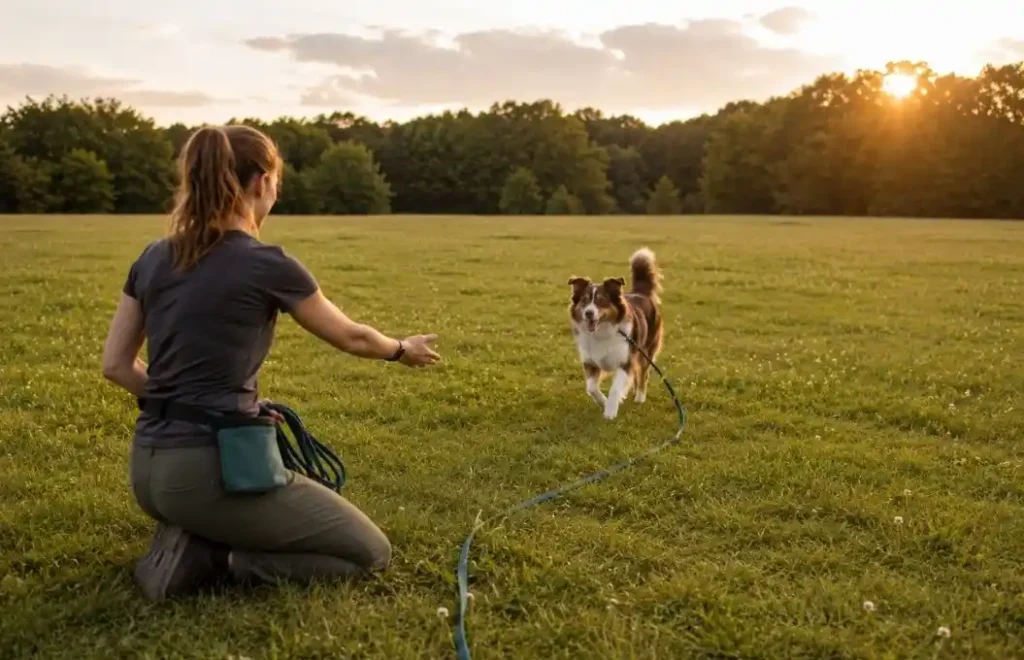
Best long line: Mendota Products long line (20 ft)
Score: 9/10
Long lines are essential for recall training anywhere you can’t use an off-leash area. This one is cotton, which doesn’t burn your hands if it slides through. It doesn’t tangle as badly as nylon. Clips are solid.
- Price: ~$20
- Best for: recall practice, controlled outdoor sessions
- Limitation: gets dirty faster than nylon, needs occasional washing
What length to get: 20 feet works for most dogs. Go 30 feet if you’re working on recall with a breed that needs more space to run (retrievers, hounds).
Best front-clip harness: PetSafe Easy Walk
Score: 8/10
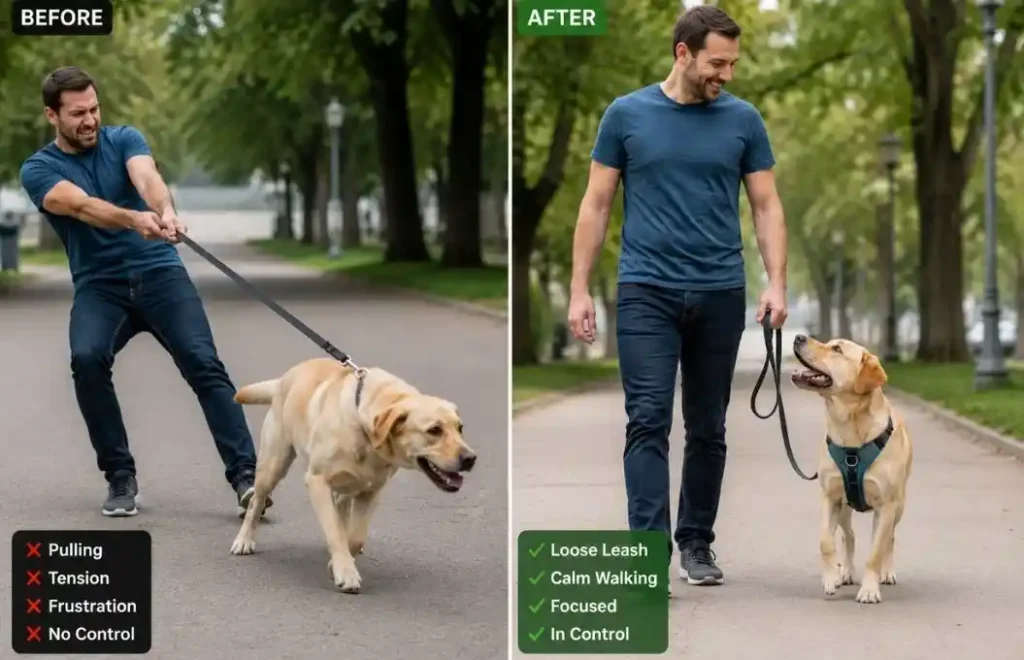
The front clip redirects the dog toward you when he pulls, instead of just tightening around his chest. This doesn’t teach loose-leash walking on its own (you still need to reward the right behavior), but it slows the pulling down enough that you can actually train.
- Price: ~$25
- Best for: dogs that pull hard, owners working on loose-leash walking
- Limitation: can slip if not sized correctly, so measure twice before buying
Runner-up: Freedom No-Pull Harness: dual clip (front and back), sturdier for bigger dogs, but more expensive and harder to fit. Worth it for strong pullers over 60 lbs.
Best training leash (6-foot): Mighty Paw standard leash
Score: 8/10
A leash is a leash, mostly. What matters: the clip doesn’t fail, the handle is comfortable for 20-minute sessions, and it’s the right weight for your dog’s size. This one hits all three and costs under $15.
- Price: ~$13
- Best for: everyday use
- Limitation: nothing special, just a solid, reliable standard leash
Who should get what: a simple decision guide
Starting from scratch with a new dog: Clicker + treat pouch + 6-foot leash. Get those first, nothing else.
Recall is your main problem: Add a long line. Practice daily for 2-3 weeks before expecting reliability off-leash.
Your dog pulls badly on walks: Front-clip harness + consistent training (stop when leash tightens, reward when loose). The harness buys you time to train without being dragged.
You have a puppy: Skip the front-clip harness for now: puppies aren’t strong enough for pulling to be the main issue. Focus on the clicker and treat pouch.
Your dog is noise-sensitive: Swap the PetSafe Clik-R for the Karen Pryor i-Click. Same concept, quieter sound.
How we evaluated these training tools for dogs
We used these products across real training sessions over multiple months, with different dog sizes and temperaments. The criteria:
Does it make timing easier? The whole point of a clicker is precision. If the click is mushy or delayed, it defeats the purpose.
Does it hold up? Cheap clips break. Fabric frays. A treat pouch that falls apart after a month isn’t worth the savings.
Does it get out of the way? Good training gear disappears once you’re using it. If you’re thinking about the tool during a session, something is wrong.
Is the price honest? We didn’t include anything where the jump to the “premium” version doesn’t deliver a real difference.
What to skip
Retractable leashes: They teach dogs that pulling extends the leash. The opposite of what you want.
Choke chains and prong collars: They suppress behavior without teaching an alternative. Effective short-term, but the behaviors come back, and you’ve damaged trust in the process.
Shock collars (e-collars): Even “low-level stimulation” elevates stress hormones. There are better tools for every problem they’re marketed to solve.
Calming sprays and pheromone collars: Won’t hurt, but won’t replace training either. If you’re dealing with anxiety, see the rest of petcalmzone.com. If you’re dealing with a training problem, train.
FAQ
Do I need a clicker, or can I just use my voice?
You can use your voice. A consistent word like “yes” works fine for most people. The advantage of a clicker is that it’s identical every time: your voice changes depending on how tired or frustrated you are. For beginners especially, the clicker removes one variable. Worth the $5.
What size treat pouch do I need?
Smaller than you think. You want treats small enough that your dog eats them in one second and is immediately ready for the next repetition. A pouch that fits thumbnail-sized soft treats is the right size. Bigger treats slow sessions down.
Is a front-clip harness the same as a no-pull harness?
Most “no-pull harnesses” are front-clip harnesses. The front-clip mechanism is what does the work: when the dog pulls, the leash redirects him toward you. Not all harnesses marketed as “no-pull” actually have a front clip, so check before you buy.
How long does a clicker last?
Years, if you don’t lose it. The main failure mode is losing it, not wearing it out. Buy two at the start. Keep one in your treat bag, one somewhere accessible at home.
Can I train without any of these tools?
Yes. Dogs were trained long before clickers and treat pouches existed. But these tools make timing more precise and sessions more efficient. Given that a clicker costs $5 and a treat pouch costs $12, skipping them to “train the old-fashioned way” is an odd economy.
The bottom line
Start with a clicker and a treat pouch. Add a long line when you’re ready to work on recall outside. Add a front-clip harness if pulling is a problem while you’re building loose-leash skills.
That’s a complete toolkit for under $60. Everything else is optional.
Try PetSafe Clik-R on Amazon, our top clicker pick
This post contains affiliate links. We earn a small commission if you buy through them, at no extra cost to you. We only recommend products we’ve actually used.
- Dog training: the complete guide for every owner: back to the full guide
- Positive reinforcement dog training: step-by-step: the method behind the tools
- Dog behavior problems: how to fix them fast: when tools aren’t enough