🐾 Does your dog panic when you leave? → Get the Free 7-Day Starter Plan

Why Does My Dog Howl When I Leave? What to Record for Your Vet
Your dog howls when you leave. Here is how to observe and record what happens before, during, and after absences so you bring useful details to the vet.

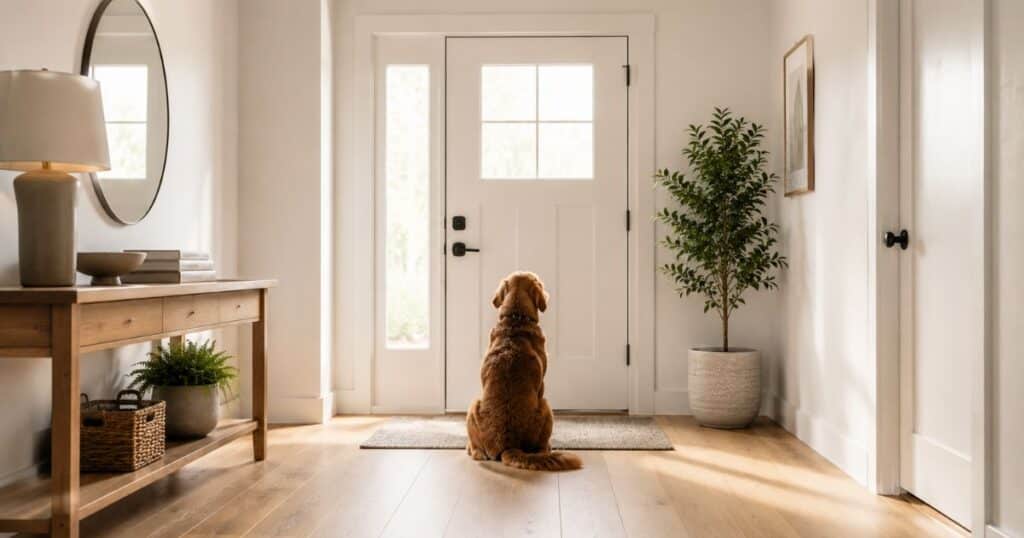
When your dog howls every time you leave, it is natural to search for an explanation. But guessing from memory is unreliable, and a single label does not help a veterinarian understand what is actually happening.
This guide is a practical tool: it walks you through what to observe and write down before, during, and after an absence, so that when you do speak to a professional you bring useful detail instead of a general worry. It is not a diagnostic checklist and it is not a substitute for veterinary advice.
If you want to understand the difference between separation-related distress and ordinary behavior, see our guide to separation anxiety vs. normal dog behavior. For nighttime-specific observations, see signs of separation anxiety in dogs at night.
Table of Contents
Why Observing Matters More Than Guessing
Owners often describe what they think happened while they were away, not what actually happened. The ASPCA and VCA Animal Hospitals both note that many behaviors have overlapping causes: howling can be territorial, social, a response to noise, or a sign of distress. Your vet needs specific observations, not interpretations.
- Memory distorts. You remember the worst moment, not the full picture. A camera or a written log captures the parts you would forget.
- Patterns take time to appear. A single bad day is not the same as a consistent pattern. Several days of notes reveal whether timing, triggers, or circumstances repeat.
- Professionals work from details. “My dog howls when I leave” is a starting point. “My dog begins pacing when I pick up my keys, howls within two minutes of the door closing, and is still unsettled forty minutes later” is something a vet or behavior professional can work with.
What to Record Before You Leave
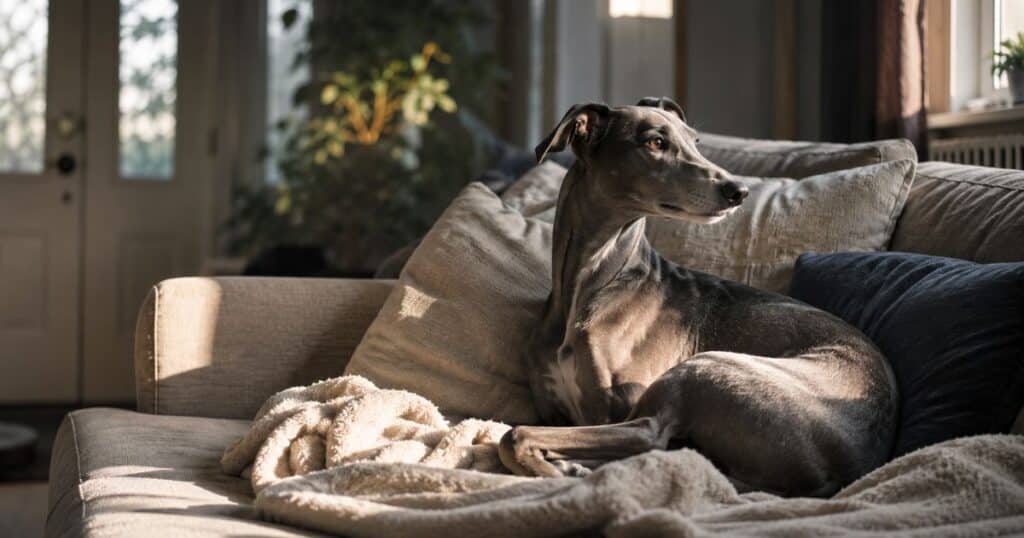
Your dog’s reaction to your departure routine can be as informative as what happens after you close the door. Note:
- Departure cues. What were you doing in the minutes before leaving? Picking up keys, putting on shoes, packing a bag? Write down the specific cues.
- Your dog’s response to those cues. Did they follow you, pace, pant, drool, tremble, or try to block the door? Or did they stay relaxed?
- Time of day and day of the week. Some dogs react differently on workday mornings than on weekends, or differently in the morning than in the evening.
- What came before. How much exercise or activity did the dog have? When was the last meal? The last toilet break? Was anything unusual about the day, such as a visitor, a storm, or a change in routine?
- Who else is home. Is the dog being left completely alone, or is another person or animal still there? This matters because some dogs are distressed only when a specific person leaves.
What to Record During the Absence
A camera is the most useful tool here. A phone propped on a shelf, a basic pet camera, or a webcam all work. The goal is to see what your dog does when you are not there to watch.
Review the footage and note:
- When the first sign of distress appears. Does vocalization or pacing start within a few minutes, or only after a longer period? The timing matters.
- What the dog does. Howling, barking, whining, pacing, scratching at the door, chewing, lying down, sleeping. Describe what you see, not what you think it means.
- Where the dog focuses. Are they at the door you left from, at a window, near your belongings, or somewhere else?
- Whether the dog settles. Does the dog calm down at any point and rest, or does the distress continue without a break?
- How long the distress lasts. If your dog howls for five minutes and then sleeps, that is a very different picture from howling for two hours straight.
- Physical signs. Drooling, panting, trembling, toileting indoors, or any sign the dog has injured themselves trying to get through a door or barrier.
You do not need to set up a deliberate test or leave your dog in distress to observe them. Record what happens during a real, necessary absence. If you normally leave for work, that is enough. Do not prolong an absence or create one just to get footage.
What to Record When You Come Home
What you find when you return, and how your dog greets you, adds to the picture. Note:
- The state of the space. Any damage, and where it is. Scratches near the door or window are a different signal from a chewed shoe in the living room.
- Toileting. Any indoor accidents, even though the dog was let out before you left and is reliable when you are home.
- Your dog’s greeting. Calm and happy, or frantic, prolonged, with jumping, crying, or panting that takes a long time to settle.
- How long it takes to settle. Does the dog calm down within a minute or two, or does it take much longer?
- Physical state. Wet paws from drooling, worn nails from scratching, damp fur, or any injury.
A Simple Observation Log
You do not need a formal sheet. A note on your phone after each absence is enough. Here is a structure you can copy:
| Field | What to Write |
|---|---|
| Date and time of departure | e.g. Monday 14 Oct, 8:15 am |
| Who left / who stayed | e.g. I left, partner still home; or everyone left |
| Departure cues noticed | e.g. picked up keys — dog started pacing |
| Last exercise / meal / toilet | e.g. 30-min walk at 7 am, fed at 7:30, toilet at 8:00 |
| Camera: first sign of distress | e.g. howling started 3 min after door closed |
| Camera: behaviors observed | e.g. paced, howled, scratched front door for 20 min, then lay by door |
| Camera: did the dog settle? | e.g. lay down at 40 min but did not sleep |
| Duration of absence | e.g. 4 hours |
| State of room on return | e.g. scratches on door frame, no accidents |
| Greeting behavior | e.g. frantic jumping and whining for 10 min |
| Anything unusual today | e.g. thunderstorm forecast, skipped morning walk |
Three to five entries over different days give a much clearer picture than a single observation. If you can, include at least one short absence and one longer one.
What to Bring to the Vet
When you speak to your veterinarian or a behavior professional, bring:
- Your log entries. Even a few dated notes with the details above are more useful than a verbal summary.
- Video clips. Short clips from your camera showing the key moments: the start of the distress, the peak, and whether the dog settles. You do not need to show the entire absence.
- A health and routine summary. Any recent changes in health, diet, medication, household, or routine, and the dog’s age and breed.
- What you have already tried. If you have changed sleeping arrangements, used calming products, or adjusted your routine, note what you did and what happened.
Your vet may want to rule out medical causes first. Pain, gastrointestinal discomfort, hearing or vision changes, and age-related cognitive decline can all produce restlessness or vocalization that looks like anxiety, as the Merck Veterinary Manual notes. Your observations help them sort through the possibilities.
Any decision about medication, supplements, or a formal behavior plan is a professional decision. Your role is to bring clear observations; theirs is to interpret them. For help choosing a behavior professional, see our guide to finding a dog trainer for separation anxiety.
Frequently Asked Questions
How many days should I observe before seeing the vet?
Three to five absences over different days usually give enough information to show a pattern. If your dog is in acute distress or injuring themselves, do not wait — contact your vet right away.
Do I need a special camera?
No. A phone propped on a shelf, a basic webcam, or any pet camera will do. The goal is to see what your dog does in the first thirty minutes or so after you leave, and whether they settle.
Should I leave my dog alone on purpose to get footage?
No. Record what happens during a normal, necessary absence such as going to work or running an errand. Do not create or extend an absence just to observe — the point is to capture the real situation, not to test your dog.
My dog only howls when I leave, not when my partner does. Should I note that?
Yes. That is important information for a professional. Some dogs are distressed only when a specific person leaves, and noting who was present and who left helps identify the pattern.
What if the camera shows my dog is fine?
That is useful information too. If your dog settles quickly and rests for most of the absence, the howling may be a brief departure response rather than sustained distress. Note how long it lasts and share the footage with your vet if you are unsure.
Sources