🐾 Does your dog panic when you leave? → Get the Free 7-Day Starter Plan

Golden Retriever for Anxiety: Signs, Causes and Support
Explore Golden Retriever anxiety signs, possible causes, noise-related fear and separation distress, with guidance on observation and veterinary support.

This guide to Golden Retriever anxiety covers possible signs in your dog, triggers such as sounds or departures, and ways to find appropriate support. The same behavior can have different causes; it is not a diagnosis on its own.
Table of Contents
- Golden Retriever for Anxiety: Signs and Causes
- Signs of anxiety in Golden Retrievers
- Anxiety patterns to discuss with your veterinarian
- How to help a Golden Retriever with anxiety
- When to see a vet
- Frequently asked questions
This guide covers anxiety-related behavior in Golden Retrievers across different situations. Note what happens, when it happens and whether your dog can settle, then discuss persistent or concerning changes with your veterinarian.
Golden Retriever for Anxiety: Signs and Causes
Golden Retrievers were developed as sporting dogs, but breed history does not diagnose anxiety or predict an individual dog’s response to being alone. Health, experience and the circumstances surrounding the behavior need individual assessment.
Possible contexts to record include:
- Social context: note whether the behavior occurs when your dog is completely alone, when a particular person leaves, or even with company present.
- Sounds: record reactions to storms, fireworks or everyday noises, without assuming that every Golden Retriever is noise-sensitive.
- Daily routine: note activity, enrichment, rest and recent changes. Unmet activity needs and an anxiety disorder are not interchangeable explanations.
Signs of anxiety in Golden Retrievers
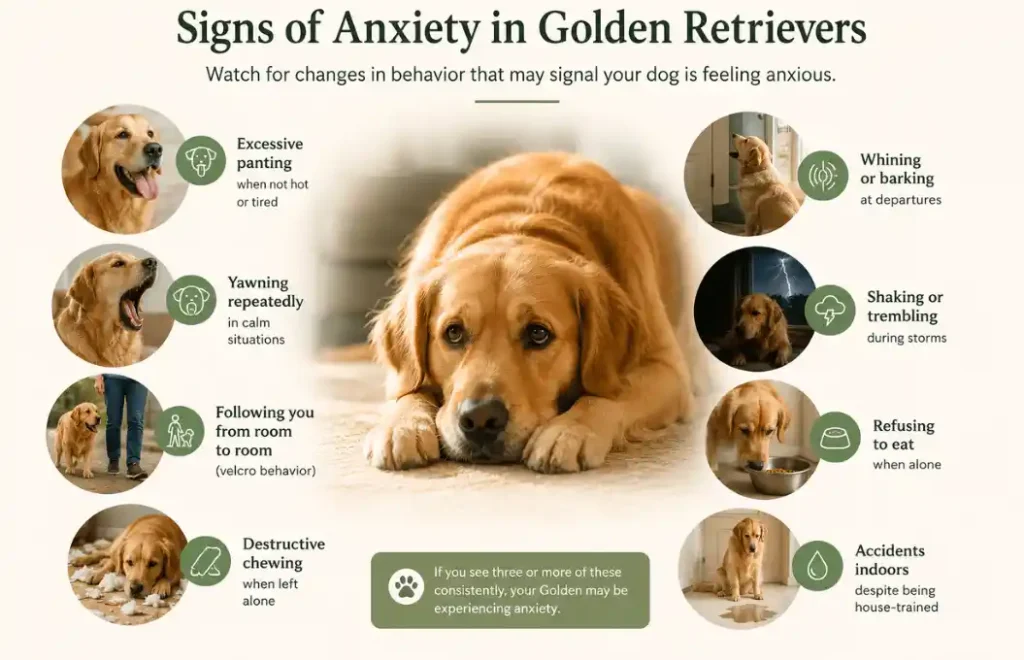
Possible signs to record include the behaviors below. Their meaning depends on context, and some may have medical or other behavioral explanations:
- Excessive panting when not hot or tired
- Yawning repeatedly in calm situations
- Following you from room to room (velcro behavior)
- Destructive chewing when left alone
- Whining or barking at departures
- Shaking or trembling during storms
- Refusing to eat when alone
- Accidents indoors despite being house-trained
There is no diagnostic cutoff based on the number of signs in this list. Record their frequency, triggers and impact, and ask your veterinarian about persistent, sudden or concerning changes.
Anxiety patterns to discuss with your veterinarian
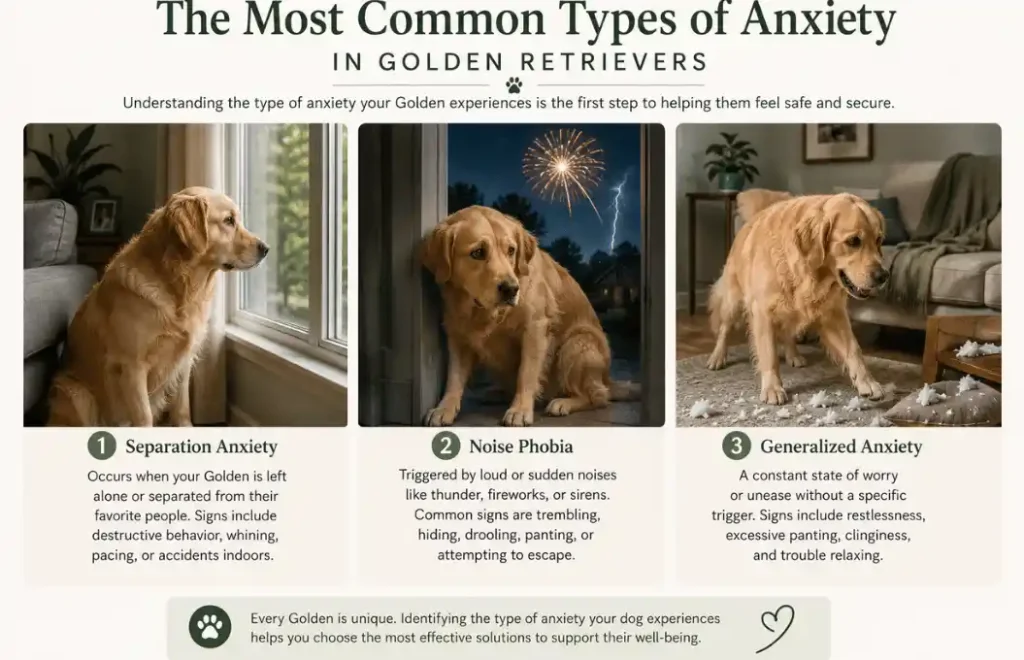
Separation anxiety
Distress associated with departures or being alone can include vocalizing, pacing, escape attempts or difficulty settling. Similar behavior can have other causes. For observation during absences and individualized practice, see our Golden Retriever separation anxiety guide.
Noise phobia
Storms, fireworks or other sounds may trigger fear. Offer a resting area your dog can use voluntarily and avoid forcing exposure to frightening sounds. Persistent or severe reactions warrant veterinary advice about an individualized plan.
Generalized anxiety
If your dog seems unsettled across several situations, record the pattern rather than assuming a genetic cause. A veterinarian can assess medical contributors and help determine whether a broader behavior assessment is needed.
How to help a Golden Retriever with anxiety
1. Appropriate activity, enrichment and rest

Choose activity and enrichment that suit your dog’s age, health and preferences, with time for rest. Ask your veterinarian about physical limitations. Do not prescribe vigorous exercise to exhaustion or treat a tired dog as proof that anxiety has resolved.
2. Calming supplements
Evidence for calming supplements in dogs is limited and varies by ingredient and formulation. Research on an ingredient does not establish that a particular chew treats separation anxiety, and effects cannot be assumed for this breed. Ask your veterinarian whether a supplement is appropriate, including possible side effects and interactions. Supplements do not replace an individualized behavior plan.
– See our top picks: Best calming supplements for dogs
3. Anxiety wrap for noise events
A pressure wrap is an optional item, not a guaranteed or fast treatment for noise-related fear. Check the manufacturer’s instructions and fit, introduce it under supervision and stop if your dog appears uncomfortable. Discuss persistent noise-related distress with your veterinarian.
– Compare options: Best dog anxiety vests
4. Desensitization training for separation
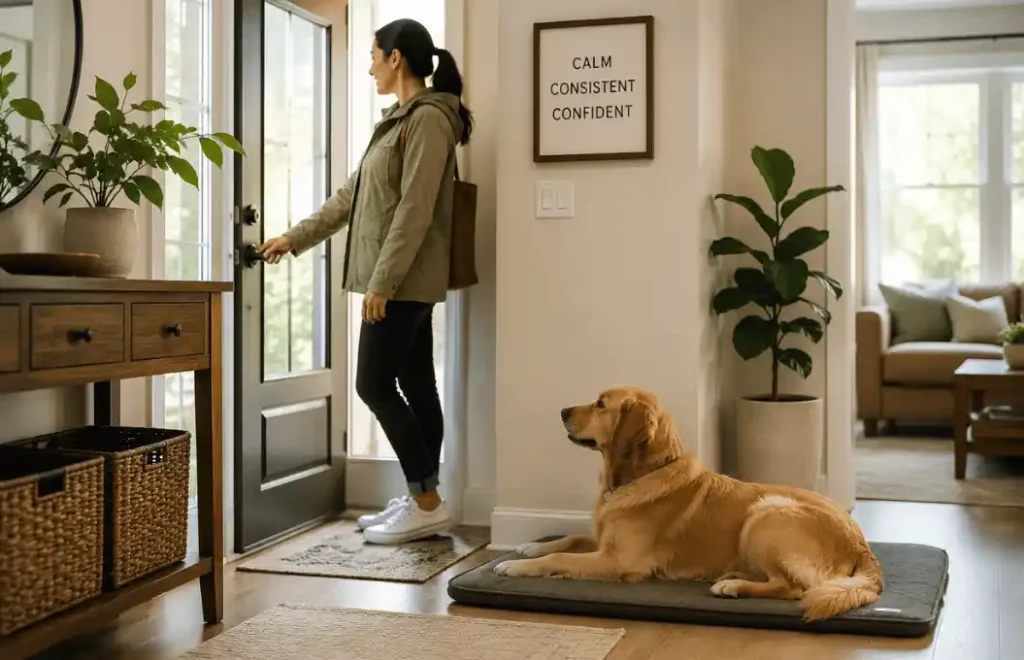
For distress linked to absences, practice should be adjusted to the dog’s observed comfort rather than a fixed timetable. The detailed absence-focused guidance belongs in the linked separation-anxiety article; confinement requires its own careful assessment.
Related confinement resource: kennel training for a dog with separation anxiety.
5. CBD: discuss evidence and safety with your veterinarian
Evidence that CBD treats anxiety in dogs remains limited. A product marketed for pets or accompanied by a certificate of analysis is not a guarantee of safety or effectiveness. Discuss CBD with your veterinarian before use, particularly if your dog takes medication; this guide does not recommend a dose or timing schedule.
Further reading: evidence and safety considerations for CBD products.
When to see a vet

Seek veterinary advice promptly if your dog is injuring itself, cannot settle, stops eating or shows a sudden concerning change. Your veterinarian can investigate medical contributors and discuss an individualized behavior plan, including medication when appropriate. Do not start, combine or adjust medication without veterinary guidance. See this veterinary guide to behavioral medication for general background.
For more detail on distress during absences, see our complete guide to dog separation anxiety.
Frequently asked questions
Are Golden Retrievers prone to separation anxiety?
Golden Retrievers can experience separation-related distress, but breed alone cannot diagnose it or establish a risk ranking. Look at behavior during absences and seek an individualized assessment if distress persists.
Why is my Golden Retriever so anxious?
Possible contributors include health problems, frightening experiences, changes in routine and the specific situation in which the behavior occurs. Your dog’s breed or activity level alone cannot identify the cause. Record patterns and discuss them with your veterinarian.
What calms a Golden Retriever down?
Appropriate exercise and enrichment may support wellbeing, but they do not treat separation anxiety on their own. Evidence for supplements and CBD remains limited; fast relief should not be assumed. A veterinarian can assess persistent distress and help plan behavior modification.

