🐾 Does your dog panic when you leave? → Get the Free 7-Day Starter Plan

Dog Separation Anxiety When One Person Leaves: Why and How to Fix It

Affiliate disclosure: This article and its sidebar contain affiliate links. If you buy through these links, PetCalmZone may earn a commission at no extra cost to you.
Dog separation anxiety when one person leaves is a specific and often more intense version of separation anxiety that’s harder to manage than the standard kind. Your dog is fine when you leave with your partner staying home. Fine at doggy daycare. Fine with the dog sitter. But the moment you specifically leave, even if the house is full of other people, they fall apart. This isn’t general separation anxiety. It’s single-person attachment, and it requires a slightly different approach than dog separation anxiety from one person’s more general cousin.
Table of Contents
- What Dog Separation Anxiety from One Person Actually Is
- How to confirm it’s one-person anxiety
- Why it happens
- How to Treat Dog Separation Anxiety from One Person
- When to get professional support
- Bottom line
What Dog Separation Anxiety When One Person Leaves Actually Is
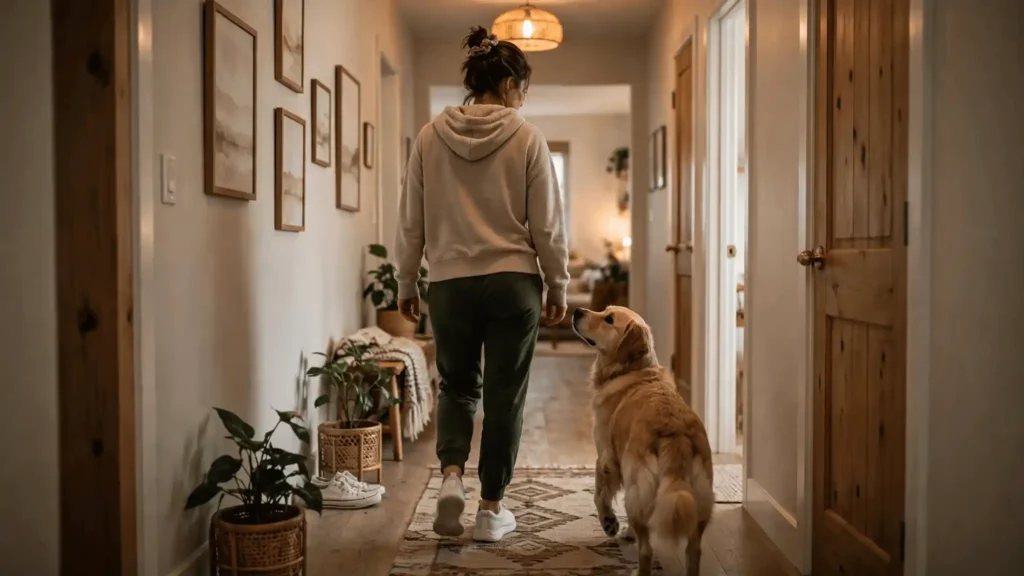
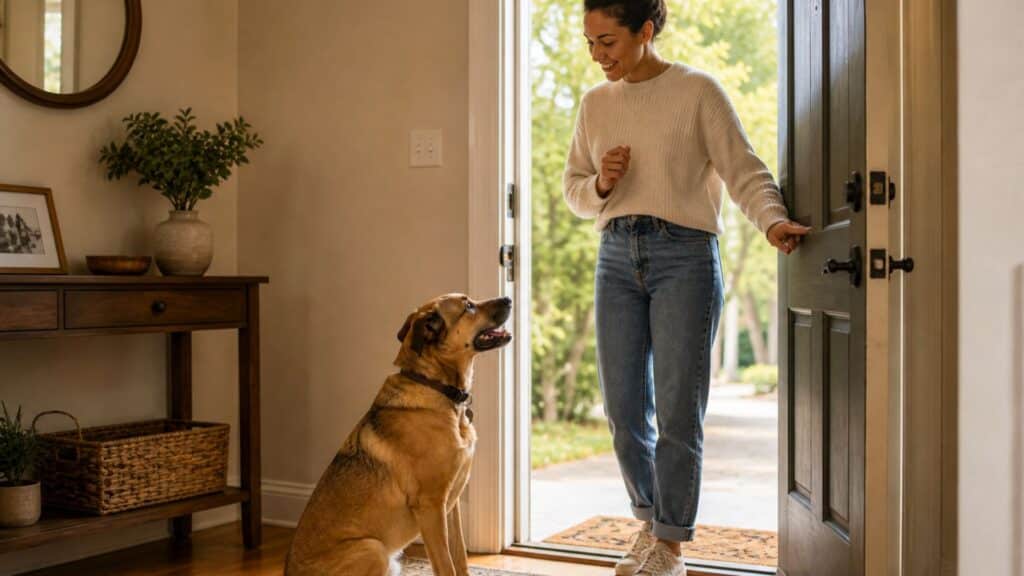
True separation anxiety and single-person attachment look similar on the surface but have an important difference. With standard separation anxiety, the dog is distressed about being alone, the absence of any person triggers the panic. With single-person attachment, the dog is distressed about being without a specific person. Another human’s presence doesn’t help because the wrong human is there.
This is sometimes called “hyper-attachment” or “velcro dog” behavior at the extreme end. The dog monitors their person constantly, follows them room to room, panics if they lose sight of them, and can be fine for hours with others present but spirals when that specific person leaves.
It’s most common in dogs who have formed an unusually strong bond with one person, sometimes because that person has been the primary caregiver from puppyhood, sometimes because the dog came from an unstable background and latched onto the first consistent source of safety they found.
How to confirm it’s one-person anxiety
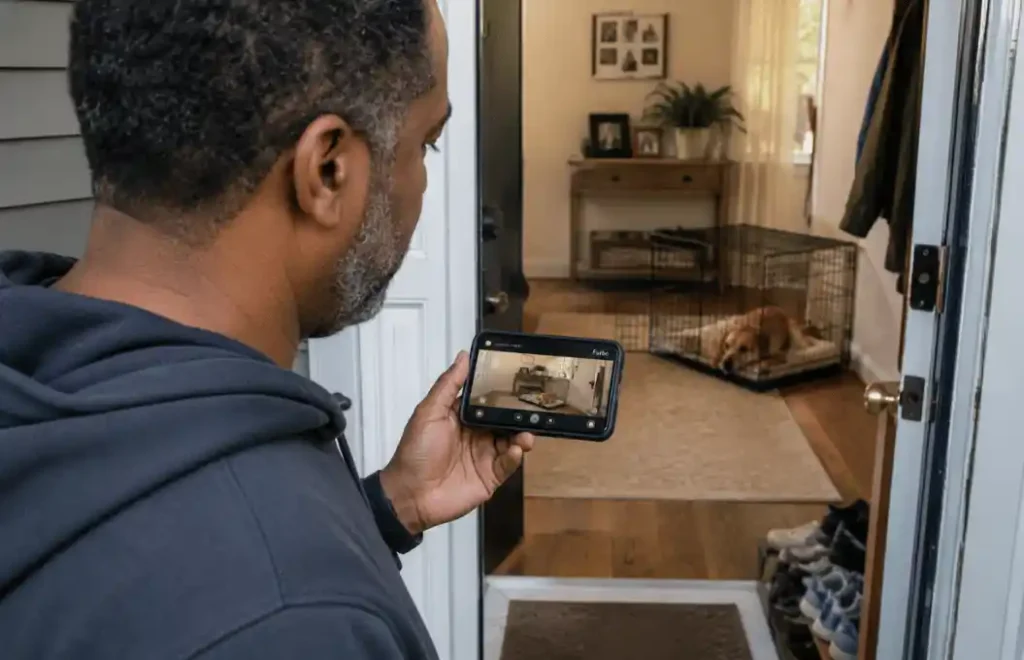
Use a camera. The footage is almost always diagnostic. Set up one camera to capture your dog’s behavior when you specifically leave while other people remain home. Then capture your dog’s behavior when you’re home and someone else leaves. If the anxiety appears specifically around your departures and not theirs, you’re looking at single-person attachment. That pattern is the clearest sign of dog separation anxiety when one person leaves.
Signs to watch for when you leave while others are home: vocalization directed at your exit, pacing near the door you used, inability to engage with other household members, and physical stress signs (panting, trembling, excessive drooling). A dog who settles with others after a few minutes probably has standard separation anxiety with you as the primary figure but can accept substitutes. A dog who remains distressed for the duration of your absence regardless of who’s home, that’s single-person attachment.
Why it happens
Several patterns commonly explain why dog separation anxiety when one person leaves develops Primary caregiver attachment. Dogs form attachments to the person who provides the most care: feeding, walking, training, playtime. If one person in a household handles the majority of these interactions, that person becomes the primary attachment figure. In single-person households, all of this falls to one person by default.
Rescue dog history. Dogs from unstable backgrounds (multiple homes, shelter stays, chaotic early environments) sometimes form particularly strong attachments to the first stable, consistent person they encounter. The bond forms with unusual intensity because it represents something genuinely new for them: reliable safety.
Pandemic patterns. Dogs acquired during periods when one person worked from home developed deep single-person attachments to that person. When work-from-home arrangements changed and the person left for the first time, the anxiety was severe and sudden.
Reinforced following behavior. Well-intentioned owners sometimes inadvertently reinforce hyper-attachment. Constant interaction when together, calling the dog whenever you move rooms, never teaching the dog to be calm independently: these patterns create a dog who has no experience of being away from you and no confidence that it’s survivable.
How to Treat Dog Separation Anxiety from One Person
Step 1: Build independence before working on departures
Single-person attachment requires an extra step that standard separation anxiety work sometimes skips: teaching the dog to be comfortable in a different room from their person before working on actual departures. This is called independence training.
Start with simple exercises: ask your dog to settle on their mat while you sit in the same room, then gradually increase the distance between you and them while remaining visible. Reward calm settling at a distance. The goal is a dog who can be comfortable not touching you or monitoring you constantly, as a prerequisite for tolerating your absence.
Step 2: Build positive associations with other people
If other household members are available, have them take over some of the caregiving functions: feeding, walks, training sessions, playtime. The dog’s attachment to one person is partly a function of one person being the exclusive source of all good things. When other people also become associated with good things, the exclusive bond loosens slightly.
This doesn’t mean the primary person withdraws from the relationship. It means others actively build their own relationships with the dog, separate from the primary person’s presence. This step alone can meaningfully reduce dog separation anxiety when one person leaves.
Step 3: Departure desensitization with one-person calibration
The same desensitization protocol used for standard separation anxiety applies here, but calibrated specifically to your departures. Leave for time periods shorter than what triggers anxiety (often seconds at first) while others may or may not be present. Your return timing is what builds the expectation that your departures are brief and always end.
The complication with single-person anxiety is that the threshold for anxiety may be very short and you have to go more slowly than with standard cases. Be patient with the progression. Full desensitization protocol →
Step 4: Stop reinforcing the vigilance
When you’re home together, reduce interactions that reinforce constant monitoring. Don’t call your dog every time you move. If your dog follows you from room to room constantly, practice settling exercises where they’re rewarded for staying put when you move. The goal isn’t to be cold. It’s to build a dog who can be confident that you’re still there without needing to see you at every moment.
Step 5: Calming aids to lower the baseline
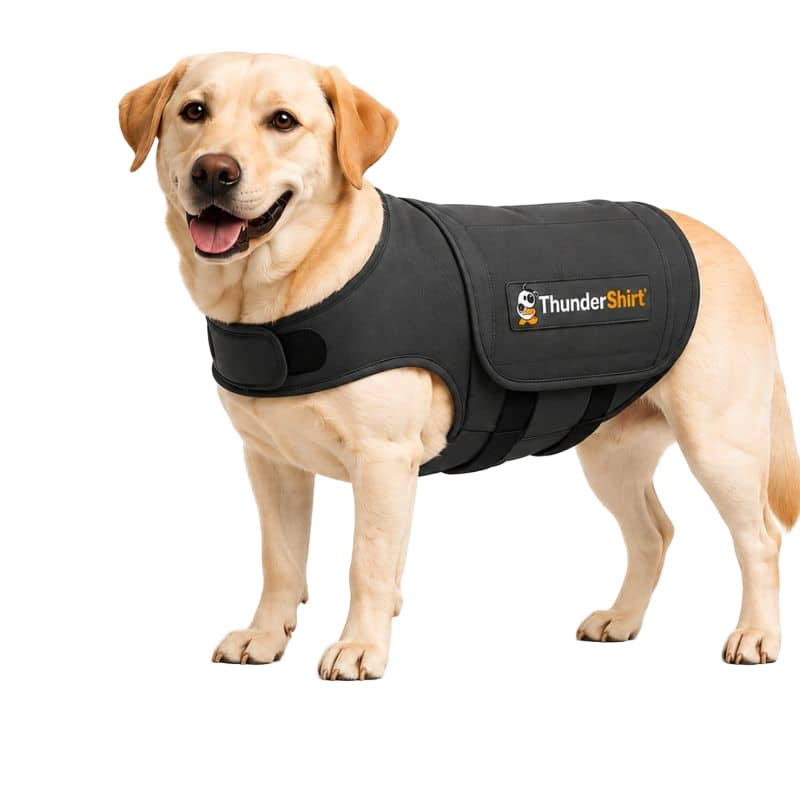
The same products used for standard separation anxiety help here too. Adaptil diffuser in the space your dog occupies when you’re gone, Purina Pro Plan Calming Care as a daily supplement, and calming chews 30–60 minutes before anticipated long absences. These lower the overall anxiety level, making desensitization training more effective. According to the ASPCA, gradual desensitization combined with these supports is the most reliable path to improvement.
→ Check Adaptil on Amazon | → Check Zesty Paws on Amazon
Full guide to dog anxiety treatment options →
When to get professional support
Dog separation anxiety when one person leaves can be more resistant to home-based treatment than standard separation anxiety, particularly when the attachment is very strong and the dog’s baseline anxiety is high. Consider professional support sooner rather than later if: the anxiety is severe enough that your dog can’t function at all when you leave (even briefly), the dog is injuring themselves, or you’ve been doing consistent desensitization work for 4+ weeks without meaningful progress.
A Certified Separation Anxiety Trainer (CSAT) is the most targeted resource here: they work specifically with this problem. For very severe cases, veterinary-prescribed medication (fluoxetine is typically the first line) combined with behavioral work outperforms either approach alone.
The bond itself isn’t the problem. The problem is a dog who lacks the confidence to exist without you nearby. That confidence is buildable. It just takes more time and more intention than standard separation anxiety work. With patience and the right protocol, dog separation anxiety when one person leaves is very treatable.
→ Full separation anxiety treatment protocol → | → Check Adaptil on Amazon | Full dog anxiety guide →

