🐾 Does your dog panic when you leave? → Get the Free 7-Day Starter Plan

Dog Training for Separation Anxiety: Why Standard Methods Fail (And What Works)
Dog Training for Separation Anxiety: Why Standard Methods Fail

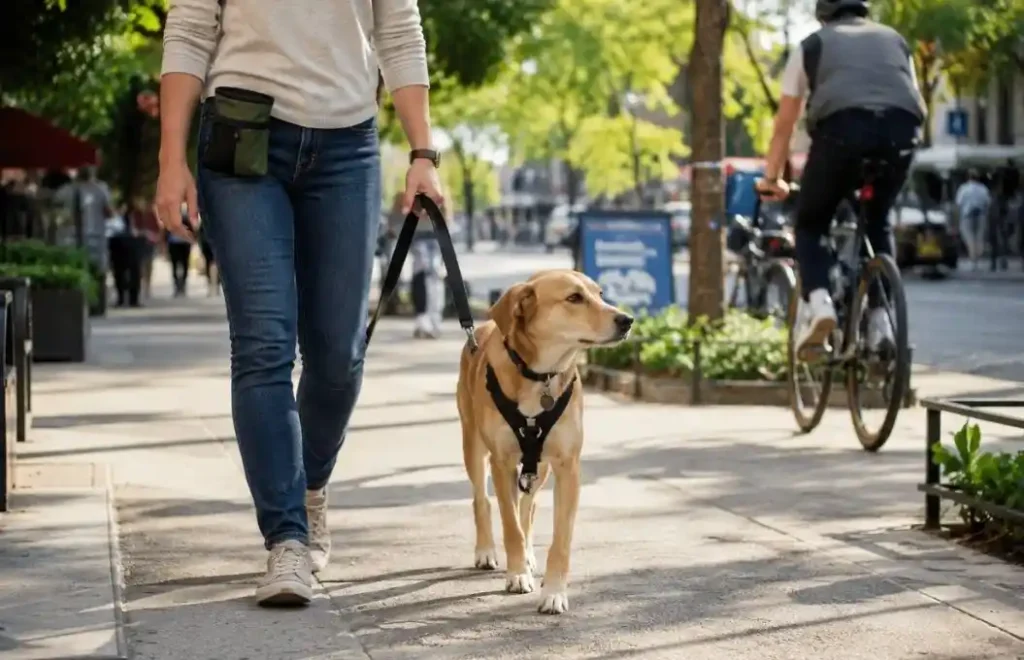
Most dogs with separation anxiety don’t have a training problem. They have a panic problem. That’s why sit, stay, and more exercise don’t fix it.
Standard obedience training won’t touch separation anxiety. You can have a dog who sits, stays, heels, and comes reliably, and still destroys your apartment the moment you close the front door. That’s because separation anxiety isn’t disobedience. It’s a panic response, and panic doesn’t respond to commands. This is why effective dog training for separation anxiety has to look completely different from standard obedience work.
This guide explains why the usual approach fails and the behavioral science (desensitization and counterconditioning) that actually changes the underlying fear response. For the full minute-by-minute protocol with a week-by-week schedule, see How to Train a Dog With Separation Anxiety: Step-by-Step.
What separation anxiety actually is
Separation anxiety is a fear response triggered by being left alone, or sometimes just by the anticipation of being left alone. The dog isn’t misbehaving. He’s in genuine distress.
The distinction matters because the solution is completely different. A dog who chews furniture because he’s bored needs more exercise and enrichment. A dog who chews furniture because he’s panicking needs a behavior modification protocol targeting the fear itself.
Separation anxiety sits on a spectrum. Mild cases look like restlessness or whining for the first 10-15 minutes after you leave, then the dog settles. Severe cases involve continuous distress the entire time you’re gone: destructive behavior, house-training regression, attempts to escape that result in broken teeth or bloody paws. According to the ASPCA, separation anxiety is one of the most common reasons dogs are surrendered to shelters, which is why catching it early matters.
[→ Related: How to train an anxious dog: step-by-step guide]
Signs your dog has separation anxiety (not just boredom)
The clearest way to tell the difference: set up a camera and watch what happens after you leave. Bored dogs typically settle within 30-60 minutes. Anxious dogs don’t settle at all, or settle briefly and then cycle back into distress.
Specific signs to look for:
Before you leave: panting, pacing, following you from room to room, refusing to eat. The anxiety often starts before you’re even out the door.
While you’re gone: continuous or near-continuous vocalization, destructive behavior concentrated near exits (doors, windows), eliminating in the house despite being reliably house-trained, escape attempts.
When you return: frantic greeting that lasts longer than a few minutes. Some anxious dogs are so relieved they can’t calm down for 20-30 minutes.
One thing that trips people up: a dog who is calm when crated and panics when left loose, or vice versa. Neither situation automatically means separation anxiety is the issue, but both are worth investigating with a camera.
[→ Related: Does crate training help with dog anxiety?]
Why standard training doesn’t fix separation anxiety
This is where most owners get stuck. They teach their dog to sit and stay for longer and longer periods while they’re present. The dog gets very good at it. Then they leave, and nothing has changed.
The stay command requires the dog to remain calm while you’re visible and returns to normal after a few minutes. Separation anxiety involves a completely different context: alone, no one visible, no end point the dog can anticipate. Practicing stay in the living room doesn’t generalize to being alone.
Similarly, punishment doesn’t work here. Coming home to find destruction and punishing it doesn’t connect to the behavior that caused the problem. By then, the dog has no idea what the punishment is for. It just makes an already anxious dog more anxious.
The other approach that reliably fails: getting another dog. Some dogs improve with a companion. Many don’t, because their anxiety is specifically about human absence, not company in general.
The two-part approach that works
Effective separation anxiety training combines two techniques from applied behavior analysis:
Desensitization means exposing the dog to the feared thing at such a low intensity that it doesn’t trigger a fear response. For separation anxiety, this means absences so short the dog never reaches panic, sometimes just a few seconds at first.
Counterconditioning means changing the emotional association. Instead of “you leaving = panic,” the goal is “you leaving = neutral or positive.” This is done by pairing departures with something the dog genuinely values.
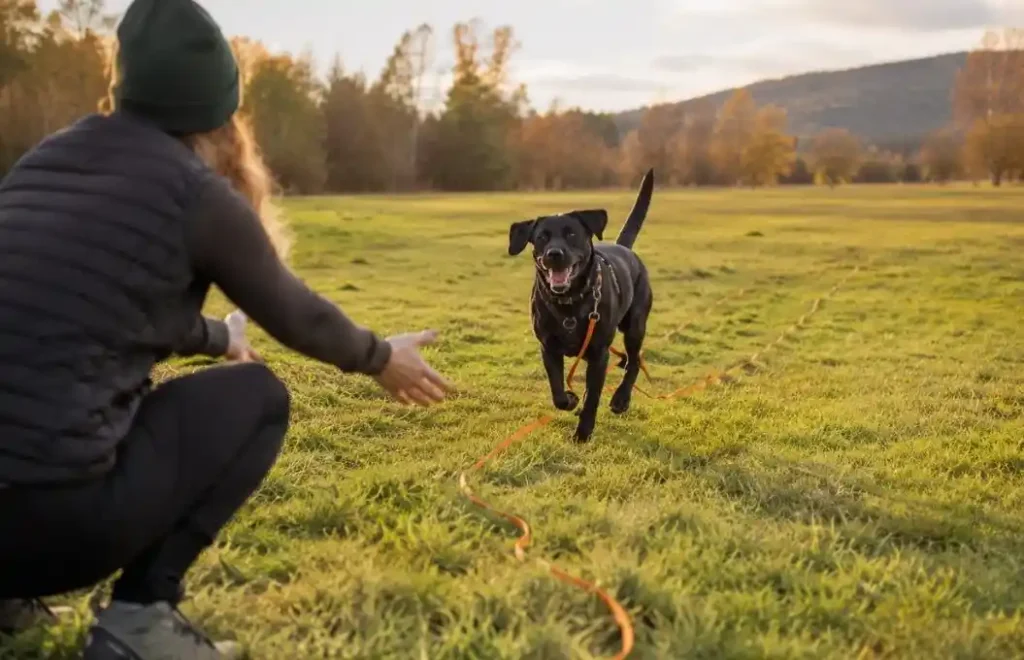
These two techniques work together. Desensitization keeps the dog below threshold (not panicking). Counterconditioning builds a new association over repeated exposures. Neither works as well without the other.
[→ Related: Dog training for fear and anxiety: what actually works]
Fix the pre-departure routine first
Most anxious dogs start their anxiety spiral before you’ve even left. They’ve learned to read departure cues: picking up keys, putting on shoes, checking your bag. By the time you’re at the door, they’re already distressed.
Address this first, separately from the departure training itself:
Pick up your keys and put them down. Do nothing. Repeat 15-20 times until your dog stops reacting.
Put on your shoes, sit down, watch TV for 10 minutes. Take your shoes off. Repeat.
The goal is to break the predictive value of these cues. When picking up keys no longer reliably predicts leaving, the spike in anticipatory anxiety drops.
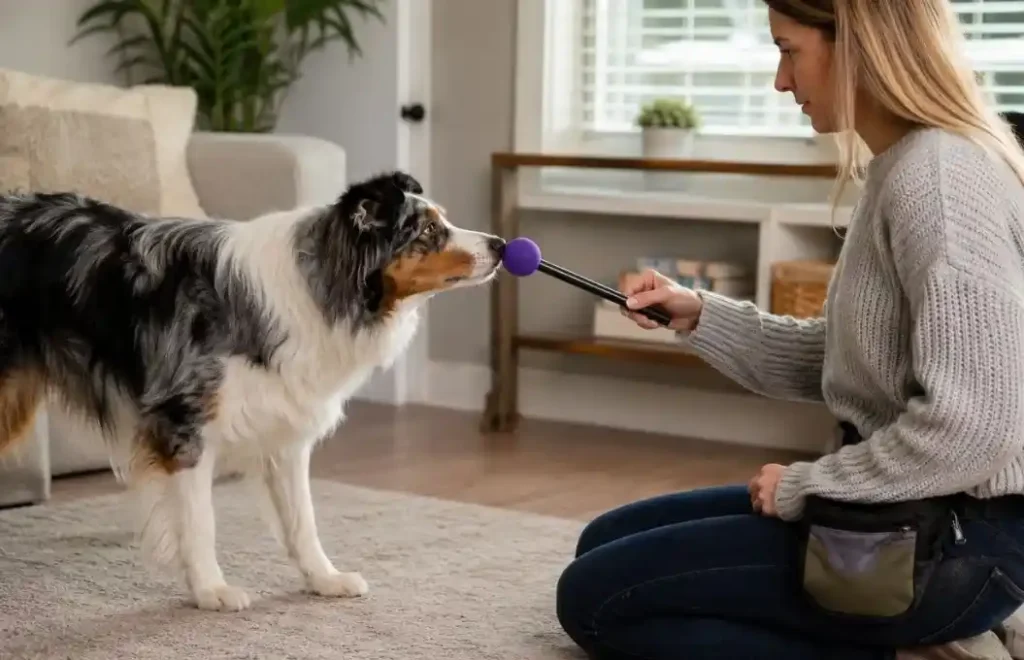
This step alone can reduce the severity of what happens when you actually do leave.
Putting it into practice: the graduated departure protocol (short version)
In practice, this means starting with absences so short your dog never crosses into panic, sometimes just seconds, pairing each exit with a high-value chew, then extending duration gradually and unevenly while watching for stress signals. Progress is measured in seconds, not minutes, and a setback means you back up, not that you’ve failed.
We break this down minute-by-minute, including how to find your dog’s exact threshold and a full week-by-week schedule, in How to Train a Dog With Separation Anxiety: Step-by-Step.
Tools that support the process
The protocol above is the work. These tools support it, but they don’t replace it.
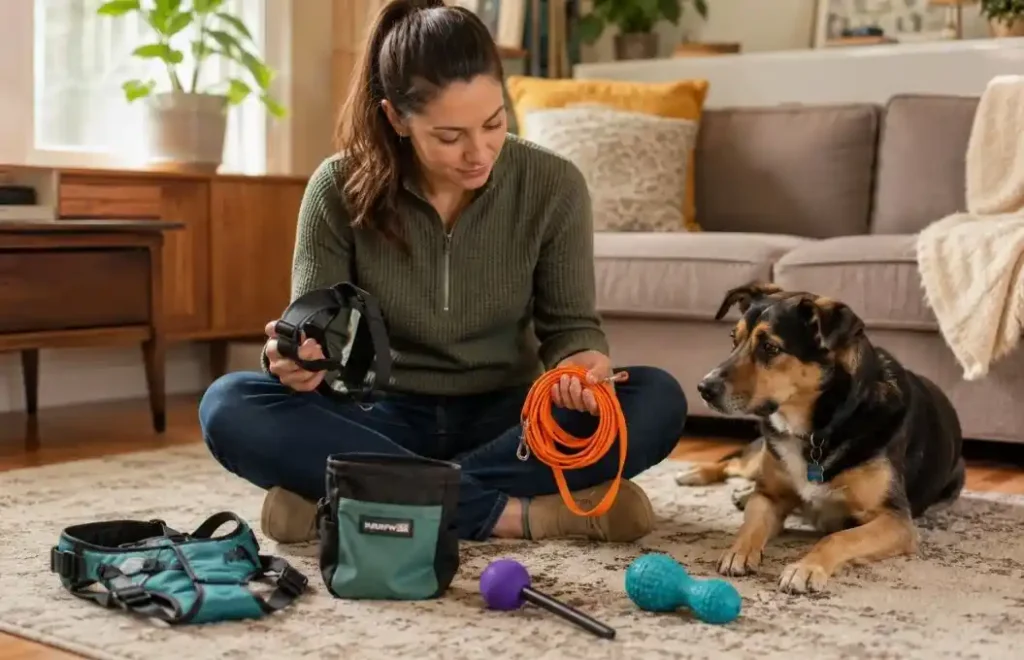
Anxiety wraps: pressure garments like ThunderShirt reduce arousal in some dogs during training sessions. They won’t fix the underlying problem, but lowering baseline anxiety can make the early stages of training more effective.
[→ Best anxiety wraps for dogs: what actually works (2026)]
The right crate setup: for dogs who are calmer when contained, the crate can be a useful tool, but it needs to be introduced separately from the departure training, not used as a containment solution that hasn’t been earned.
[→ Best crates for dogs with separation anxiety (2026)]
Stuffed Kongs and long-lasting chews: essential for the exit ritual. The chew needs to be high-value enough that the dog actually engages with it when anxious. Freeze the Kong to make it last longer.
Camera: non-optional. You cannot judge your dog’s distress level from inside the house. A cheap pet camera running on your phone is sufficient.
White noise or a TV: helps with outside sounds that trigger barking or alerting, which can escalate anxiety. Not a treatment, but useful for reducing interruptions during sessions.
How long this actually takes
Separation anxiety training is slow because you’re working against a panic response, not a training gap. Expect weeks to months, not days: roughly 1–2 weeks on pre-departure cue work alone, then gradually extending real departures over 2–3+ months toward functional absences. The pace depends on your dog’s starting threshold, not on how hard you push, and every full-panic episode during training reinforces the fear you’re trying to undo.
For the detailed week-by-week breakdown, see the full training protocol.
When progress stalls
The dog is fine for 20 minutes, then falls apart. This is a specific pattern called the “20-minute threshold.” Some dogs have a predictable time point where they stop expecting you to return. The fix is lots of sessions at 15-18 minutes until that window expands.
Training sessions go fine, but real departures don’t. Check whether you’re using the same exit ritual for both. Dogs pick up on differences: using the same door, same bag, same chew matters.
The dog stops eating the Kong when you leave. Anxious dogs often won’t eat once they cross threshold. If the chew is being abandoned within 30 seconds, the duration is too long. Shorten it.
Two months of work and no progress at all. At this point, a veterinary consultation is worth having. Anti-anxiety medication doesn’t cure separation anxiety, but it can lower the dog’s baseline stress enough that behavior modification starts to work. Some dogs need medication to be trainable.
When to involve a professional
Most mild to moderate cases can be managed with the protocol above, patience, and a camera. There are situations where professional help makes sense:
The dog is injuring himself in attempts to escape. This is a safety issue that needs immediate management alongside training.
The anxiety is severe and not improving. A certified applied animal behaviorist (CAAB) or veterinary behaviorist can build a tailored protocol and assess whether medication is appropriate.
You’re not sure what you’re looking at. Some behaviors that look like separation anxiety (barking, destruction, elimination) have other causes. A professional assessment rules those out before you spend months on the wrong approach.
Credentials to look for: CAAB (Animal Behavior Society), DACVB (veterinary behaviorist), or CPDT-KA with documented experience in anxiety cases. Avoid anyone who uses aversive methods: punishment makes anxiety worse.
FAQ
How long does separation anxiety training take?
Mild cases often show meaningful improvement in 4-8 weeks. Moderate to severe cases typically take 3-6 months of consistent work. Some dogs need ongoing management rather than a complete cure.
What not to do with a dog that has separation anxiety?
Don’t punish post-departure behavior: the dog can’t connect the punishment to what caused it. Don’t push through full panic sessions hoping the dog will “get used to it.” Don’t add a second dog expecting it to fix the problem. And don’t skip the camera: you can’t make good decisions without knowing what the dog is actually doing.
At what age do dogs develop separation anxiety?
It can develop at any age, but there are two common windows: puppies around 8-12 weeks (before they’ve learned to be alone), and dogs aged 6-9 years as they become more dependent. Life changes (a move, a new work schedule, the loss of a companion) can trigger it in adult dogs with no prior history.
Does ignoring a dog reduce anxiety?
Partially, and only for specific behaviors. Ignoring a dog who barks or jumps for attention on departure can reduce those specific behaviors. But ignoring the underlying panic state doesn’t resolve it: the anxiety continues whether you respond or not. The training protocol targets the root cause rather than the behavioral expression.
Does crate training help with dog separation anxiety?
It depends on the dog. Some dogs feel safer in a contained space and show less distress when crated. Others find confinement more stressful, not less. Test with a camera: the crate is helpful if the dog is calmer inside it, not as a default solution.
Can I train my dog for separation anxiety myself?
Yes, for most cases. The protocol is straightforward even if it’s slow. The main requirements are time, a camera, and the discipline to not push past the dog’s threshold. Professional help becomes necessary when the anxiety is severe or not responding to home training.
Should I get medication for my dog’s separation anxiety?
Worth discussing with your vet if training alone isn’t working after 2-3 months, or if the anxiety is severe enough that the dog can’t engage with training at all. Common options include fluoxetine (Reconcile) and clomipramine (Clomicalm), both FDA-approved for this use. Medication works best alongside training, not instead of it.
How to calm dog anxiety naturally during training?
Exercise before sessions helps: a tired dog has a lower anxiety baseline. The exit-ritual Kong provides a natural calming activity. Anxiety wraps reduce arousal in some dogs. None of these replace the training, but they can make early sessions more manageable.
Where to go next
Separation anxiety training is slow, but it’s not complicated. Standard obedience won’t touch it: desensitization and counterconditioning will. Most dogs get better with consistent work.
What it requires is patience with the pace, discipline to not trigger panic during training, and the willingness to start over when you’ve moved too fast.
- How to Train a Dog With Separation Anxiety (Step by Step): the full minute-by-minute protocol
- How to train an anxious dog: step-by-step guide: the broader context for anxiety-specific training
- Does crate training help with dog anxiety?: when to use a crate and how to introduce it
- Dog training for fear and anxiety: what actually works: if anxiety goes beyond separation
- Best anxiety wraps for dogs (2026): tools that lower arousal during training sessions
- Best crates for dogs with separation anxiety (2026): how to choose the right setup
- Best Dog Training Tools That Actually Work
- Dog Separation Anxiety: Complete Owner’s Guide